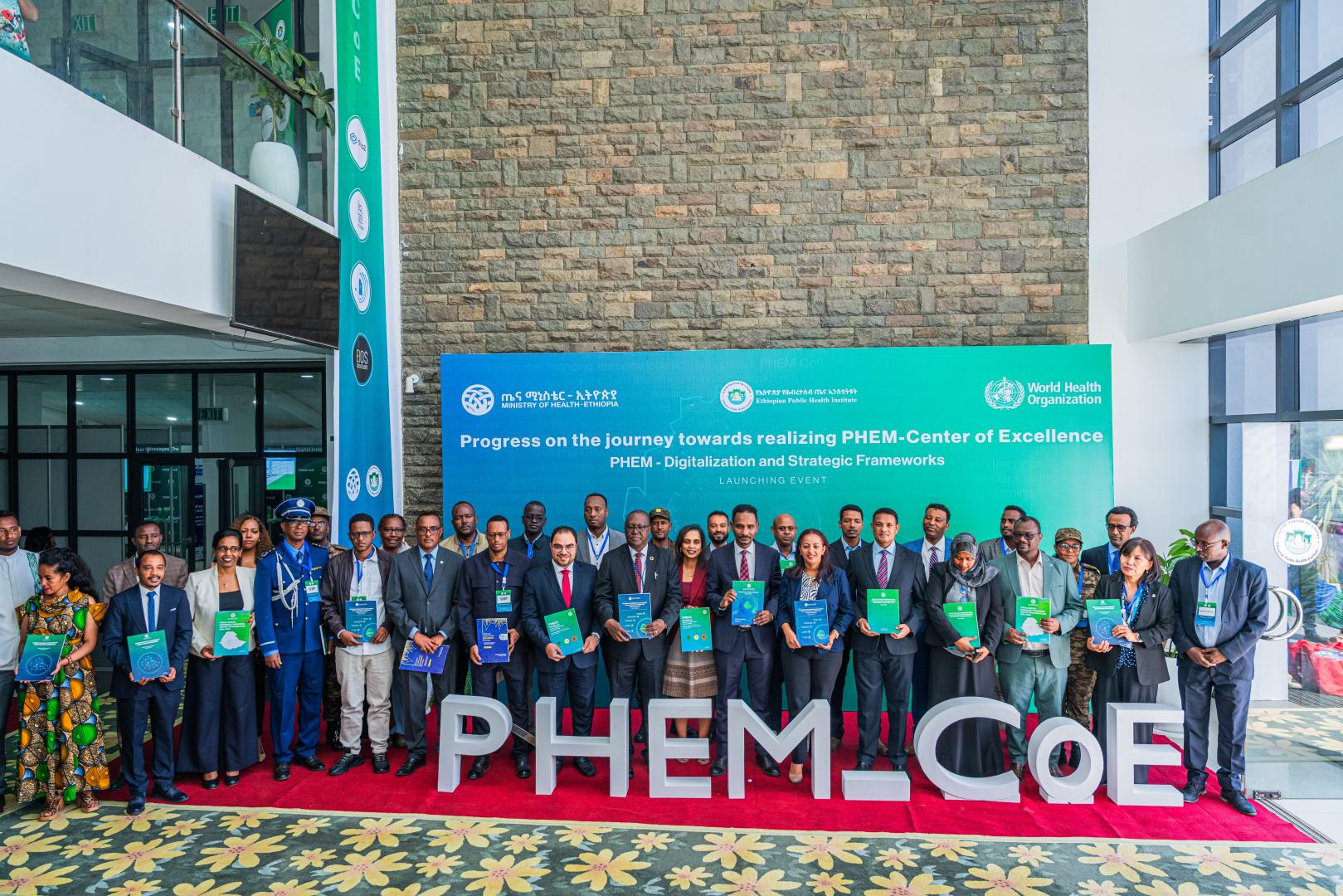
Ethiopia launches digitalization of public health emergency management system, advances toward PHEM Center of Excellence
Addis Ababa, Ethiopia - In a landmark step toward strengthening national health security, Ethiopia officially launched the digitalization of its Public Health Emergency Management (PHEM) system, marking significant progress toward establishing the Public Health Emergency Management Center of Excellence (PHEM-COE).
The high-level event in Addis Ababa convened senior government leaders and development partners, the World Health Organization (WHO) including other partners such as United Nations Children’s Fund (UNICEF), the Food and Agriculture Organization (FAO), the Africa Centres for Disease Control and Prevention (Africa CDC), and the Bill & Melinda Gates Foundation, among others.
In her opening remarks, Dr. Mekdes Daba, Minister of Health of the Federal Democratic Republic of Ethiopia, underscored the urgency of collective action:
“We don’t have time to waste when it comes to public health. We must integrate, we must act, and we must use data. Today’s session is about converting our words into action.”
Delivering the keynote address, Head of Mission and Representative to Ethiopia, the African Union and UN Economic Commission for Africa, Prof. Francis Chisaka Kasolo, commended Ethiopia’s decisive leadership, particularly during the recent Marburg virus response:
“Allow me to sincerely congratulate the Ministry of Health and the Ethiopian Public Health Institute for their strong leadership. The swift detection of cases, rapid activation of the Incident Management System, and coordinated national response demonstrated the growing strength and maturity of Ethiopia’s public health emergency management system.”
He noted that this progress positions Ethiopia as a potential regional hub for training, technical assistance, and knowledge exchange across Africa and beyond, advancing the vision of designating the PHEM-COE as a WHO Collaborating Centre and contributing to continental health security.
Dr. Mesay Hailu, Director General of the Ethiopian Public Health Institute (EPHI), emphasized that preparedness has become a global imperative:
“The number of reported health emergencies has increased substantially over the past two decades, driven by emerging infectious diseases, climate-related shocks, humanitarian crises, and population mobility. Preparedness is no longer optional — it is essential.”
Highlighting the transformation underway, Dr. Melaku Abte, Deputy Director General leading the Public Health Emergency Management Wing, described the shift toward modern emergency operations:
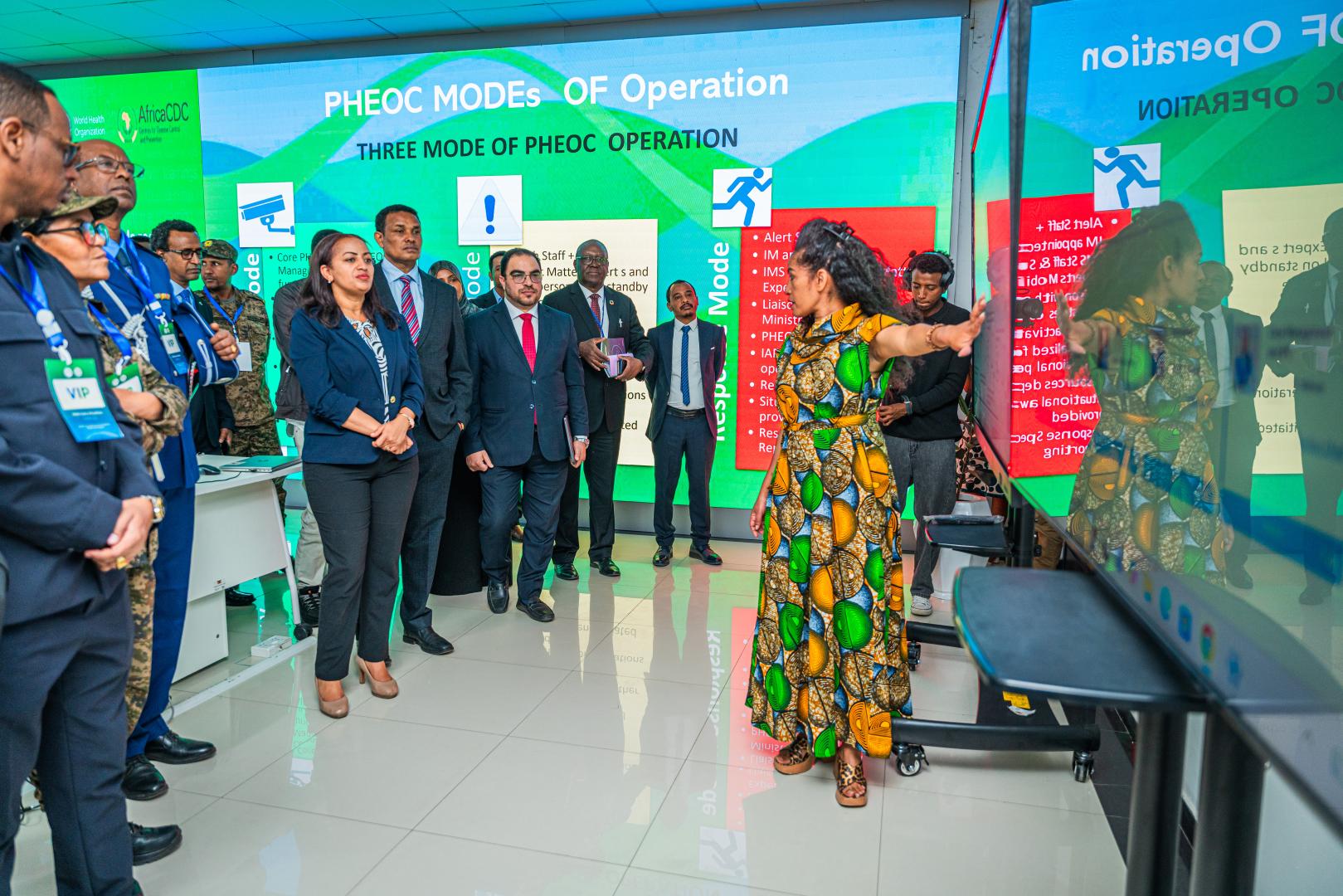
“Not long ago, emergency management processes were largely paper-based, manual, fragmented, and reactive. Today, modernization of our Public Health Emergency Operations Center, combined with interoperable digital platforms, has strengthened early warning surveillance, enhanced laboratory linkages, and enabled real-time data visualization for decision-makers.”
Reaffirming the government’s long-term vision, Minister Mekdes Daba added:
“Ethiopia’s investment in this Center of Excellence strengthens infrastructure, institutionalizes standard operating procedures, and builds a skilled multidisciplinary workforce. These efforts enable earlier detection and faster response, helping to protect our communities. I encourage stronger collaboration with non-health sectors, including the Ethiopian Artificial Intelligence Institute, the Ministry of Innovation and Technology, universities, and other relevant institutions.”
Partners echoed their strong support for Ethiopia’s ambition to position the PHEM-COE as a regional hub for training, technical assistance, and knowledge exchange. WHO also recognized the critical contributions of the European Civil Protection and Humanitarian Aid Operations (ECHO) and the Pandemic Fund, whose investments have accelerated preparedness, surveillance integration, laboratory strengthening, and coordinated response capacity nationwide.
With a robust digital backbone now in place, Ethiopia is advancing toward its vision of designating the PHEM-COE as a WHO Collaborating Centre. Future innovations — including AI-enabled analytics, predictive epidemic intelligence, and climate-sensitive surveillance systems — are expected to further reinforce Ethiopia’s leadership in emergency preparedness across the region.
The World Health Organization reaffirmed its commitment to continue supporting Ethiopia in strengthening health security and ensuring that no public health threat goes undetected or unaddressed.
Communications Officer
WHO Ethiopia
Email: gebremichaela [at] who.int (gebremichaela[at]who[dot]int)