WHO supports Mauritius in undertaking a comprehensive Health Labour Market Analysis
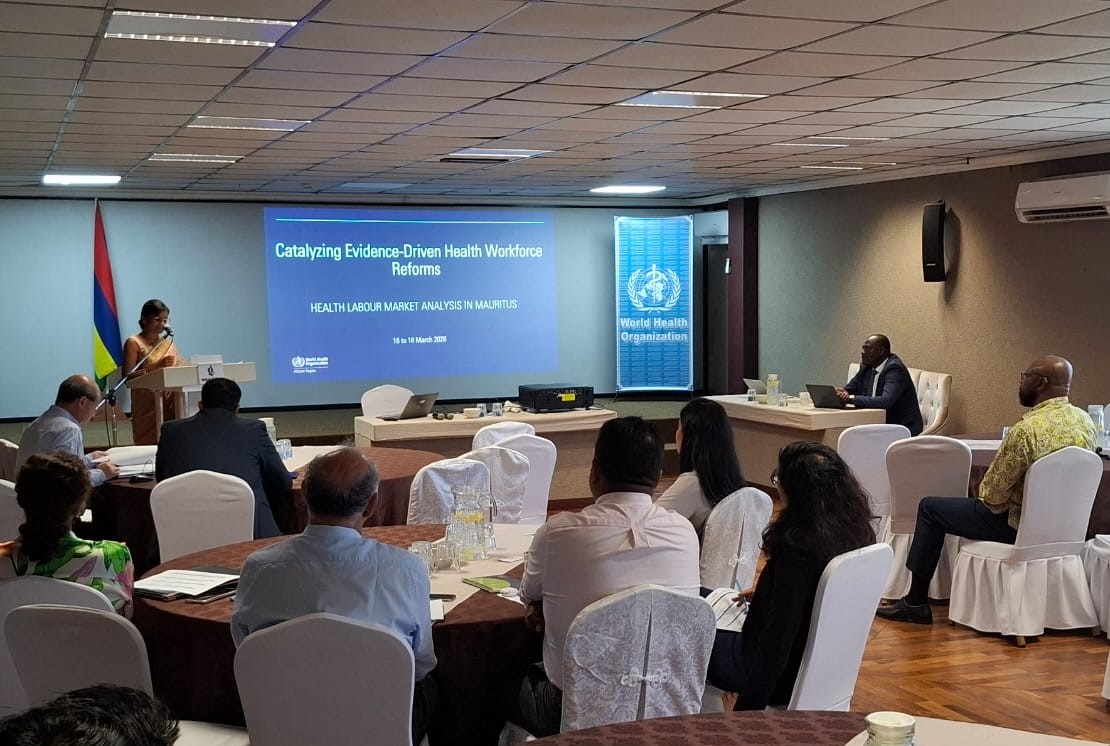
Port Louis—Mauritius is set to reshape its health workforce through a comprehensive Health Labour Market Analysis, with support from the World Health Organization (WHO). This initiative marks a decisive step toward strengthening Mauritius’ health system and advancing progress toward universal health coverage.
“The Health Labour Market Analysis comes at the right time for Mauritius. We must address workforce shortages, improve distribution and ensure the number of health workers are adequate for our population’s health needs,” says Dr Poonam Gungadin, Director of Health Services, Ministry of Health and Wellness (MOHW). “This process will give us the evidence we need to design effective and sustainable workforce policies.”
Mauritius has long demonstrated strong investment in its health workforce, maintaining one of the highest doctor and nurse densities in the African Region, with 31.7 doctors and 35.7 nurses and midwives per 10 000 population. Yet, the health system faces mounting challenges: persistent shortages across several cadres, emerging skills gaps, high workloads, burnout, and uneven distribution of health professionals. Despite employing approximately 13 000 officers across 375 grades, shortages remain acute due to retirement, migration, limited training capacity, and lengthy recruitment procedures.
To meet rising service demands, the MOHW expanded specialized services and increased the number of primary care clinics from 147 to 268 between 2022 and 2024—an 82% increase. While this expansion strengthens access to care, it also intensifies staffing pressures. Both public and private health institutions face difficulties filling vacancies due to a limited pool of qualified candidates, compounded by emigration and complex recruitment and licensing processes.
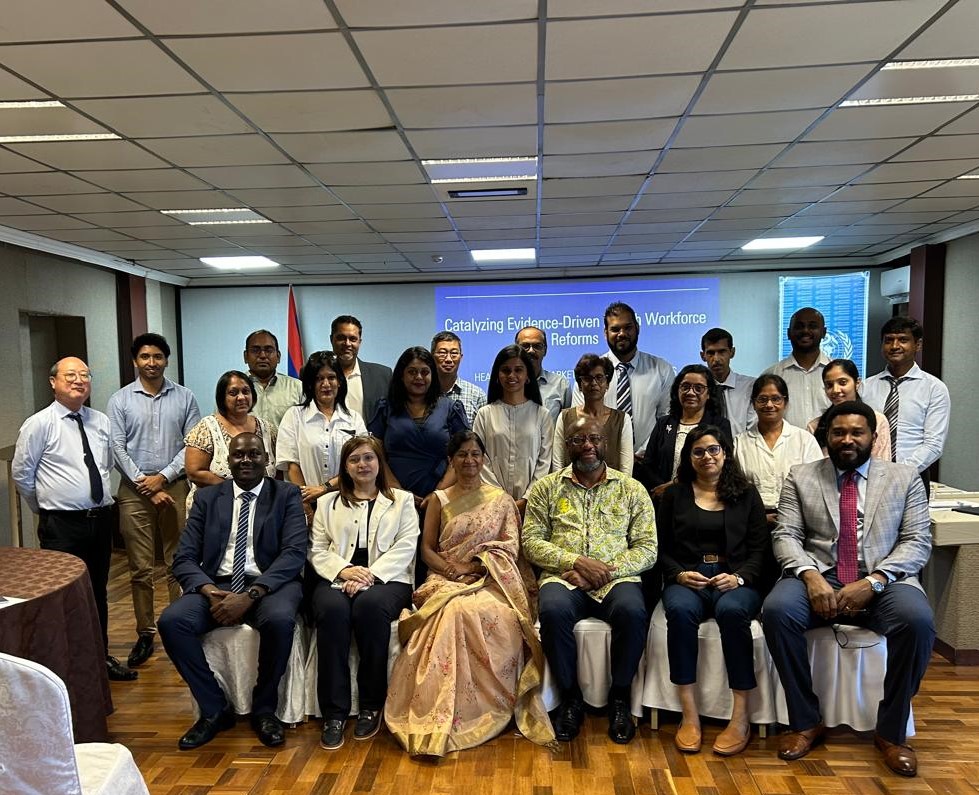
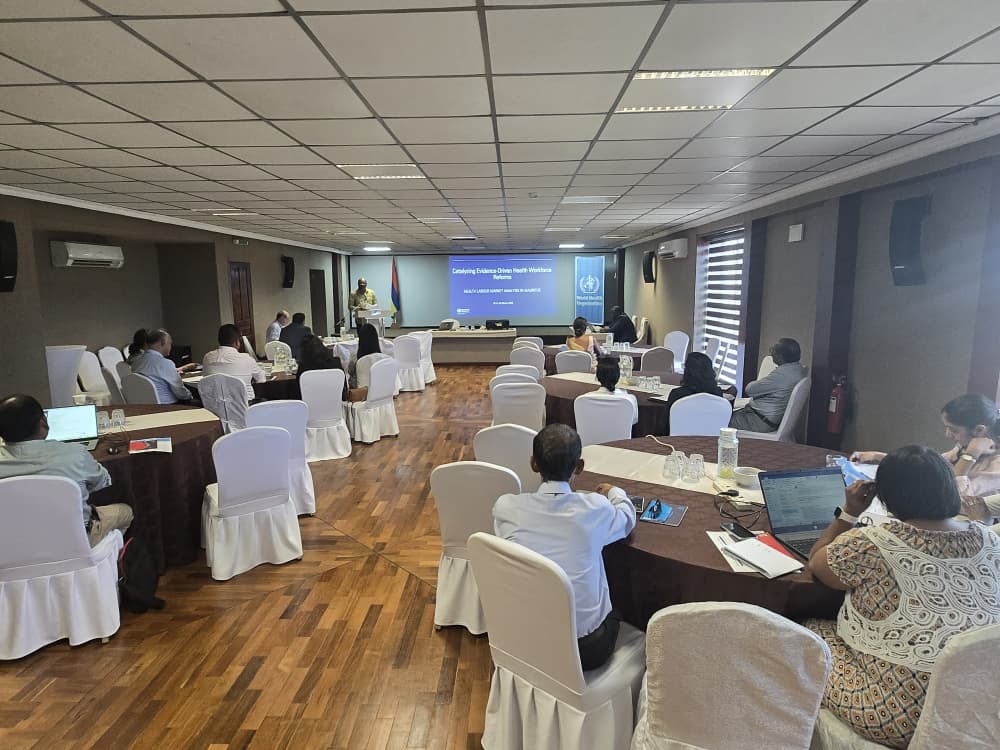
The HLMA process is taking place from 16 to 27 March 2026 with participation from across government with 40 representatives from the different ministries, regulatory councils, statistical bodies, training institutions, health professional associations and the private sector. This broad engagement ensures that the analysis is grounded in high quality data, shared ownership, and consensus driven policy recommendations that reflect the realities of both public and private service delivery.
“WHO is proud to support Mauritius in this comprehensive HLMA process,” says Dr Gilbert Buckle, Health Policy Advisor at WHO Mauritius. “A resilient health system depends on a well-planned, well-supported health workforce. Mauritius’ Health Labour Market Analysis is a vital investment in understanding workforce realities and shaping the reforms needed to deliver health for all.”
This major national undertaking reaffirms Mauritius’ commitment to developing a resilient, motivated and equitably distributed health workforce capable of delivering high quality, accessible health services to every person in the country.
Mauritius joins more than 20 countries across the African region actively implementing the principles of the Africa Health Workforce Investment Charter, which aims to halve inequities in access to health workers by 2030.
“By undertaking the Health Labour Market Analysis, Mauritius is taking a decisive step toward smarter, evidence‑driven workforce investments that strengthen resilience, improve equity and accelerate progress toward health for all,” says Dr Sunny Okoroafor, Health Workforce Management, Performance and Retention Advisor at WHO ‘s Regional Office for Africa and facilitator for the process.
NPO (NCDs/HP)
Email: vythelingamv [at] who.int (vythelingamv[at]who[dot]int)