Reaching Every Child: How Enugu’s Independent Monitors Are Helping Close Immunity Gaps
Enugu; In Enugu State, families, health workers, and young volunteers are working together to protect children from measles, rubella, human papilloma virus (HPV), and other vaccine preventable diseases. The state aims to reach more than 2.1 million children across all 17 LGAs during the Measles–Rubella (MR) Vaccination Campaign in Phase 2 Stream 2 States, scheduled for 4–15 February 2026. The effort is led by the Government of Nigeria through the National Primary Health Care Development Agency (NPHCDA), with support from World Health Organization (WHO), partners, and funding from Gavi.
This campaign supports Nigeria’s goal to reduce zero dose children and strengthen routine immunization as part of national and global strategies, including Immunization Agenda 2030.
Why this campaign matters
Measles remains one of the leading causes of vaccine preventable deaths in children. Nigeria continues to record outbreaks, especially in communities with low routine immunization coverage.
• 19,225 confirmed measles cases and 153 deaths were detected in Nigeria from January to December 2025
• About two-third of these confirmed cases are
• 14,813 cases (77%) were in zero dose
• In Enugu State, 328 suspected measles cases were recorded in 2025, with 26 (8%) confirmed
• Nigeria also detected 7,303 suspected rubella cases by week 47, with 770 (10.5%) testing Rubella IgM positive
These numbers show why the campaign is important. Many children still miss routine vaccines, and outbreaks continue in areas with low coverage.
For many parents, the campaign brings reassurance.
“I have worried about measles since my first child fell sick years ago,” said Mrs. Odoh Stella Chinasa from Auchima community, Idoha ward, Igbo Etiti LGA. “This time, I brought all my children to be vaccinated.”
Reaching children everywhere
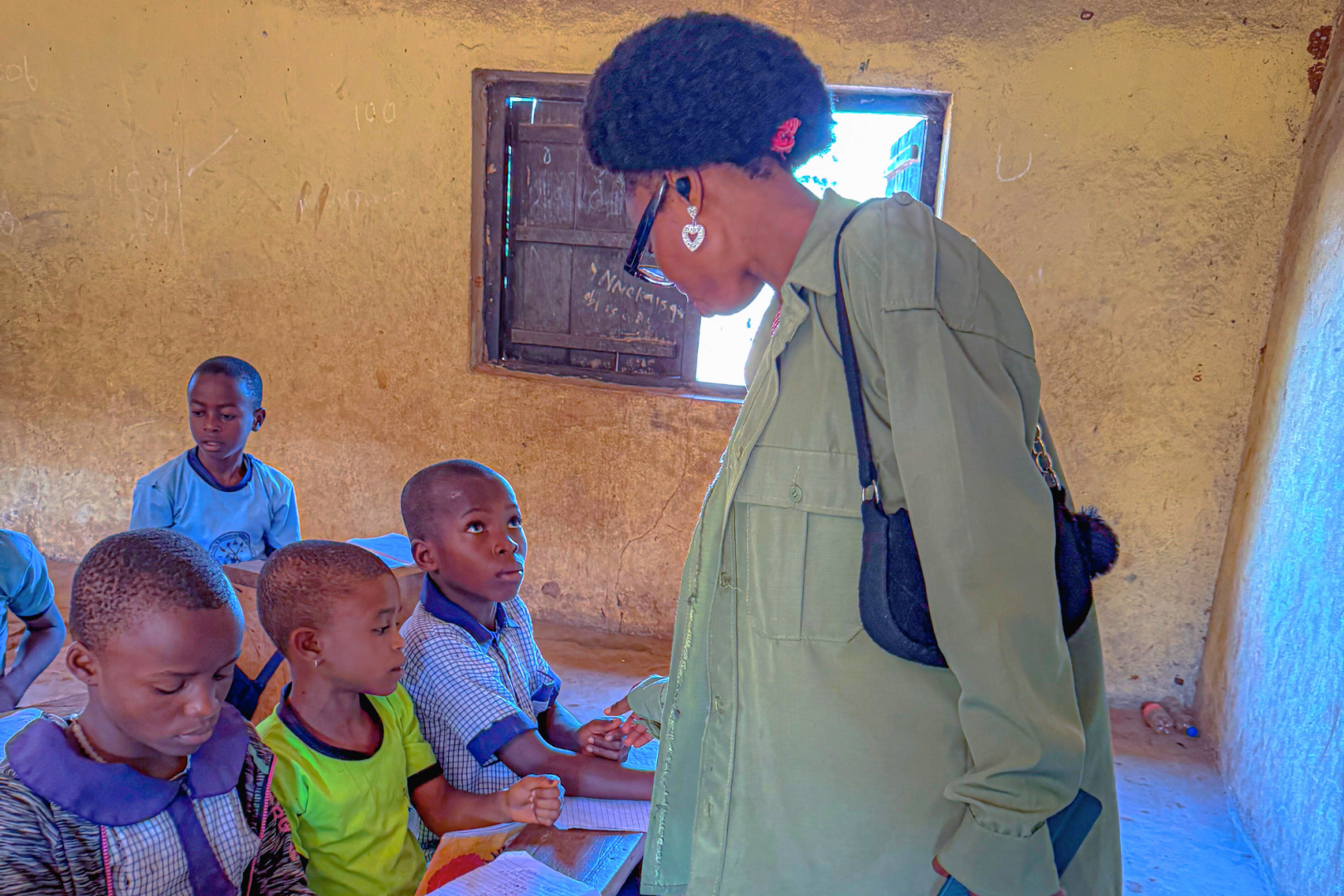
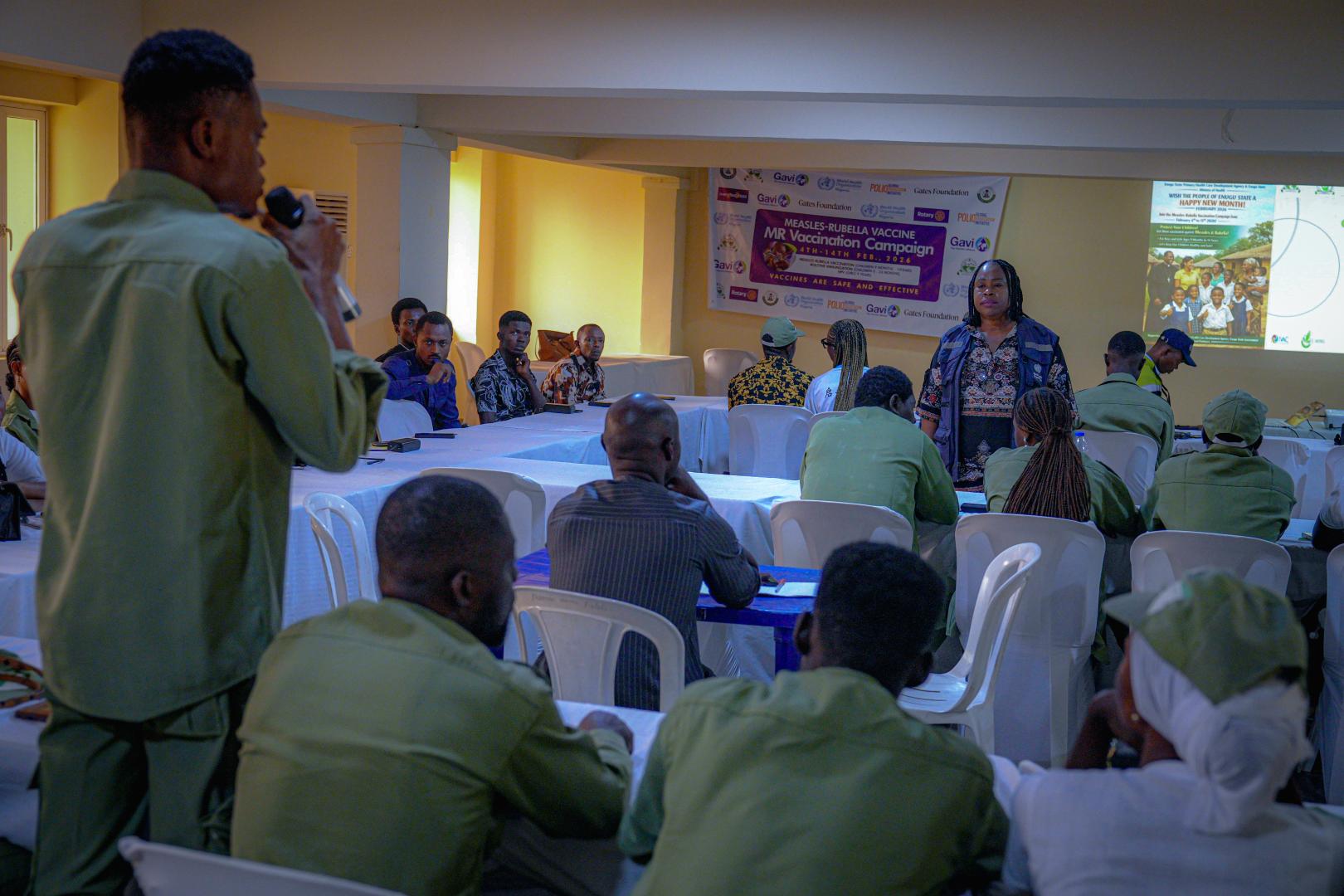
To help ensure no child is missed, the state trained more than 60 National Youth Service Corps (NYSC) members as independent monitors.
The NYSC is a one year national service programme for young graduates. Using NYSC members helps the state maintain an independent and unbiased monitoring process while drawing on the skills of these young Nigerians.
The monitors visit vaccination posts, schools, markets, health facilities, worship centres, and remote settlements. They check what is working, where children may be missed, and what needs to change.
Their findings are shared with LGA teams each day so that gaps can be corrected quickly.
Their presence is already making a difference.
In Ikolo community, Igbo Etiti LGA, a monitor (Onyeani Emmanuel Atuh) noticed that children in a nearby settlement had not been reached. The vaccination team adjusted their route the same day.
“If we didn’t come here, these children would have been left out,” the monitor said.
A health worker in a rural community shared how the monitors helped improve daily planning.
“They showed us where our numbers were not adding up,” said Mr. Ugwosi Patrick, Local Immunization Officer (LIO), Igbo Etiti LGA. “We corrected it immediately and went back to reach the households we missed.”
Voices from hard to reach areas
In one riverine settlement, a community leader explained why the campaign matters.
“Our children often miss services because of distance,” said Mr. Ike Matthew from Idoha, Igbo Etiti LGA. “Seeing these young monitors come all the way here gives us confidence that our children are not forgotten.”
These communities often face barriers such as long travel distances, poor roads, and limited access to health services. Independent monitoring helps identify these gaps early so teams can reach children who are usually missed.
Strengthening systems while protecting children
Children aged 9 months to 14 years are receiving the MR vaccine, while girls aged 9 years old are receiving the HPV vaccine.
Beyond preventing disease, the campaign is helping the state prepare for the introduction of the MR vaccine into Nigeria’s routine immunization schedule.
Independent monitoring is a standard practice used worldwide. It improves data quality, helps teams spot problems early, and strengthens accountability. Using NYSC members gives the state a mobile workforce that can reach places that are difficult for regular teams to access.
Government leadership and partner support
Dr. Ifeyinwa Ani Osekun, Executive Secretary of the Enugu State Primary Health Care Development Agency, said months of planning went into the campaign.
“Independent monitoring helps us check the quality of our work in real time,” she said. “Our goal is simple: every eligible child should be reached.”
At the state level, the NPHCDA State Coordinator highlighted how independent monitoring supports better decision making.
“NYSC members help us see what is happening on the ground,” said Dr. Ifeoma Uduji. “Their reports guide quick corrective action.”
WHO is supporting the state with technical guidance, planning support, training, and coordination.
“Our role is to support the state to strengthen equity and accountability,” said Dr. Adaeze Ugwu, WHO Enugu State Coordinator.
“Every child deserves protection, no matter where they live.”
Gavi funding supports vaccine procurement and operational needs, helping ensure vaccines reach communities across the state.
Young Nigerians driving change
For many NYSC members, the experience is personal.
“I now understand how important vaccines are and why every child must be reached,” said Faith Bankole.
“I am glad to support my community,” added Onyeani Emmanuel Atuh from Achara 1 in Enugu South LGA.
Looking ahead
For 10 days, monitors will move across the state, observing activities, verifying coverage, and reporting findings using the Inside Household and Outside Household Monitoring Checklists.
Their reports will help the state identify missed settlements, improve daily planning, and strengthen the quality of vaccination services. The findings will also guide future routine immunization activities.
A shared commitment
The campaign reflects a shared commitment from the Government of Nigeria, Enugu State, WHO, NPHCDA, partners, and young Nigerians. Together, they are working to protect every child and strengthen the primary health care system.
Call to action
Parents and caregivers are encouraged to bring their children to the nearest vaccination post during the campaign.
Vaccination is free and safe.
Every dose helps protect a child and brings Nigeria closer to a future where no child suffers from a preventable disease.
Communications Officer
WHO Nigeria
Email: hammanyerok [at] who.int (hammanyerok[at]who[dot]int)