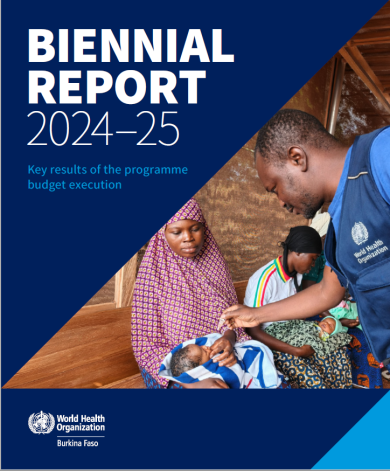
The WHO in Burkina Faso 2024–2025 Biennial Report documents major public health achievements delivered in a context marked by security constraints, population displacement, and climate‑related pressures.
A key milestone during the biennium was the scale-up of the malaria vaccine across all 70 health districts, representing a critical advance in malaria prevention and child health. The report also highlights the roll-out of the WHO PEN package in six districts, strengthening the management of noncommunicable diseases through integrated primary health care services.
A major policy achievement was the adoption of a national tobacco control decree banning smoking in public places and in public transport, reinforcing national efforts to reduce preventable health risks and promote healthier environments.
WHO-supported malaria interventions continued to generate large-scale impact, with over 5 million children benefiting from seasonal malaria chemoprevention and approximately 15 million insecticide-treated nets distributed nationwide.
In fragile and hard-to-reach settings, WHO helped sustain essential health services through the deployment of advanced health posts and mobile clinics, while 58 tonnes of medicines and medical equipment were delivered to support continuity of care for vulnerable populations.
The report further underscores progress in strengthening health information systems, notably through the implementation of the International Classification of Diseases (ICD‑11) in four national referral hospitals—a critical step toward improving mortality surveillance, data quality, and evidence‑informed decision‑making.
Together, these results reflect continued progress in health system resilience, service delivery, and population protection, while highlighting priority areas for sustained investment in upcoming strategic cycles.


