Polio Surveillance in Namibia

Namibia was certified polio free since October 2008 and had continued routine and national immunization campaigns to maintain its polio free status. However, the country remains at high risk for vaccine derived polio viruses due to low detection of Acute Flaccid Paralysis cases in the bordering regions which is used as an indicator to measure how sensitive the surveillance system is. In addition, there is high number of un and under vaccinated children along the Namibian- Angolan and Namibia-Zambia border with 5 densely populated regions bordering these two countries.
Namibia aiming to eliminate malaria through eco-friendly preventive strategies

Approximately 1,629,289 (64%) Namibians are at risk of contracting malaria. Malaria transmission is unstable, seasonal, characterized by outbreaks and concentrated in 7 endemic northern regions. The malaria transmission season typically begins in December and ends in May with the peak transmission months being April and May. The Ministry of Health and Social Services is conducting indoor residual house spraying (IRS) to reduce the malaria mosquito population responsible for transmission as one of several prevention strategies.
Health workers leaving no stone unturned, responding to mental health cases in the Northeast

Maiduguri November 4, 2021- In Nigeria’s North East, 12 years of insurgency and attendant security challenges had major impact on the mental health of people living in the region. Since the beginning of the conflict, more than 43 000 people have died from Boko Haram violence
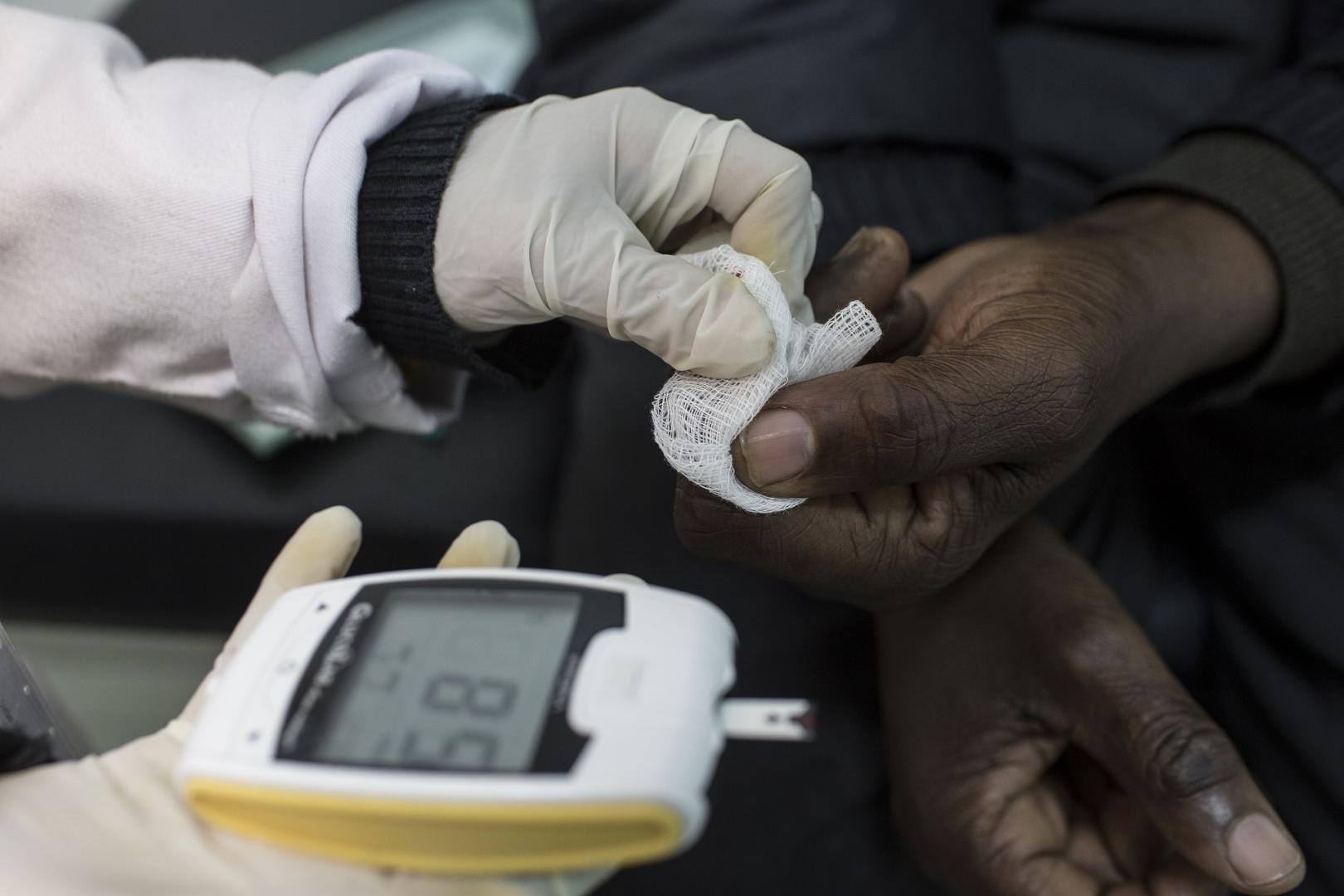
COVID-19 more deadly in Africans with diabetes
Gearing towards a TB free Nigeria- WHO and partners scale up action

Abuja November 10, 2021- The World Health Organization (WHO) has reaffirmed its commitment to support the country in eradicating Tuberculosis (TB), one of the top infectious killer diseases in the world.
The Deputy Country Representative Mr. Chimbaru Alexander in his goodwill message at the 2021 National TB conference in Abuja on November 09, 2021 said WHO as a technical partner will continue supporting the National TB program at all levels.
WHO delivers 6.6 tons of emergency medical kits to Sierra Leone following fire disaster

Consensus Building Workshop on Priority Health Research Agenda 2022-2026 November 04, 2021

On 4 November 2021, the Ministry of Health, Eritrea, organized a Consensus building workshop for the National Health Research Agenda document which the country has developed. The objective of the priority health agenda consensus workshop was to give all the technical expertise an opportunity to review and further enrich the document before final printing and dissemination. The priority health research agenda is one of the key tools which can help the health sector to identify and implement research based on the need of the country.
How a commercial driver is contributing to prevent the spread of Covid-19 in Kumasi in the Ashanti Region of Ghana

It's a wet Monday morning in Kumasi, the capital city of the Ashanti Region. Many commercial drivers have already taken advantage of the early hours' rain to cash in on the numerous requests for cab services. Daniel Jordan, an Uber driver, has just dropped off a passenger when he receives another request to pick a passenger nearby.
WHO emergency teams learning and supporting in Malawi

With Malawi’s top-level leadership fully committed to addressing bottlenecks that are hampering the country’s COVID-19 vaccine rollout, WHO’s emergency ‘surge’ team is on the ground, supporting the national initiative.
WHO consultant Zora Machekanyanga travelled from Zimbabwe last week to join team leader Dr Charles Byabamazima and Dr Caroline Ryan.
WHO supports Adamawa and Yobe States to administer Malaria drugs to over 1.9 million children

Yola, 1 November, 2021 - Maimuna Abdulraham a caregiver and four other women living in Yola South Local Government Area in Adamawa state sat patiently under a tree in front of their houses awaiting the turn of their children to receive the antimalarial drugs administered by a community health dispenser.
The drugs are administered as the fourth cycle of the Seasonal Malaria Chemoprevention, SMC intervention in Adamawa and Yobe states. It is part of the larger efforts to eliminate the scourge in the states and the country in general.