President Danny Faure calls on small island developing nations to continue to ‘Work together as One’
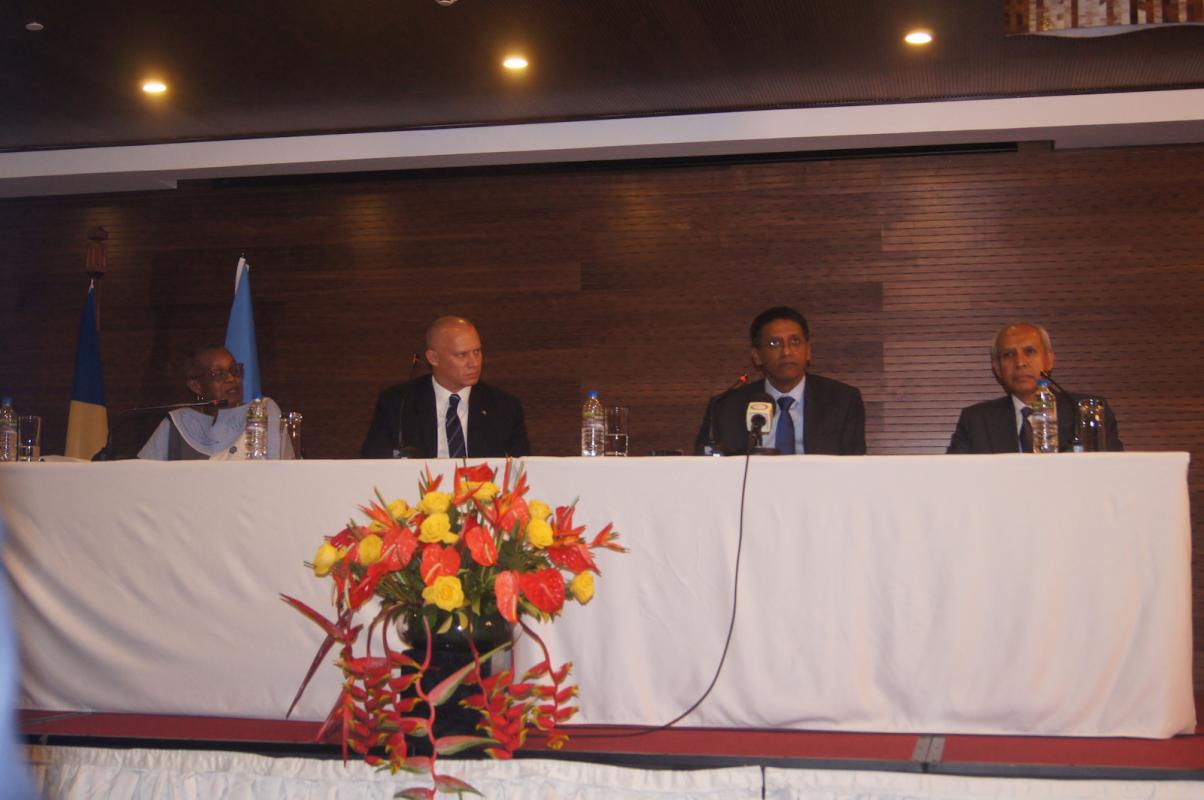
Victoria, Seychelles, 27th August 2017 - The President of the Republic of Seychelles Honourable Danny Faure has commended the five small island developing states of the African WHO region for having kept the promise of trying to keep working together as one over the last 10 years. President Faure said that the SIDS, Mauritius, Comoros, Cabo Verde, Sao Tome and Principe and Seychelles should be proud to have been able to keep such great collaboration healthy amidst international political and economic turbulence and real international challenges in health.
WHO’s emergency mobile medical teams provide lifesaving health services in famine-affected and hard-to-reach areas of South Sudan

26 September 2017, Juba – WHO’s emergency medical mobile teams are providing lifesaving health services to alleviate the myriad of public health challenges faced in famine-affected and hard-to-reach areas of South Sudan.
The team includes one doctor, nurse, nutritionist and community health worker. They support partners in remote locations with case management of patients, vaccinations, setting up of cholera treatment centers and units in areas reporting outbreaks, and help partners to set up mobile clinics.
Tackling the common health challenges of African Small Island Developing States

Countries commit to scaling-up IDSR to tackle guinea worm disease in Africa

Experts from the Democratic Republic of Congo (DRC), Ethiopia, Kenya, South Sudan and Uganda convened in Entebbe, Uganda, to identify and discuss opportunities to strengthen cross-border interventions for guinea worm disease eradication. Participants mapped a joint action plan for 2018 to strengthen surveillance, communication and coordination for guinea worm disease eradication. They further charted a strategy to strengthen cross-border surveillance among refugees to prevent the disease from spilling over to refugee host-communities.
WHO scales up implementation of integrated disease surveillance tools in Africa

The World Health Organization Health Emergencies program (WHE) will revitalize the Integrated Disease Surveillance and Response (IDSR) Taskforce that will guide use and scale-up of the revised IDSR guidelines and tools in the WHO African Region.
Uganda hosts Inter-agency meeting on Neonatal health for Eastern and Southern Africa

The World Health Organization Regional Office for Africa (WHO-AFRO) in collaboration with United Nations Children’s Education Fund (UNICEF) and United States Agency for International Development (USAID), convened a four-day meeting in Uganda aimed at improving Neonatal Health (NNH) in Eastern and Southern Africa.
Campagne nationale de distribution de moustiquaires imprégnées : un engouement certain
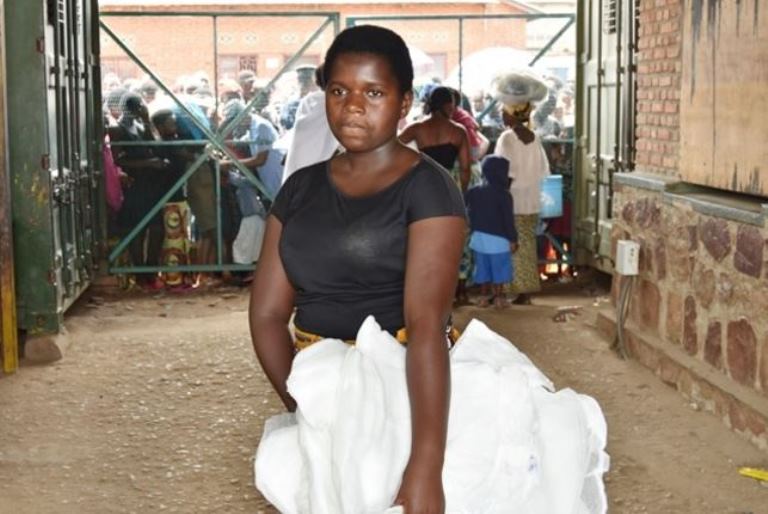
A jour 3, la campagne prévue pour durer 5 jours se déroule comme prévue. C’est le constat fait par les superviseurs de l’OMS au Burundi, des experts présents sur plusieurs axes du pays dont Kayanza, Ngozi, Kirundo, Rutana–Makamba, Bujumbura-Gitega, sans oublier Bujumbura la capitale. Des équipes fixes de distribution sont en place au niveau des centres de santé et des équipes mobiles sont déployées sur les sites avancés au niveau des écoles et des lieux de grande affluence.
WHO with funding from the Government of Canada inaugurates newly constructed maternity complexes in Awiel and Kuajok

19 September 2017, Juba – As part of its efforts to ensure the delivery and utilization of quality comprehensive emergency obstetrics and newborn care services in hospitals in South Sudan, the World Health Organization (WHO) with support from the Government of Canada through the Department of Foreign Affairs, Trade and Development (DFATD) has inaugurated the newly constructed fully-equipped maternity complexes in Aweil, former Northern Barh el Ghazal State and Kuajok, former Warrap State.
Mitigating health risks in the wake of disaster

FREETOWN, September 21 2017 --- On the morning of 14th August 2017, people in Sierra Leone awoke to tragic news. Following torrential rains, landslides had devastated communities in and around the country’s capital, Freetown. The landslide started in the Regent area, high on the slopes in the eastern part of the city, but flash floods, mudslides and boulders then cascaded down the mountainside, eviscerating everything in their way.
Borno applauds WHO's response to cholera outbreak.

Maiduguri, 19 September 2017 - As the cholera vaccination campaign kicks off for the first time in Nigeria in the affected areas of Borno state, the Deputy Governor, His Excellency Usman Mamman Durkwa has commended World Health Organization’s (WHO) commitment to contain the outbreak.