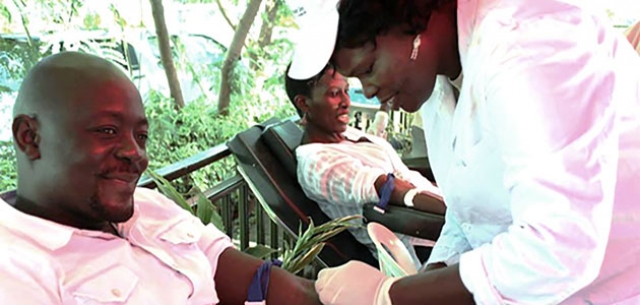
World Blood Donor Day-Nigeria requires innovative strategies for sufficient and safe blood supply.

Abuja, 14 June 2016 - The Honourable Minister of State for Health, Dr Osagie Ehanire says that access to safe blood transfusion requires innovative strategies to ensure safe and sufficient blood supply, to achieve 100% voluntary blood donation and to ensure 100% quality-assured testing of donated blood. There is also a need to optimize blood usage for patient health, develop quality systems in the transfusion chain, strengthen the workforce, keep pace with new developments and build effective partnerships for safe blood.
South Sudan Commences World Blood Donor Day (WBDD) 2016 Celebrations

Under the theme “Blood Connects Us All”, South Sudan has joined the rest of the world to celebrate this year’s World Blood Donor Day to acknowledge the crucial role that voluntary blood donors play in saving millions of lives worldwide.
Share life Give Blood is the message behind the massive voluntary blood donation campaign carried out by the NBTS and partners to celebrate WBDD.
From safe blood transfusions in South Sudan to hospital equipment for Yemen: Wide-ranging support from Japan
 27 April 2016 - In a country facing ongoing conflict, safe blood transfusions are a life-saving necessity.
African national regulatory agencies and ethics committees agree to harmonise practices to strengthen clinical trial oversight
Addis Ababa – Heads of national regulatory agencies and national ethics committees from across Africa have agreed to harmonise their practices to strengthen regulatory oversight of clinical trials.
WHO declares the end of the most recent Ebola virus disease outbreak in Liberia
Liberia, 9 June 2016 – Today the World Health Organization (WHO) declares the end of the most recent outbreak of Ebola virus disease in Liberia. This announcement comes 42 days (two 21-day incubation cycles of the virus) after the last confirmed Ebola patient in Liberia tested negative for the disease for the second time. Liberia now enters a 90-day period of heightened surveillance to ensure that any new cases are identified quickly and contained before spreading.
Uganda improves access to immunization services

Kampala, 8th June 2016 - Twenty two (22) out of Uganda’s 112 districts have good access and utilization of immunization services reaching over 80% of the children with all recommended doses of life-saving childhood vaccinations according to their district specific targets. This is according to the findings of the recent annual National Administrative Immunization Performance Analysis done by the Uganda National Expanded Programme on Immunization (UNEPI), supported by WHO and UNICEF.
Uganda improves access to immunization services

Kampala, 8th June 2016 - Twenty two (22) out of Uganda’s 112 districts have good access and utilization of immunization services reaching over 80% of the children with all recommended doses of life-saving childhood vaccinations according to their district specific targets. This is according to the findings of the recent annual National Administrative Immunization Performance Analysis done by the Uganda National Expanded Programme on Immunization (UNEPI), supported by WHO and UNICEF.
Eritrea observes the African Vaccination Week and successfully implements the tOPV-bOPV switch

The African vaccine week in Eritrea was observed from 25-30 April, 2016 at national level in all zobas focusing more on polio eradication endgame and the importance of quality of vaccination. The service provided was to strengthen the routine immunization programmes in the country by increasing public awareness on the importance of every person’s right to be protected from vaccine-preventable diseases at set times and schedules.
WHO Country Office signs a financing agreement with African Development Bank (ADB) on leveraging mobile technology to improve access to basic health services
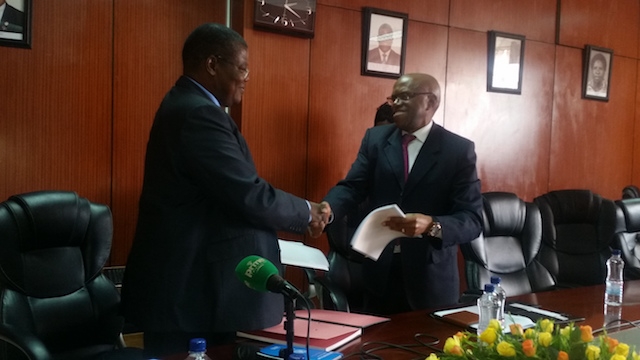
Lusaka, June 6, 2016 – On 19th May 2016, the World Health Organisation Country Office signed a financing agreement with the African Development Bank (ADB) on leveraging mobile technology to improve access to basic health services in Zambia. Through this agreement, the ADB will provide WHO a grant amounting to US$ 385,000 to support the Ministry of Health in implementation of the Mhealth initiative.
New Kit for the treatment of Severe Acute Malnutrition launched by WHO in South Sudan
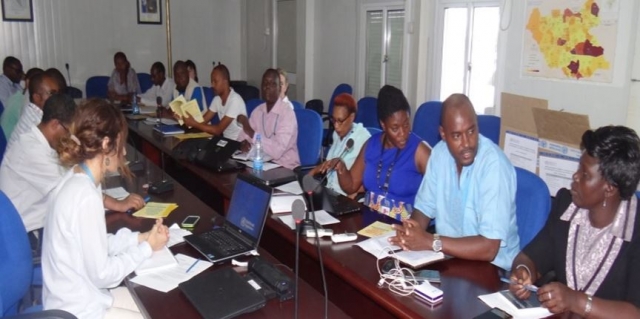
6 June 2016 - WHO launched the first ever drug module kit for the management of Severe Acute Malnutrition and Medical Complications in children. South Sudan is the first country in the world to introduce the use of the kit. The kit constitutes the most essential and basic medicine for the treatment of children with severe acute malnutrition and medical conditions. The kits comprise four basic modules of routine, basic, supplementary and malaria drugs.