Journalists join fight against Lassa fever in security compromised North eastern Nigeria

Abuja, 02 February, 2016 - As part of ongoing efforts to contain the spread of Lassa fever, the World Health Organization (WHO) in collaboration with the Journalists’ Initiative Against Polio (JAP), has taken the campaign on personal and environmental hygiene to both urban and rural communities in the North East Zone (NEZ) with emphasis on infected states of Bauchi, Gombe and Taraba.
National Electronic Health Management Information System Stakeholders meeting held in Entebbe
Entebbe, 3rd February 2016 - The Quarterly National Electronic Health Management Information System, (eHMIS) Stakeholders Meeting took place at the Lake Victoria Hotel (LAICO).
Angola starts massive campaign to contain Yellow Fever Outbreak
 3 February 2016, Luanda - Angolan authorities started Tuesday a multisectoral massive campaign with the aim of to stop the current yellow fever outbreak in the province of Luanda, whose balance as of today is of 96 suspected cases and 26 deaths.
20% of Zimbabwean students using tobacco products

Harare, 28 January 2016 - This was revealed in the summary report of the Global Youth Tobacco Survey (GYTS) country report for Zimbabwe which was launched on Wednesday 27th January in Harare. The GYTS was conducted in 2014, and involved a representative sample of grade 7 pupils and forms 1—3 students aged 13 –15 years. It was a questionnaire based survey that consisted of 6,427 eligible students drawn from randomly selected classes from 100 sampled schools with a response rate of 70.4%.
Plans to establish a Public Health Institute in Liberia continue

Monrovia, 28 January 2016 - During a high-level meeting held on 18-20 January, the Ministry of Health of Liberia moved a step forward with plans for the establishment of a national public health institute (PHI). This is one of the priority components of the Liberia plan for building a resilient health system 2015-2021.
mHealth Mobile Application Improves Access to Essential Surgical Care in Ethiopia

In response to the need for access to life-saving surgical care, the World Health Organization's Emergency and Essential Surgical Care rogram has developed and launched the 'Integrated Management for Emergency and Essential Surgical Care'(IMEESC) toolkit via a mobile phone application. The toolkit will make available key resources in obstetric and surgical care literally at users’ fingertips.
WHO Donates Minilabs to Strengthen Control of SSFFC
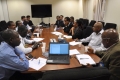
Substandard, spurious, falsely labelled, falsified and counterfeit (SSFFC) medical products pose an unacceptable risk to public health. SSFFC medical products affect every region of the world, and all major therapeutic categories of medicines, including vaccines and diagnostics. They harm patients and undermine confidence in medical products, healthcare professionals and health systems.
Dr Ovberedjo meets Honourable Minister of Health Botswana!
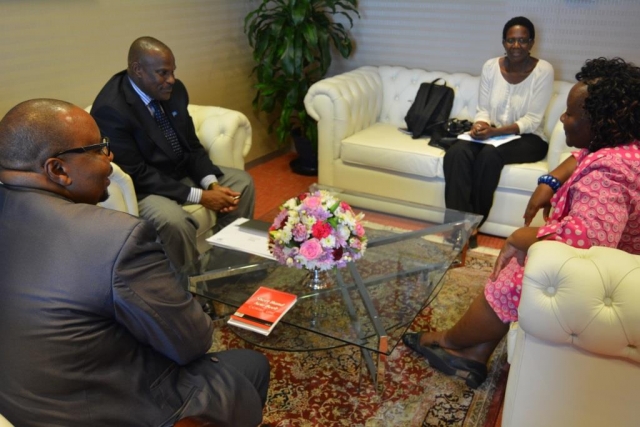
Gaborone, 26 January 2015 - The Minister of Health, Honourable Dorcas Makgato hosted the new WHO Representative Dr Martins Ovberedjo in her office today. Dr Ovberedjo was accompanied by members of the WHO country office, Dr Tebogo Madidimalo, Mrs Lucy Maribe and Mr Moagi Gaborone.
Disease early warning, alert and response in emergencies

Humanitarian emergencies increase the risk of transmitting disease. Disease outbreaks, such as malaria, measles and cholera, are often a major cause of illnesses and death during crises.
The global Early Warning and Response System (EWARS) project is a WHO initiative to catch disease outbreaks early on to be able to contain them in emergencies. It supports Ministries of Health and health partners by providing technical support, training and field-based tools.
WHO revises onchocerciasis guidelines as countries approach elimination targets

Geneva, 22 January 2016 - The World Health Organization (WHO) targets the elimination of onchocerciasis (river blindness) in Latin America, in selected African countries and in Yemen by 2020 as highlighted in the WHO Roadmap on neglected tropical diseases (NTDs). As countries approach the end of the treatment phase, WHO has published revised guidelines incorporating new evidence gathered during the past 15 years.