One-Month World Blood Donor Day Campaign Ends
Safe blood for saving mothers
Immunizing against measles in the Central African Republic
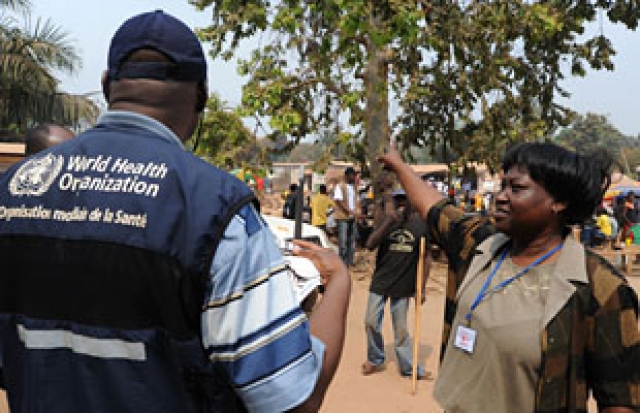
Immunizing children against measles is a priority in the Central African Republic. In January 2014, more than 115 000 children aged 6 months to 15 years were vaccinated in health centres across the country by national health workers with support from WHO, the International Red Cross and partners.
As of 2012, of every 100 children born in the country, 13 died before their fifth birthday. Measles can kill up to 1 in 25 children affected with the disease, and remains a public health problem in the Central African Republic. People, therefore, welcomed the vaccination campaign.
Ethiopia's Parliament Champions Tobacco Control

WHO Awards the House of Peoples' Representatives for its Contribution to Tobacco Control.
WHO and Embassy of Russia donate consignment of items to support Ebola outbreak response

Freetown, 1 August 2014 - The WHO Country Office in Sierra Leone on 1 August 2014 donated a consignment of assorted items worth US$38,000 to the Ministry of Health and Sanitation. The donation is part of WHO’s continued support to the government of Sierra Leone in the Ebola outbreak response. The various items included 3,000 Personal Protective Equipment (PPEs) to protect health workers particularly those that are directly involved in the management of cases in the treatment centres, the ambulance and burial teams.
Making neglected tropical diseases, “neglected no more”
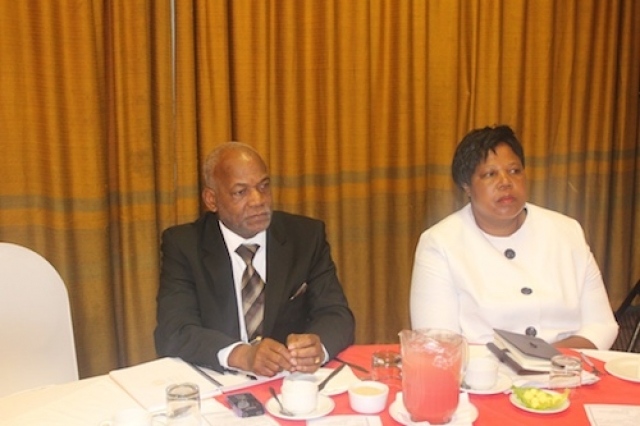
The Government of the Kingdom of Swaziland through the Ministry of Health intensifies efforts to make Neglected Tropical Diseases (NTDs) neglected no more in Swaziland. The Ministry of Health with technical and financial support from the World Health Organization (WHO) successfully held a national high level advocacy meeting on Neglected Tropical Diseases. The meeting was held on the 1st of August 2014 at Mountain Inn Hotel in Mbabane.
Challenges and rewards of working on Ebola outbreak
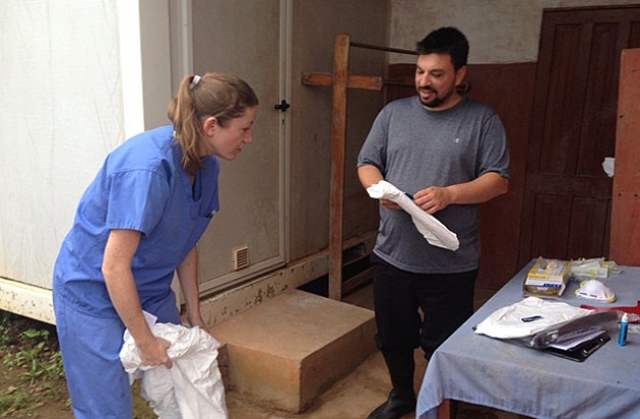
“It was great that Mauricio and I arrived the same day; we were able to share first, very shocking, impressions and to go through the process of adapting to difficult working conditions together,” says Dr Catherine Houlihan, an infectious disease doctor from the United Kingdom deployed through WHO to help respond to the Ebola outbreak in Sierra Leone.
For Catherine this is her first deployment in an outbreak setting; “On my first day, I felt shocked by the enormity of the challenges. The day after, I started to adapt.”
WHO Director-General and west African presidents launch Ebola outbreak response plan

31 July 2014 -- The new joint US$ 100 million response plan is part of an intensified international, regional and national campaign to bring the outbreak under control. “The scale of the Ebola outbreak, and the persistent threat it poses, requires WHO and Guinea, Liberia and Sierra Leone to take the response to a new level, and this will require increased resources, in-country medical expertise, regional preparedness and coordination,” says WHO Director-General Dr Margaret Chan.
President Koroma visits the Emergency Operational Centre at the WHO Complex
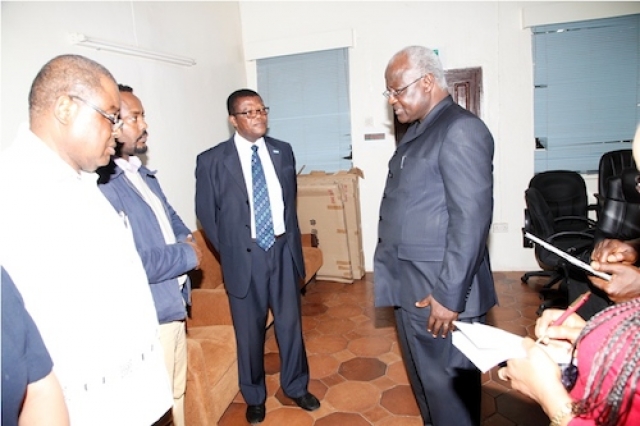
Freetown, 31 July 2014 - His Excellency President Dr Ernest Bai Koroma, President of the Republic of Sierra Leone made a visit to the Ebola Emergency Operational Centre (EOC) work station at the World Health Organization Country Office in Sierra Leone on 31 July 2014. The President made the visit to assess readiness of the EOC which is the leading Coordination Structure in the Ebola outbreak response in Sierra Leone. Membership of the EOC comprised of heads of strategic local and international development agencies including the United Nations agencies, MSF, and other partners.
WHO partners with CDFU to implement the Accelerating Nutrition Improvement (ANI) project

Kampala, 31th July 2014:- WHO has gone into contract with a local partner Communication for Development Uganda (CDFU), a Ugandan based Non–Governmental Organization (NGO) who will implement the ANI Intervention. The target is to scale up the recommendations through a social and behavioral change communication strategy .
Liberia launches Operational Plan to accelerate response against Ebola
Monrovia 31 July 2014 – The Government of Liberia on yesterday launched the Operational Plan to accelerate the response to control the on-going outbreak of Ebola in the country, which requires $20.9 million to invest in the response for the next six months.