Equipping the displaced communities with lifesaving practices during Ebola outbreak

Equipping the displaced communities with lifesaving practices during Ebola outbreak

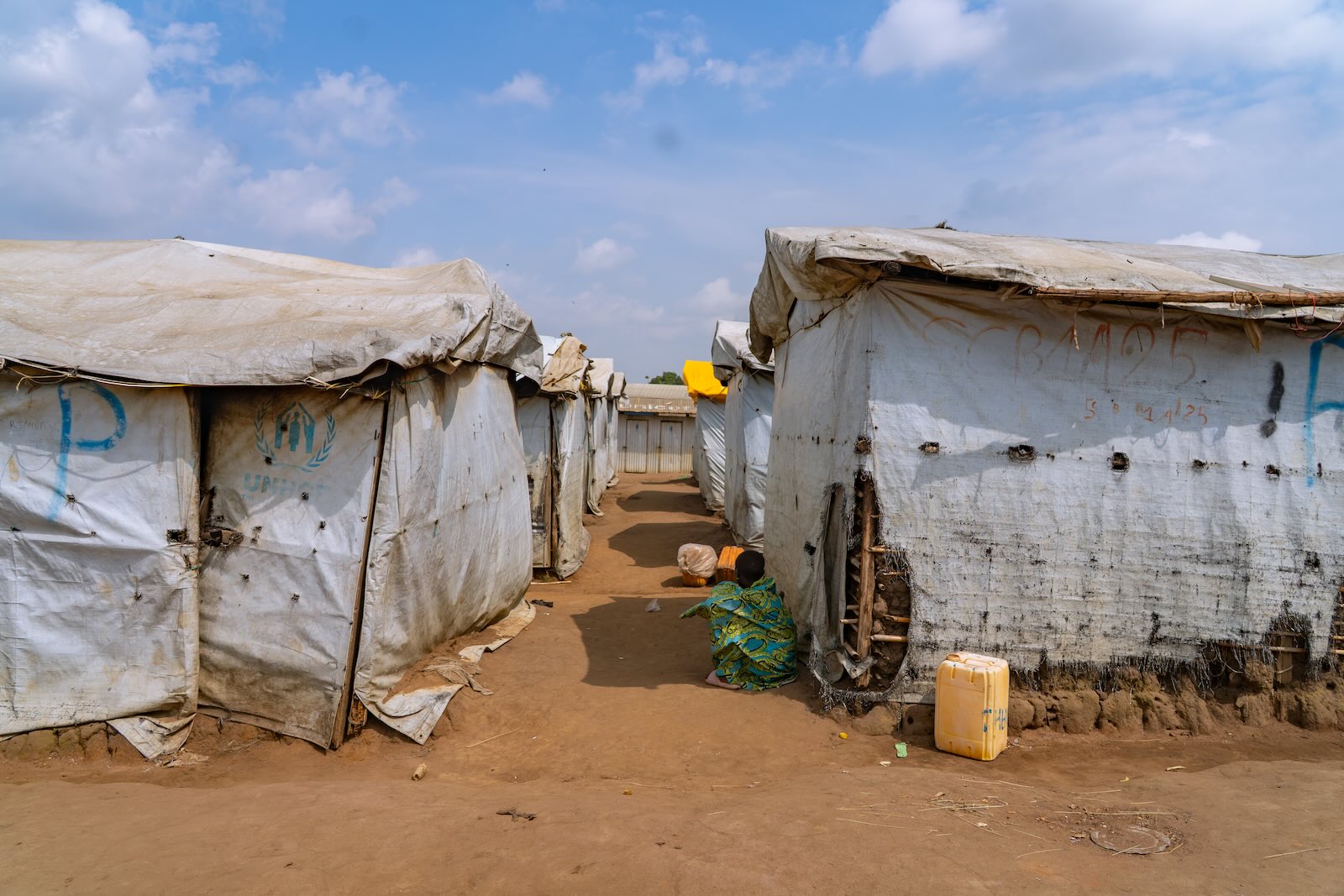
Bunia, Democratic Republic of the Congo - Over 25 000 people have fled their homes in the outskirts of Bunia, Ituri Province in Eastern Democratic Republic of the Congo to the Kigonze camp. It's one among the six camps in Bunia hosting one of the largest number of people forced away from their homes due to inter-tribal conflict.

Bunia, Democratic Republic of the Congo – Over 25 000 people have fled their homes in the outskirts of Bunia, Ituri Province in Eastern Democratic Republic of the Congo to the Kigonze camp. It's one among the six camps in Bunia hosting one of the largest number of people forced away from their homes due to inter-tribal conflict.

With growing numbers, there has been great concern about hygiene conditions as the camp has been historically vulnerable to infectious conditions after a few positive cases have been reported. Amid the Ebola outbreak caused by the Bundibugyo virus, the situation is more dire. World Health Organization (WHO) and partners are supporting the country's Ministry of Health in a sensitization exercise of some community members in infection prevention and control measures. After a 3-day theory sensitization program, it was time to put the lesson to test.
With growing numbers, there has been great concern about hygiene conditions as the camp has been historically vulnerable to infectious conditions after a few positive cases have been reported. Amid the Ebola outbreak caused by the Bundibugyo virus, the situation is more dire. World Health Organization (WHO) and partners are supporting the country's Ministry of Health in a sensitization exercise of some community members in infection prevention and control measures. After a 3-day theory sensitization program, it was time to put the lesson to test.
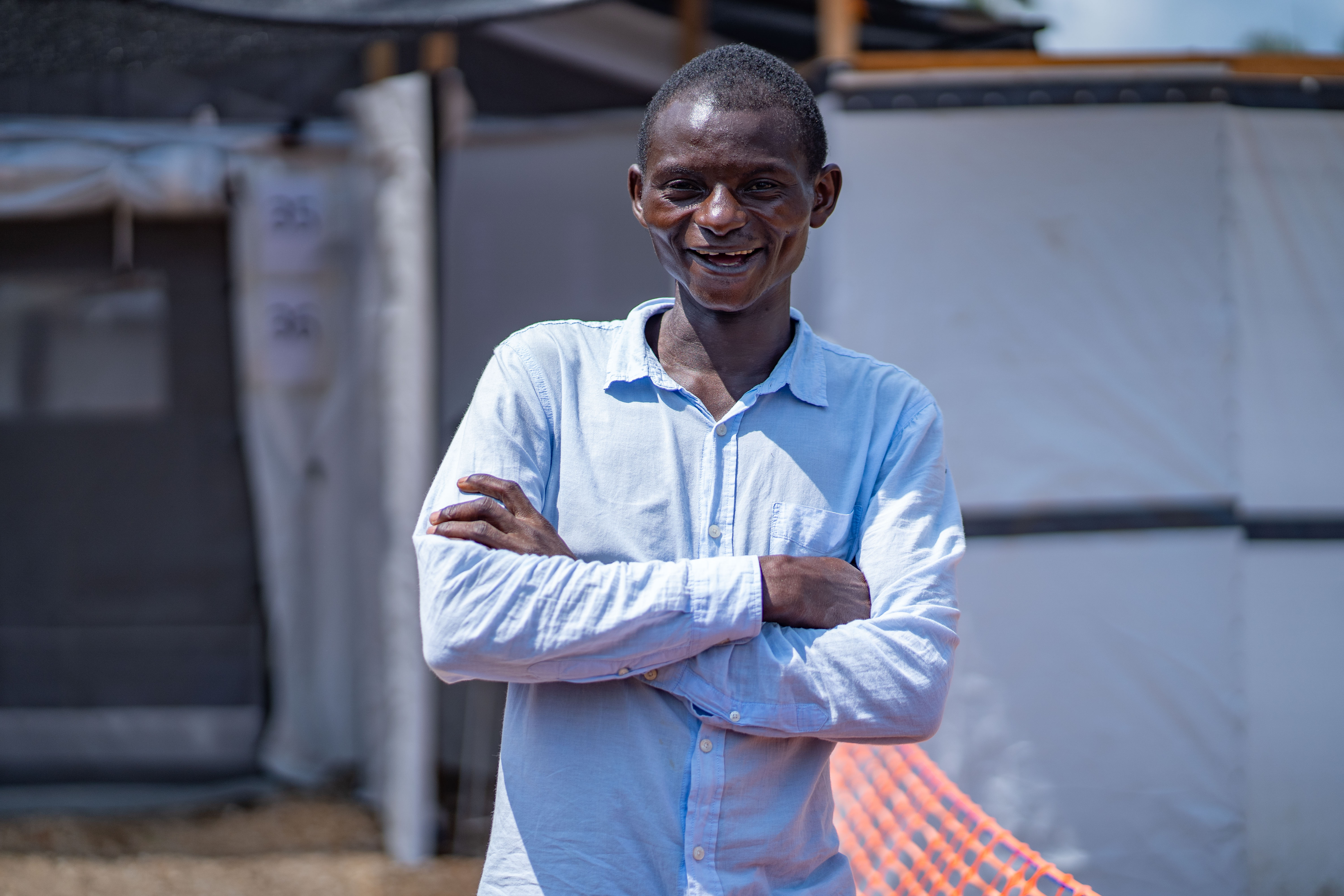
“We have learnt many things, such as how to keep ourselves and our surroundings clean, practical tips on how to mix the chlorine granules for decontamination and most importantly to advise the sick to seek medical treatment in the hospital,” says Dieudonné Denja, community leader living in the Kigonze camp.

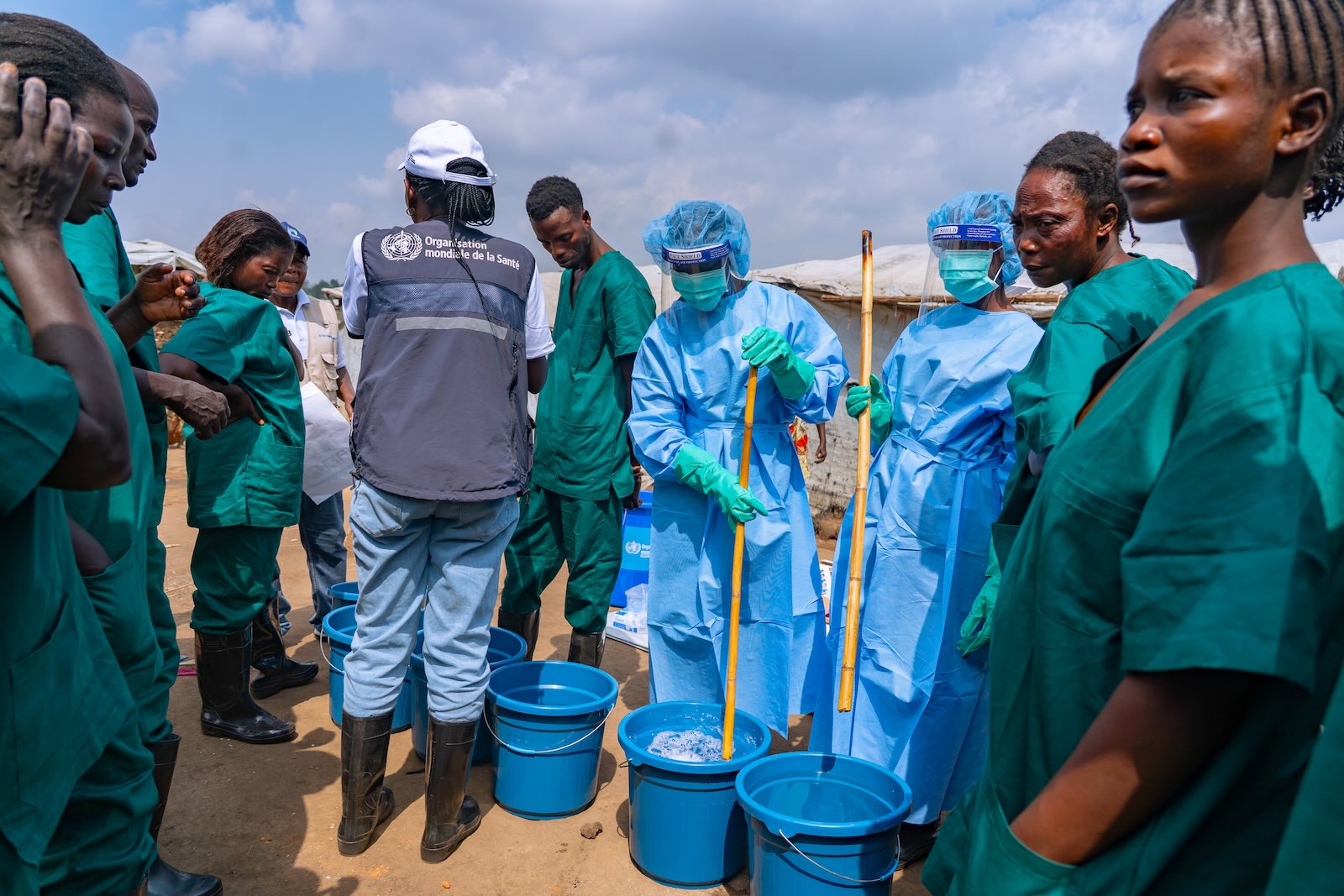
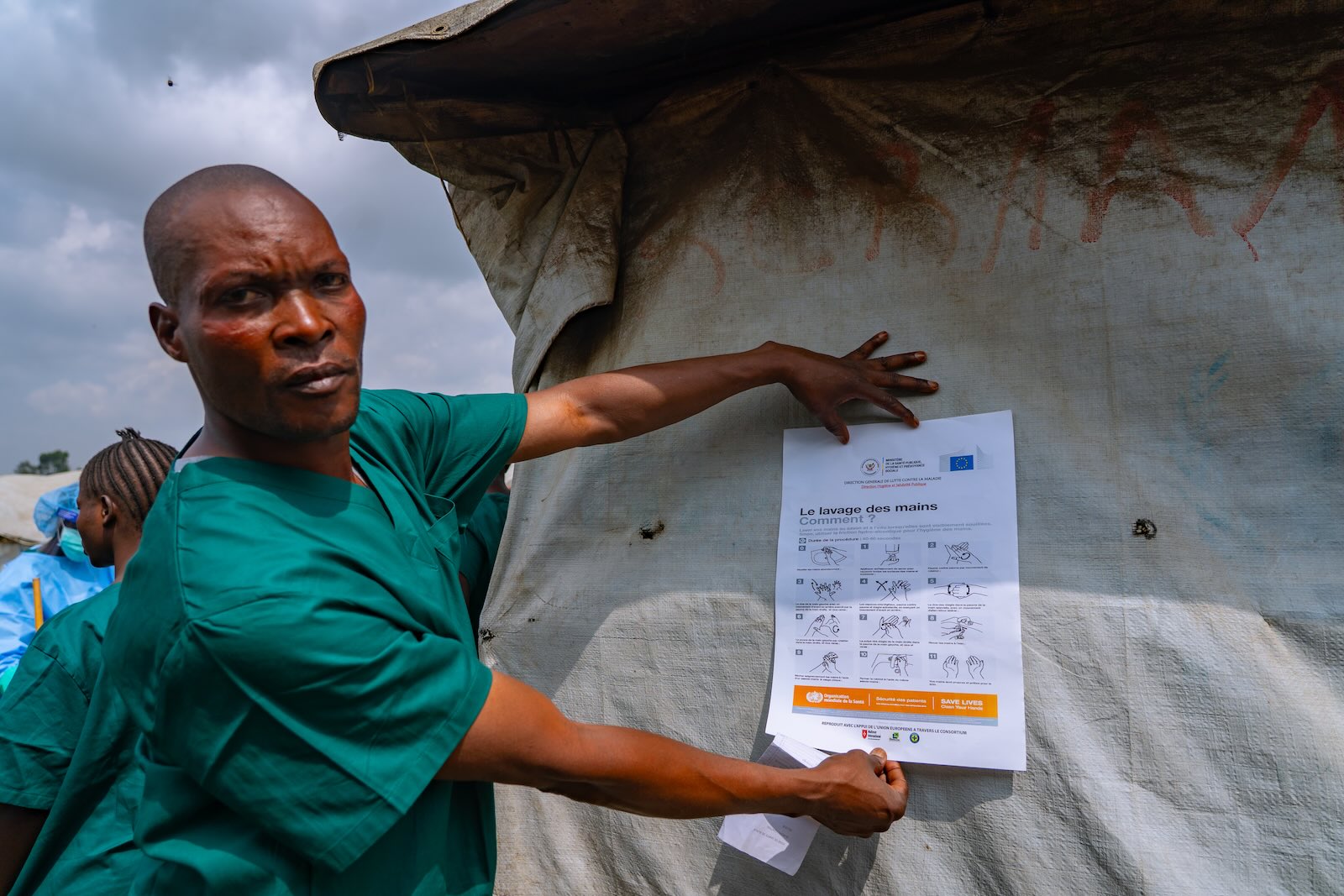
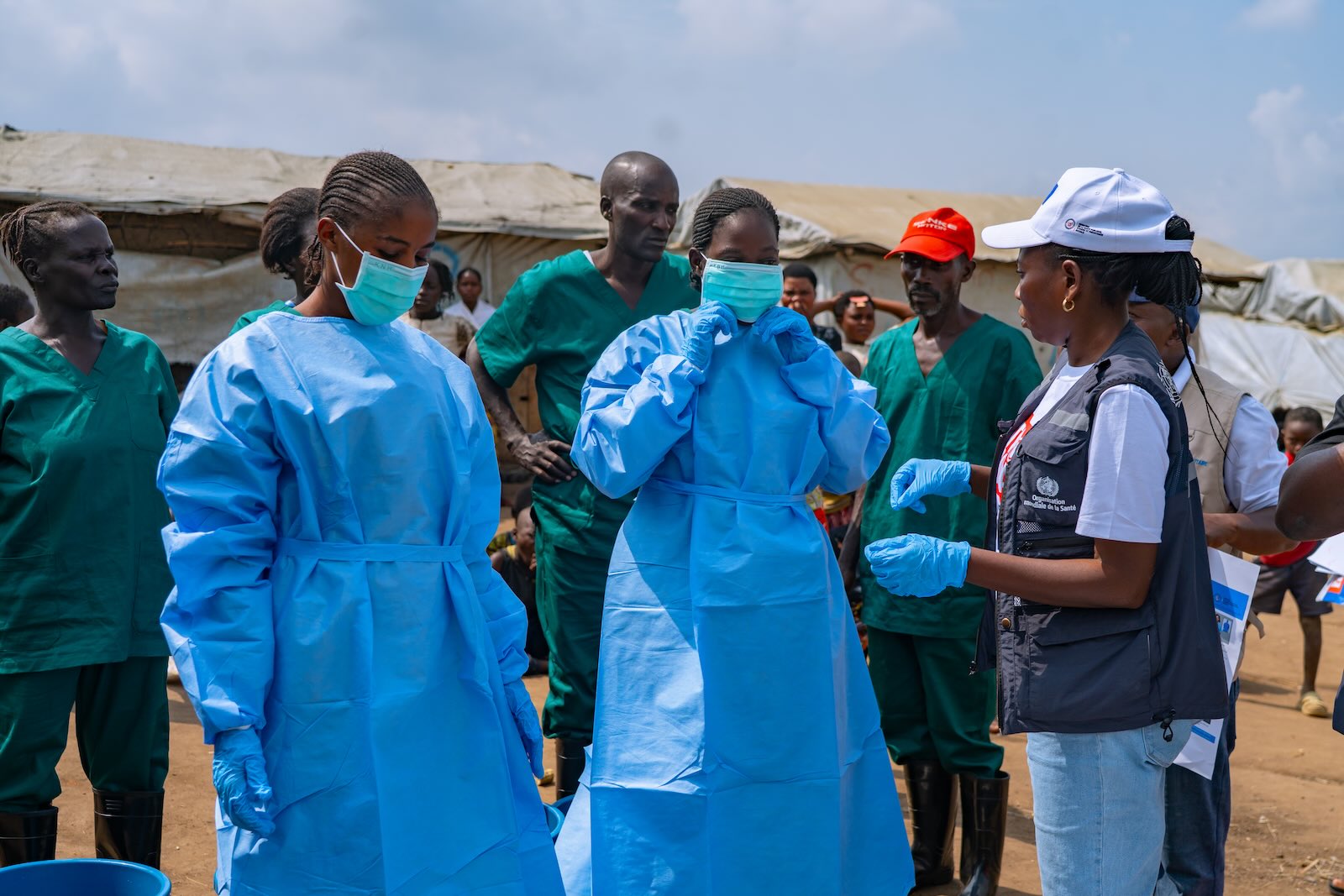
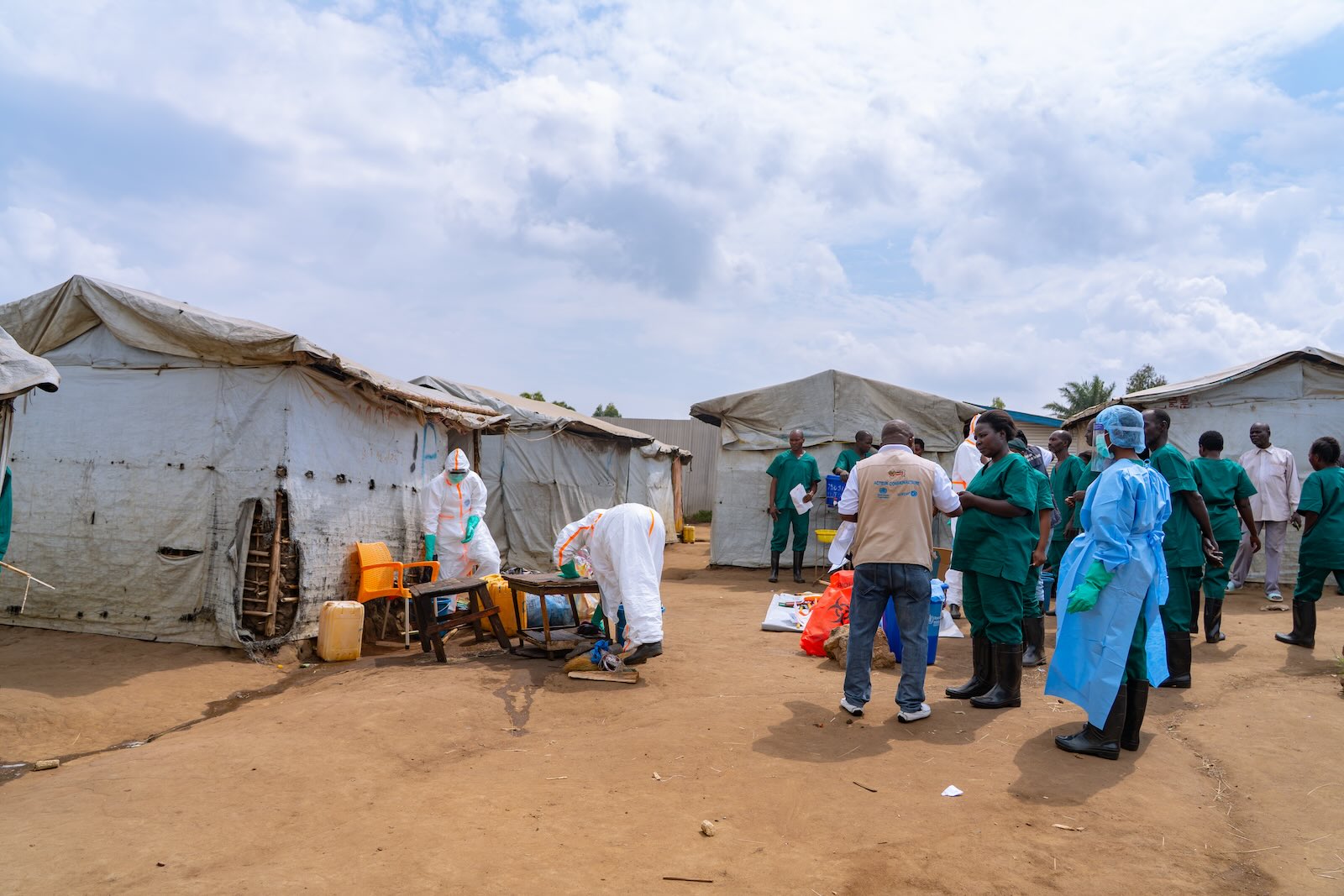
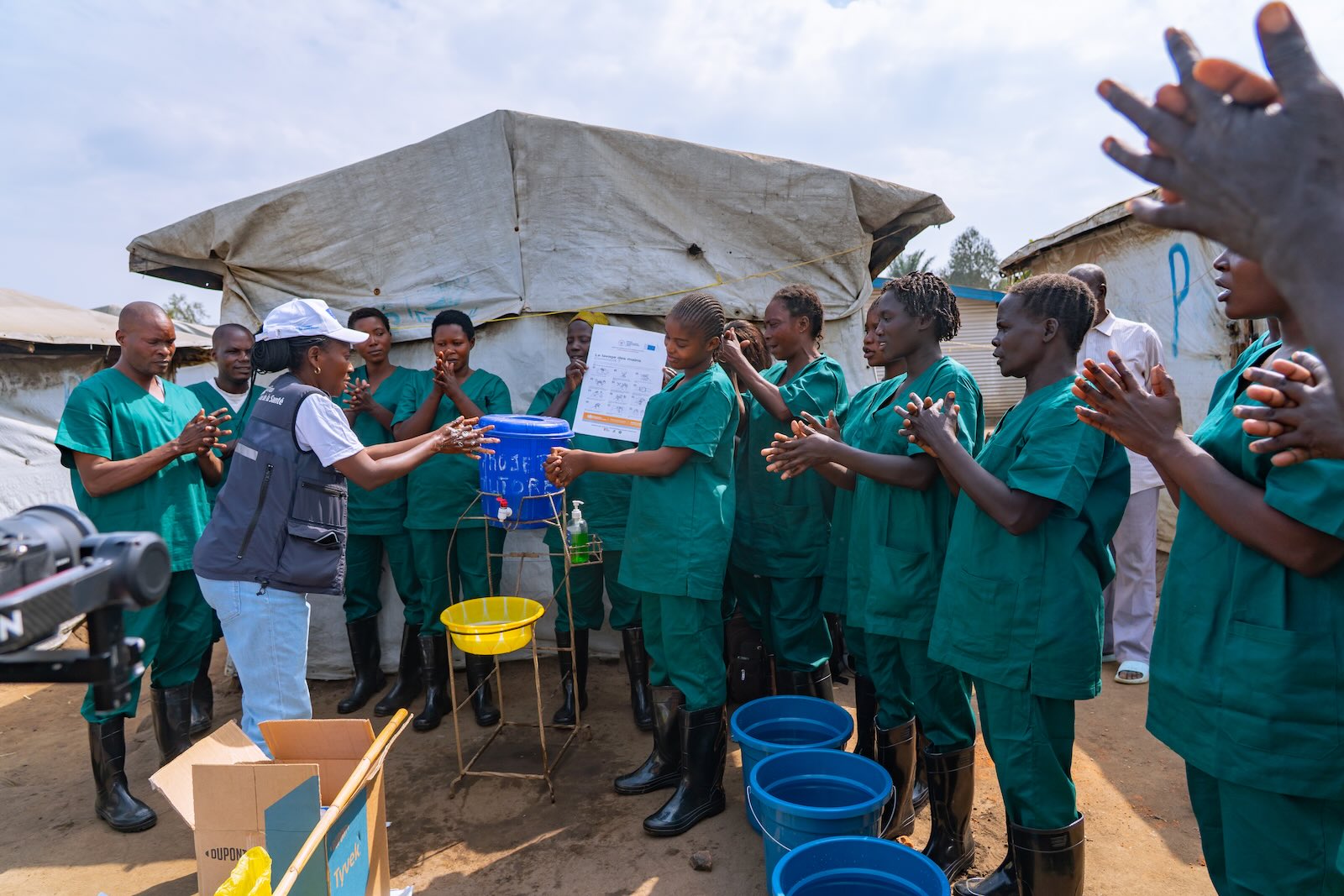
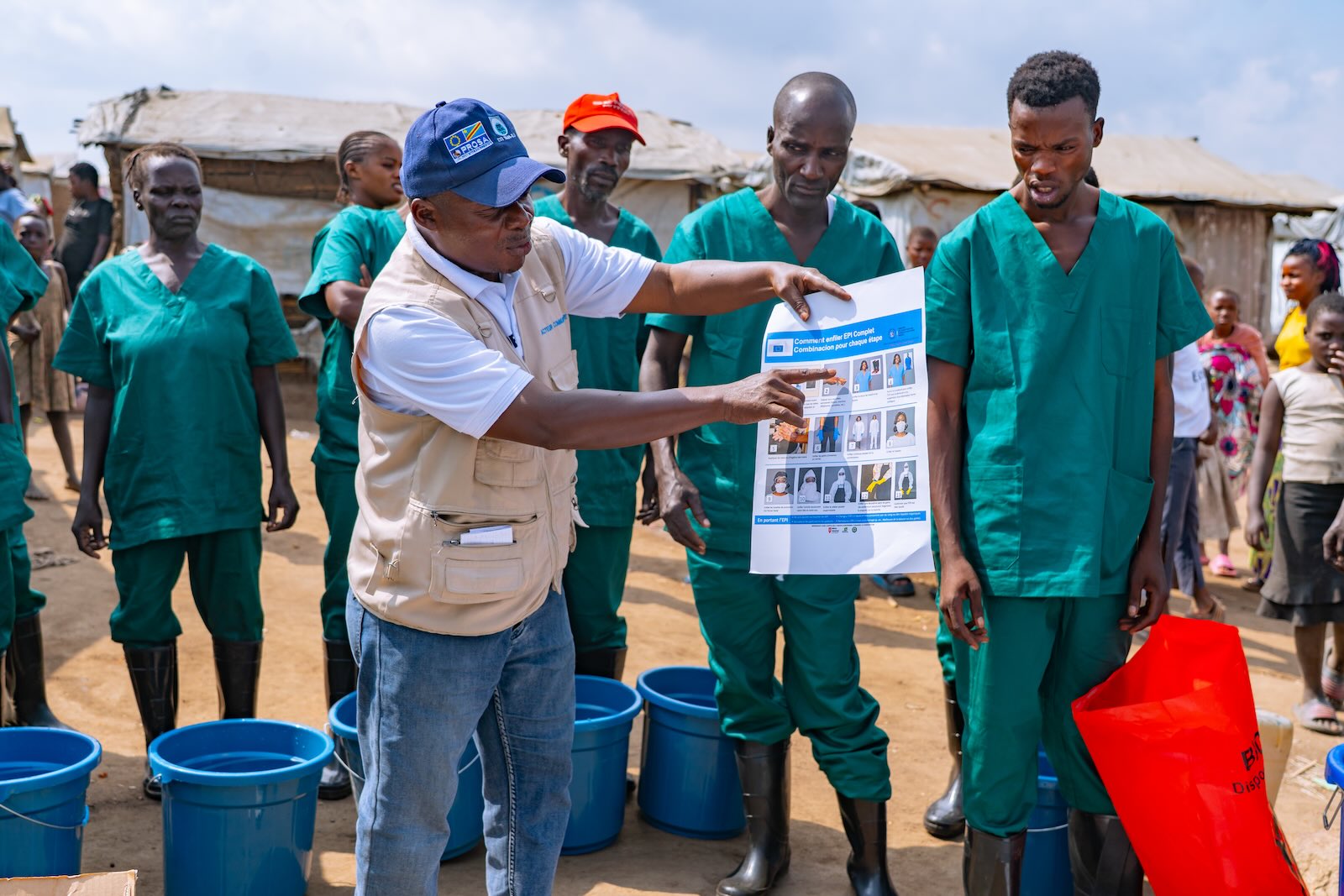
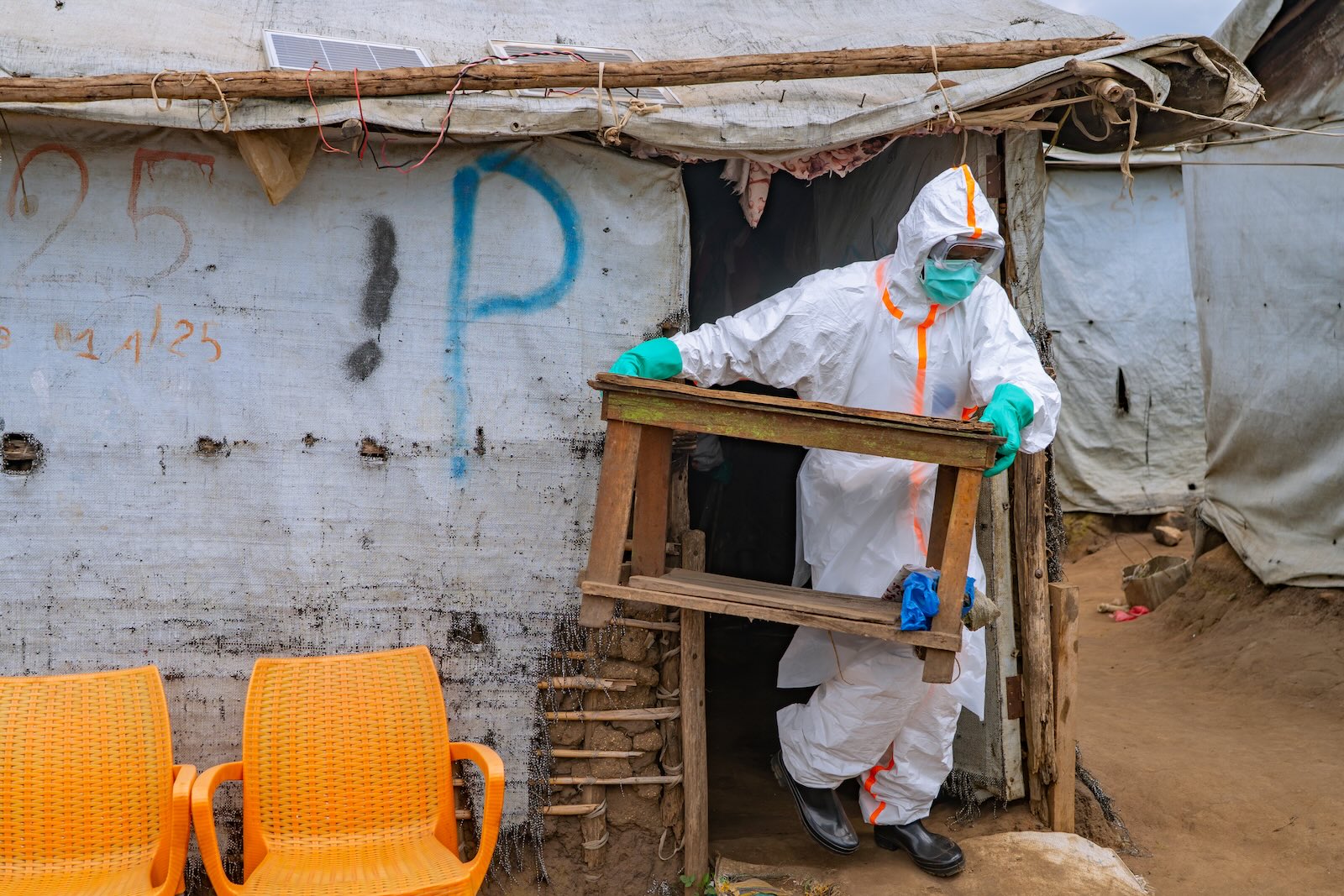
The simulation began with practical demonstrations on the basics of infection prevention and control. Trained community members were guided through proper handwashing techniques, the correct way to put on and remove gloves and personal protective equipment (PPE), and the safe use of soap and water to clean and disinfect surfaces within affected homes. Facilitators emphasized that these simple but essential practices are the first line of defence against Ebola, helping to protect caregivers, family members and neighbours from infection to help stop transmission.

This initiative is supported by WHO with the backing of the Ministry of Public Health, Hygiene and Social Welfare, to strengthen Ebola preparedness and response to an already vulnerable community at risk. “This will go a long way in protecting the community, they will have the tools and skills to help us decontaminate infected homes before we get here,” explains Lazo Kalimini Jean de Dieu, Chairperson of the Infection Prevention and Control Sub-Committee in Bunia. “By doing this, we are also demystifying the response efforts to help reduce transmission.”

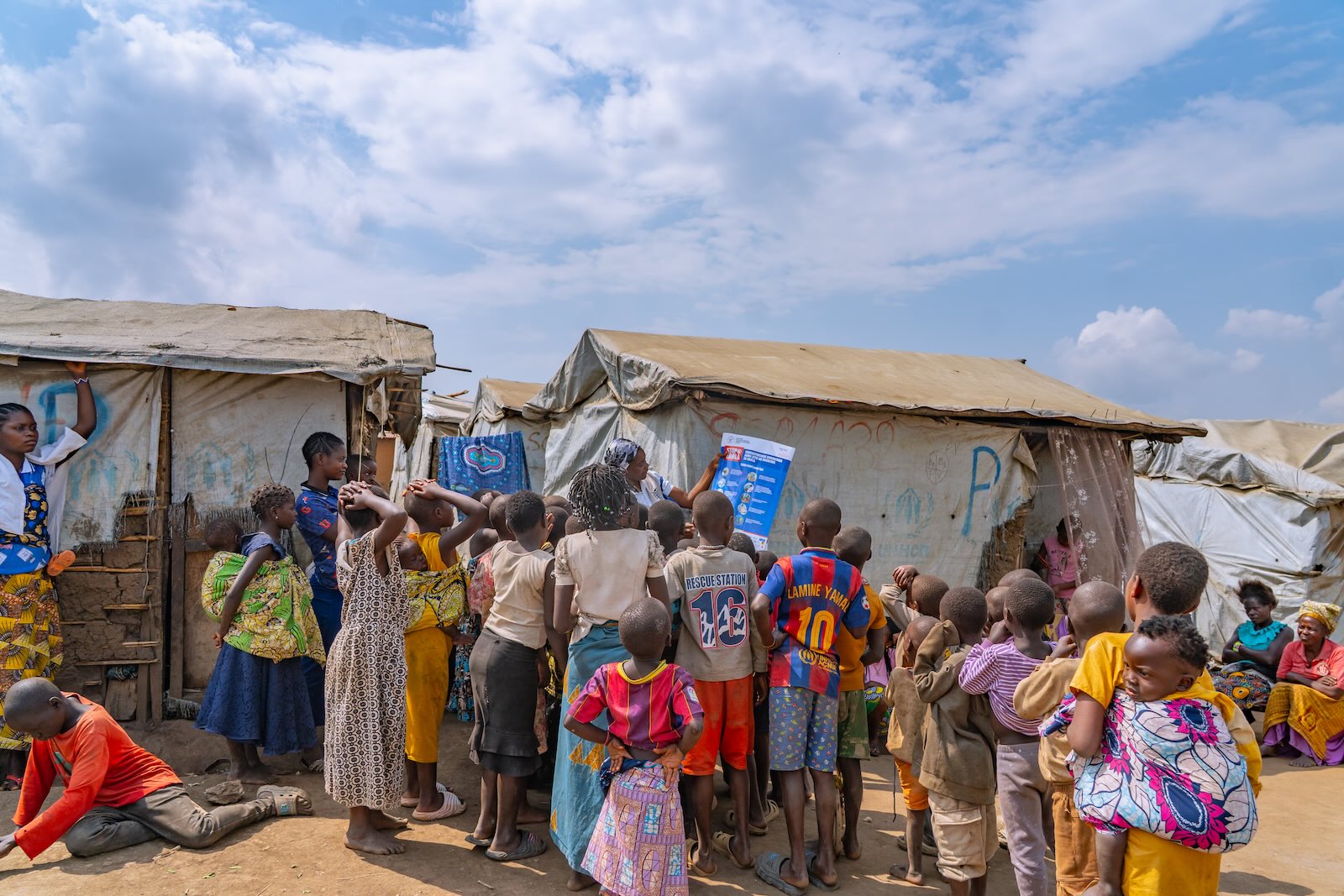
Alongside these efforts, the Risk Communication and Community Engagement (RCCE) team is having community dialogues, household visits and awareness sessions to strengthen the link between health responders and the people they serve, making preparedness efforts more effective and responsive to local needs.

Denja and his family have been living in the camp for the last 5 years and was appointed to help the community with their queries on different issues. During this exercise he helped select 12 community members from different blocks within the camp to benefit from the training and help with the preparedness efforts.

“Now that the training has been completed, the teams will be supervised by the government, with support from WHO, to ensure that the work is carried out to a high standard and meets quality requirements,” said Dr Nadia Bolodjwa, in charge of infection prevention control officer in Bunia.

Conducting the simulation inside a shelter in Kigonze IDP Camp helped ensure that the lessons reflected the realities of life in a displacement setting, where families often live in close quarters and preventing the spread of infectious diseases requires collective action that will safeguard the health and protect the communities from spread of the Ebola virus.