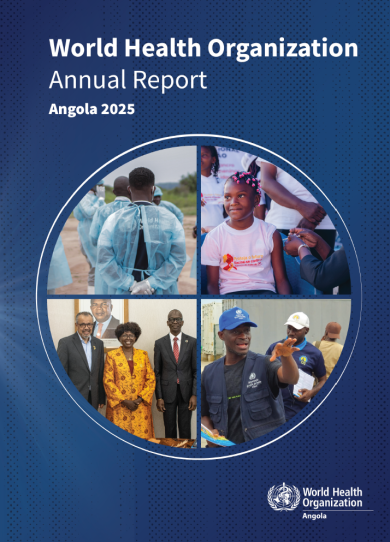
WHO Angola Annual Report 2025
In 2025, Angola faced significant public health challenges, including outbreaks of cholera, poliomyelitis and measles, in a context marked by structural vulnerabilities and high pressure on the health system. At the same time, important progress was recorded, reinforcing the country’s trajectory towards Universal Health Coverage, with the continued technical support of the World Health Organization (WHO).
The response to public health emergencies was one of the pillars of the year. More than three million doses of oral cholera vaccine were administered, contributing to a reduction in the case fatality rate to 2.4%, supported by strong community mobilisation involving more than 1,175 religious and community leaders. In the area of poliomyelitis, 6.8 million children were vaccinated, achieving coverage levels above 95%. In parallel, the operationalisation of the National Public Health Emergency Operations Centre and six regional centres strengthened the capacity for rapid and coordinated response.
In maternal and child health, measurable progress was observed, with a reduction in neonatal mortality from 24 to 16 per 1,000 live births and in maternal mortality from 239 to 170 per 100,000 live births. These results reflect investments in antenatal care, skilled birth attendance, updated clinical protocols and workforce capacity-building, as well as inclusive initiatives such as the introduction of the Maternal and Child Health Record Booklet in braille.
HPV vaccination marked a historic milestone, protecting 1.26 million girls against cervical cancer and positioning Angola as a regional reference in the implementation of the Global Strategy for the Elimination of this disease. In parallel, in the area of neglected tropical diseases, Angola has remained free of human cases of dracunculiasis for almost six years, sustaining progress through active surveillance, access to safe drinking water and community mobilisation.
However, significant challenges persist. Malaria remains the leading cause of morbidity and mortality in Angola, placing constant pressure on the health system, particularly among the most vulnerable populations. Tuberculosis also continues to represent a high burden, requiring greater acceleration of diagnosis, patient-centred care and more effective integration into primary health care. Noncommunicable diseases are also assuming a growing burden, with WHO supporting the updating of clinical guidelines and the development of strategic plans in the areas of mental health, alcohol, tobacco and other drugs, with a focus on prevention and service integration.
At the institutional level, WHO supported the strengthening of the regulation of medicines and health technologies, with a view to achieving regulatory maturity level 3 by 2027, and initiated the update of the National Health Accounts for 2020–2023, reinforcing evidence-based planning. Strategic communication also played a central role, with high-reach digital campaigns and the creation of platforms that strengthened health literacy and public trust.
Despite progress, Angola continues to face structural challenges, including still high maternal and child mortality, gaps in vaccination coverage, particularly among zero-dose children, food insecurity and high exposure to health emergencies. Addressing these challenges requires sustained action, innovation and long-term investment.
Under the theme of World Health Day, “Healthy Beginnings, Hopeful Futures”, WHO reaffirms its commitment to supporting Angola to ensure that all children, women and families have access to quality health care from the start of life, accelerating progress towards Universal Health Coverage and the Sustainable Development Goals.
