Sustained response curbing cholera outbreak in South Sudan
Juba—South Sudan’s sustained cholera outbreak response has reduced new cases and prevented around 94 000 deaths since the confirmation of the outbreak more than two years ago in September 2024.
Working with government departments, World Health Organization (WHO) and partners, the Ministry of Health in South Sudan activated a multisectoral response within 24 hours of outbreak confirmation. The result of which is a drop in the number of new cholera cases from an average of 1000 at the peak of the outbreak in December 2024 to 114 in the last week of September 2025. The number of affected counties has dropped from 55 to 12 in the same reporting period and the outbreak is now restricted to 29 out of 517 payams (administrative divisions).
At the outset, the Public Health Emergency Operations Centre reactivated national rapid response teams. These seven-member teams were deployed to counties to conduct investigations, assess county capacity to manage the outbreak and recommend additional capacity to be filled with surge deployments.
Rapid responders conducted one-week deployments to 45 of the 55 cholera affected counties. In 25 counties that needed additional support, teams were deployed for an average of four weeks. Key response areas include treatment, laboratory, infection prevention control, improving water sanitation and hygiene, as well as risk communications and community engagement.
The country stepped up disease surveillance in cholera-affected areas, including training of all state and county surveillance officers on use of cholera rapid diagnostic tests and provision of thereof. These tests were used for at least 5‒10 acute watery diarrhoea cases detected in the early days of each week. Disease surveillance also includes active search for cases and deaths through additional outreach workers in high-risk communities, for example, among refugee and internally displaced populations.
Treatment has been strengthened through rapid expansion of treatment sites, community training, prepositioned supplies and improved clinical care for severe dehydration—reflected in modest but important reductions in facility-based deaths. In total, health authorities established19 cholera treatment centres and 88 cholera treatment units across the country, expanding access to points of care for mild to severe cases. In addition, previously nonfunctional units, for example, at Nasir County Hospital, were reopened to restore local inpatient capacity.
The Ministry of Health and county health departments, with WHO technical support, trained boma (community) health workers to manage mild cases in remote and hard-to-reach areas and established 102 oral rehydration points across the country, improving early rehydration and referral.
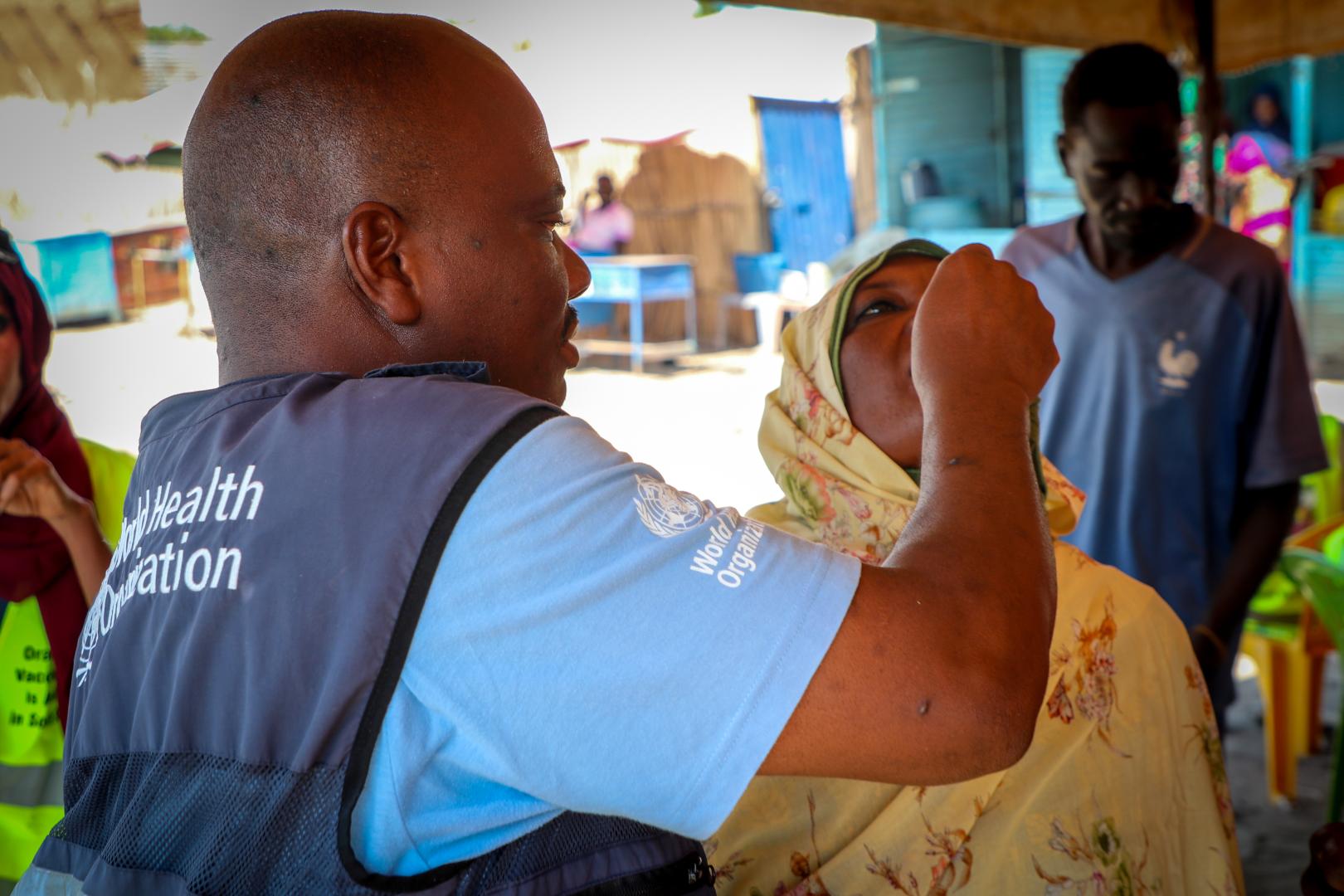
Oral cholera vaccination campaigns have been completed in 46 of 48 targeted counties with a total of 8.6 million vaccines administered (87% coverage of the targeted population). Mop-up campaigns have also been conducted in 11 counties, reaching 234 000 people (98% coverage of the targeted population who may have missed a vaccine in the initial campaign). South Sudan is currently conducting a post-campaign coverage survey to document reasons for missed vaccination to improve future campaigns.
Throughout the outbreak, WHO has supported the Ministry of Health by strengthening and standardizing surveillance practices, laboratory testing protocols and case management guidelines, planning and implementation of the oral cholera vaccination campaigns and multimedia risk communication and community engagement.
WHO has also provided critical input into the establishment and operations of cholera treatment centres and helped coordinate response operations through the Public Health Emergency Operations Centre. The Organization also distributed around 80 metric tonnes of emergency health supplies, which increased the country’s capacity to treat up to 88 000 severe and mild cases.
Dr Kennedy Ganiko, Undersecretary at the Ministry of Health, notes the scale of the collective effort. “Oral cholera vaccination in 46 counties, improved treatment and testing algorithms, strengthened infection prevention and control, water, sanitation and hygiene and expanded surveillance have helped protect communities and save lives,” he says, calling for sustained commitment until transmission is interrupted.
This is largest and longest cholera outbreak since independence in 2011. The outbreak began in Renk, a border town receiving large numbers of returnees and refugees fleeing conflict in neighbouring Sudan, where cholera transmission was already ongoing. Population movements contributed to the rapid spread of the disease.
At the height of transmission, between September 2024 and January 2025, the country reported more than 27 000 cases and 472 deaths across 40 counties. To date, nearly 70 000 additional suspected cases and more than 1100 deaths have been recorded. High-density areas hosting displaced populations have been particularly affected and the scale and duration of the outbreak exerted further pressure on an already fragile health system.
The strains on the health system include multiple disease outbreaks and climate-related emergencies, including floods that affected 63 health facilities and displaced around 230 000 people. This is in a context of a protracted humanitarian crisis, economic crisis exacerbated by a constrained donor environment, weak transport infrastructure and restricted access in some areas.
“South Sudan’s experience highlights the importance of sustained investment in preparedness, early detection and rapid response to infectious disease threats,” says Dr Humphrey Karamagi, WHO Representative in South Sudan. “Continued support to recovery and resilience are the only tools to strengthen health systems for effective detection timely response in future cholera outbreaks and reducing their impact.”
Communication Officer
Mobile: +211 921736375
Email: atema [at] who.int (atema[at]who[dot]int)
Communications and Media Relations Officer
WHO Regional Office for Africa
Email: saida.swaleh [at] who.int (saida[dot]swaleh[at]who[dot]int)