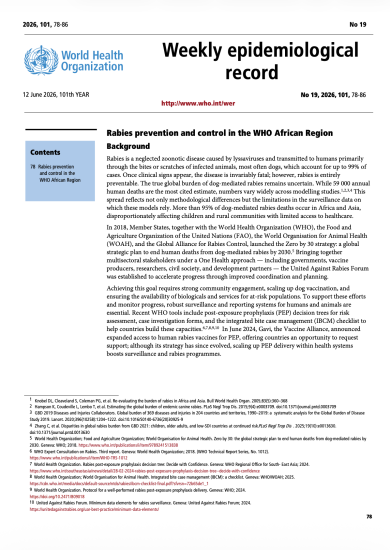
Rabies is a neglected zoonotic disease caused by lyssaviruses and transmitted to humans primarily through the bites or scratches of infected animals, most often dogs, which account for up to 99% of cases. Once clinical signs appear, the disease is invariably fatal; however, rabies is entirely preventable. More than 95% of dog-mediated rabies deaths occur in Africa and Asia, disproportionately affecting children and rural communities with limited access to healthcare.
In 2018, Member States, together with WHO, the Food and Agriculture Organization of the United Nations (FAO), the World Organisation for Animal Health (WOAH), and the Global Alliance for Rabies Control, launched the Zero by 30 strategy: a global strategic plan to end human deaths from dog-mediated rabies by 2030. The United Against Rabies Forum was established to accelerate progress through improved coordination and planning under a One Health approach.
Achieving this goal requires strong community engagement, scaling up dog vaccination, and ensuring the availability of biologicals and services for at-risk populations. Robust surveillance and reporting systems for humans and animals are essential, supported by WHO tools such as post-exposure prophylaxis (PEP) decision trees, case investigation forms, and the integrated bite case management (IBCM) checklist.


