WHO supported "Presidential Health Compact" is launched

Namibia continues to strengthen its emergency preparedness and response

WHO is in the process of supporting the Namibian government strengthen its capacity for assessing and analyzing health risks and to integrate the results in its emergency preparedness and response plans. A workshop held in May 2019 to map the country’s vulnerability to all hazards and how these risks will be managed from a multi-sectoral perspective is part of a process which started in 2016 with a Joint External Evaluation (JEE) of the International Health regulations in response to an invitation by the Namibian government.
WHO takes health care closer to internally displaced and conflict-affected population in South Sudan’s Tambura State

“I was called to help a pregnant woman in the IDP camp”, says Dr Tony Tombe, a doctor with the WHO mobile medical team. “When I reached the camp, a woman was heavily pregnant and visibly in pain and labour. There was no other skilled person around to attend to her delivery. I rushed her to the nearby Zamoi primary health care unit where we proceeded to safely deliver the baby girl.
Zamoi primary health care unit had been nonfunctional for a long time, upon our arrival with medicines we were able to re-open the facility where she received life-saving care.
Regional consultation on primary care strategies for non-communicable diseases

Strategies to reverse tobacco usage in Africa in the spotlight

PEN-Plus Meeting in Kigali – The management and treatment of non-communicable diseases at primary levels strengthened

The management and treatment of non-communicable diseases at primary levels will be in the spotlight from 29 July 2019 to 1 August 2019 when the WHO Regional Office for Africa (WHO/AFRO) and the Ministry of Health Rwanda will be holding a Regional Consultation in Kigali.
Ethiopia joins global efforts to end cholera by 2030

23 July 2019: Addis Ababa – The responsibility to eliminate cholera in Ethiopia – a country where almost a third of the population has sub-standard water supplies – lies with stakeholders at all levels, from ministries to partners and non-governmental organizations.
This was the message to delegates at a recent high level briefing with sectoral ministries, regional health bureaus, partners and donors on a multi-sectoral approach to eliminating cholera from Ethiopia by 2030.

WHO and the Africa Centres for Disease Control and Prevention call on countries in the region to work together on the Ebola response

Cabo Verde sets the bar for ending mother-to-child transmission of viral hepatitis
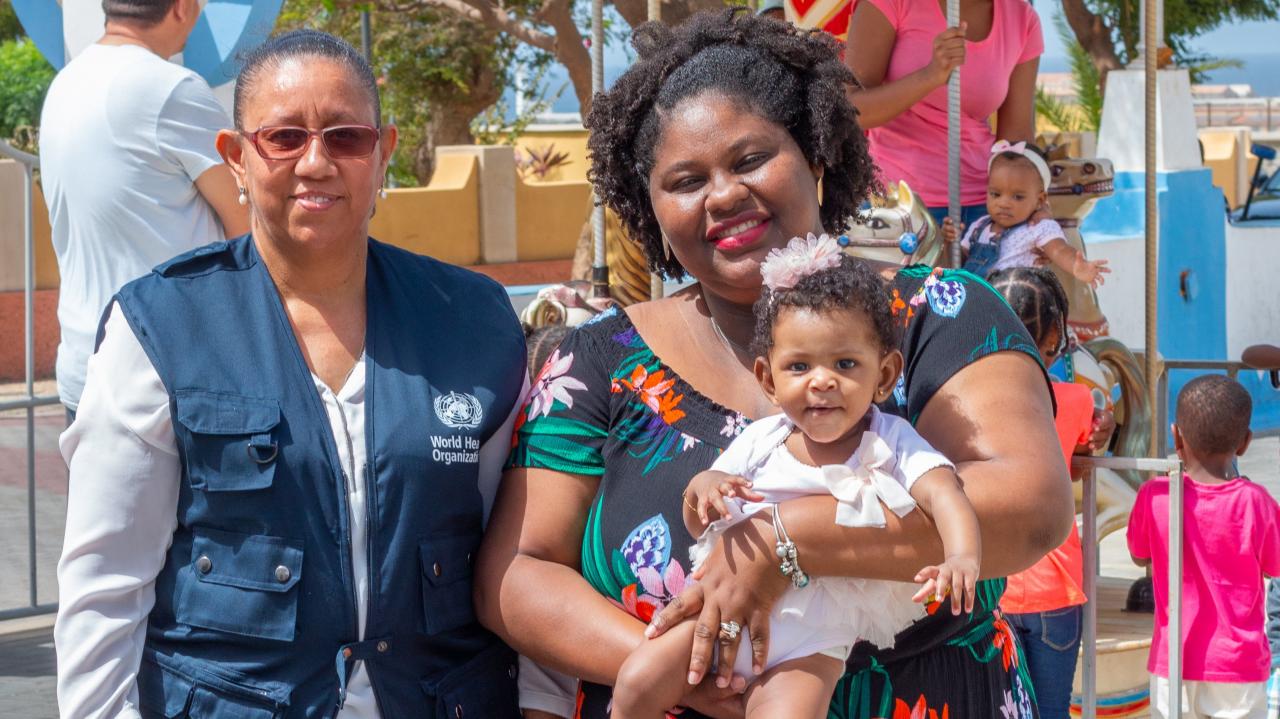
“Vaccinating is protecting who you love the most. Everyone should do it,” implores Orisa Brito, a mother of three children living in Praia, the capital of Cabo Verde. Her youngest child, Lila, is a healthy 5-month-old who received a dose of hepatitis B vaccine within hours of her birth and is due for another dose in a month.