
Ethiopia stakeholders chart path forward for stronger hand hygiene systems

As the world marks Global Handwashing Day, stakeholders in Ethiopia are renewing efforts to strengthen hand hygiene systems as a cornerstone of public health, disease prevention, and emergency preparedness. Government institutions, development partners, civil society organizations, and media representatives gathered in Addis Ababa to review findings from Ethiopia's Hand Hygiene for All (HH4A) Enabling Environment Assessment and identify actions to advance hand hygiene systems across community settings.
Burkina Faso : renforcer les espaces publics sans fumée

Ouagadougou – Missa*, 58 ans, est gérant d’un bar communément appelé « maquis » à Gaoua dans le Sud-ouest du Burkina Faso. Il se percevait comme étant un grand fumeur. « Pendant plus de vingt ans, le tabac a fait partie de mon quotidien, au point que je pouvais fumer deux paquets de cigarettes par jour », relate Missa, le visage amer.
Twenty contacts of Kenya’s first Ebola case released from quarantine
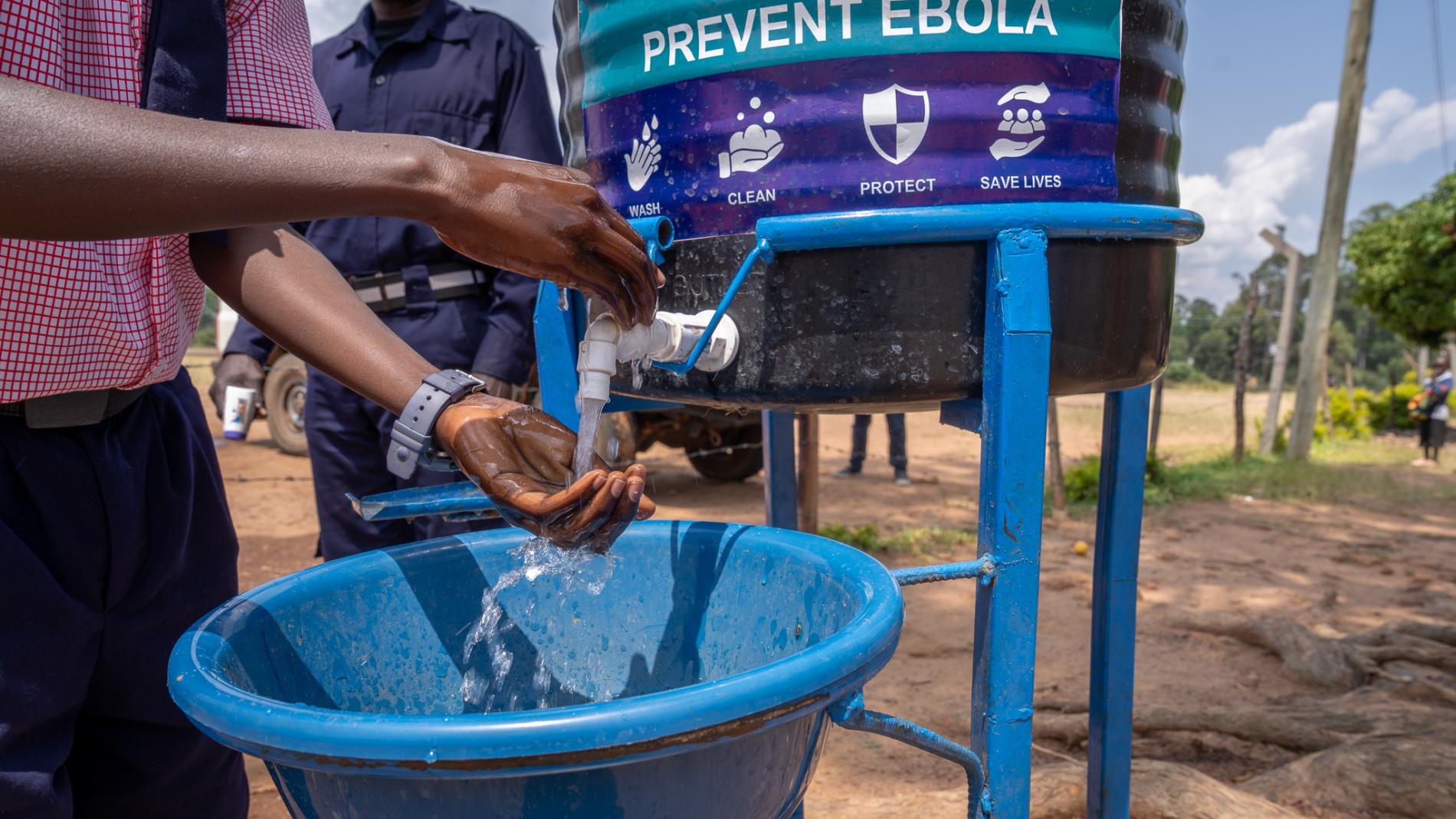
Nairobi—Today 20 contacts associated with Kenya’s first imported case of Bundibugyo virus disease were released from quarantine and reunited with their families after completing the mandatory 21-day monitoring period.
A total of 98 contacts now remain in quarantine. The contacts discharged today remained asymptomatic during quarantine. They underwent standard protocols, including a final health assessment, counselling on post-discharge precautions and follow-up where required before being released.
South Sudan conducts a full-scale simulation exercise to test Bundibugyo virus disease (BVD) readiness

The Ministry of Health of South Sudan, together with the National Public Health Institute (NPHI), and with support from the World Health Organization (WHO), the African Centre for Disease Control and Prevention (Africa CDC), UNICEF, and other partners, conducted a five-day full-scale simulation exercise (SIMEX) from 19 to 24 October in Juba, Yei and Yambio to test the country’s readiness for Bundibugyo virus disease (BVD).
One day, one focus, Ending polio for good” Together let us build polio free future.
Angola launches integrated vaccination campaign to protect more than 10 million children

Starting today, more than 10 million children across the country will begin receiving vaccinations against polio, measles, rubella, and yellow fever, as part of one of the largest public health operations ever carried out in Angola.
WHO Ethiopia and Plan International Ethiopia champion girls’ leadership through Girls Takeover 2026 campaign

Addis Ababa, Ethiopia, 20 October 2026 – The World Health Organization (WHO) Ethiopia Country Office, in partnership with Plan International Ethiopia, hosted Ms. Timrhabiruk Mulugeta as the symbolic WHO Representative for a Day as part of the global Girls Takeover 2026 (#ChangeHerForecast) campaign. The initiative marked the International Day of the Girl and supported this year’s theme, “End Child Marriage and Invest in Girls’ Rights.”
Improving dietary diversity for better health among children in Africa
Abidjan—Around 59 million children in Africa under the age of five lack the dietary diversity necessary for healthy growth and development, making them up to 50% more likely to suffer from wasting, a life-threatening form of malnutrition.
Many of these children consume foods from no more than two of the eight recommended food groups each day, with diets often limited to breastmilk and a starchy staple such as maize, rice or cassava.
WHO's emergency response in Northern Ethiopia

The World Health Organization (WHO), in collaboration with national and regional health authorities and health partners, is scaling up emergency health response operations across Afar, Amhara and Tigray to address growing humanitarian and health needs resulting from ongoing hostilities.
WHO and Ethiopian Artificial Intelligence Institute Explore Strategic Collaboration to Advance AI for Health

Addis Ababa, Ethiopia – The World Health Organization (WHO) Country Office in Ethiopia and the Ethiopian Artificial Intelligence Institute (EAII) are exploring a strategic partnership to harness artificial intelligence (AI) and emerging technologies to transform health systems, improve health outcomes, strengthen emergency preparedness, and advance health security in Ethiopia and across Africa.