WHO-AfDB cooperation: Dr Moeti and Dr Adesina agree on a number of financing priorities for health in Africa
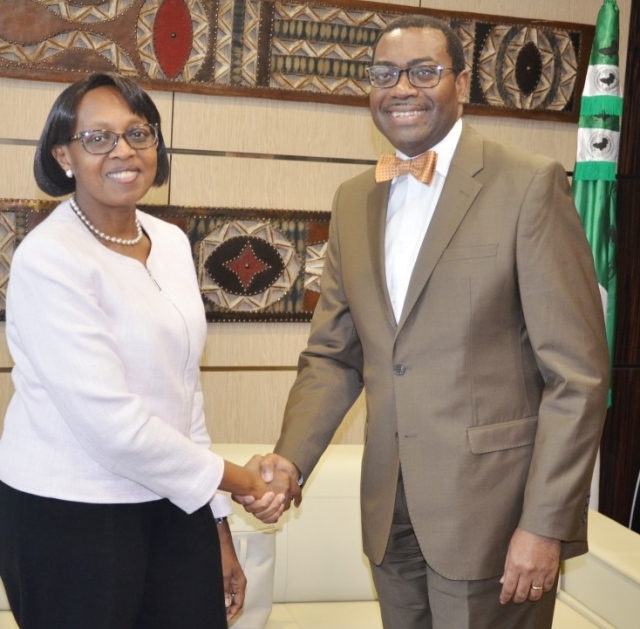
Abidjan (Côte d’Ivoire), 9 November 2016 – The WHO Regional Director for Africa, Dr Matshidiso Moeti and the President of the African Development Bank, Dr Akimwumi Adesina, have agreed on priority health programmes for potential future cooperation between the Bank and WHO.
WHO and partners support measles vaccination in Borno State, Nigeria

WHO and health partners helped vaccinate more than 10 000 children against measles in 2 days in internally displaced persons (IDP) camps in the conflict-affected Borno State.
Since 6 June 2016, health clinics in IDP camps in Borno State have seen increasing numbers of measles cases. From early September until late October, 744 suspected cases of measles, and 2 deaths, were reported from WHO-established EWARS reporting sites. The majority of these children had never been vaccinated against measles and most of them were aged less than 5 years.
Nigeria Situation Report, 31 October to 6 November 2016

WHO and Borno State Ministry of Health have trained 89 participants including data collectors and rolled out data collection for Health Resources and Services Availability Mapping System (HeRAMS) in Borno targeting 360 health facilities.
As part of its efforts to control malaria in newly liberated areas, WHO has supported Borno State Ministry of Health to train 80 health workers including clinicians on the use of Rapid Diagnostic Kits (RDTs) and case management for malaria.
Nigeria launches the 2015 National Malaria Indicator Survey

Abuja, 08 November 2016 - The Honourable Minister of Health, Professor Isaac Adewole launched the National Malaria Indicator Survey (MIS) 2015 report in Abuja on 7 November, 2016. The survey was conducted by National Malaria Elimination Programme (NMEP) in collaboration with National Population Council and National Bureau of Statistics, with technical support from ICF international, US Presidents Malaria Initiative, WHO and UKAid.
More hard-to-reach local government areas of Borno State benefit from integrated health service

Maiduguri, 08 November, 2016 - The World Health Organization (WHO) and Borno state Ministry of Health are scaling-up Hard-to-Reach programme (HTR) with training of 36 health workers as part of teams to serve people in prioritized difficult to access areas in six local government areas (LGAs) in Borno State.
WHO hosts stakeholder meeting to finalize the Integrated Vector Management strategy

November 2016 - The Ministry of Health National Malaria Control Program (NMCP) convened a consultative meeting, at the World Health Organization (WHO) Country Office in Uganda, to update stakeholders on the process of developing an Integrated Vector Management (IVM) strategy for Uganda and gather their inputs into the draft strategy. During the meeting, NMCP stressed the need for an IVM strategy for Uganda as the country moves towards the 2030 elimination target.
Dr Moeti, WHO Regional Director for Africa, advocates building resilient health systems, increasing investments for health and mobilizing domestic resources in African countries

Abidjan (Côte d’Ivoire), 7 November 2016 – At the opening of the Ministerial Dialogue that brought together African ministers of health and finance, hosted by the African Development Bank at its headquarters in Abidjan on the theme: “From Ebola to Zika; how prepared are we and what needs to be done,” the WHO Regional Director for Africa, Dr Matshidiso Moeti, delivered three key messages.
Polio outbreak response assessment and Lake Chad Coordination review meeting underway in Abuja

Abuja, 04 November, 2016- Experts and partners are in Abuja to access the response by countries in the Lake Chad Basin to the wild polio virus outbreak in north east Nigeria. Since August 2016, Nigeria has recorded four wild poliovirus (WPV) cases in Gwoza, Jere and Monguno local government areas (LGAs) of Borno state, Nigeria.
African leaders recognize importance of preventing and managing health emergencies on inaugural One Health Day
3 November 2016, Brazzaville – Today, on the inaugural One Health Day, the World Health Organization (WHO) is calling attention to the importance of using the One Health approach in order to more successfully prevent and manage public health emergencies and threats. One Health is an approach to designing health systems and services in ways that account for the link between human, animal and environmental health.
Mano River Union Countries Committed to Eradicate Neglected Tropical Diseases

Monrovia, 28 October 2016 - The Mano River Union (MRU) Countries - Cote D’Ivoire, Guinea, Liberia and Sierra Leone, have made a firm commitment to eradicate Neglected Tropical Diseases (NTDs) in the sub-region. This commitment was made at the 9th Annual Conference of the Union organized by the Liberia Ministry of Health and MRU Secretariat with support from the World Health Organization (WHO) and partners.