WHO Recognizes Staff for Excellence in Ebola Response
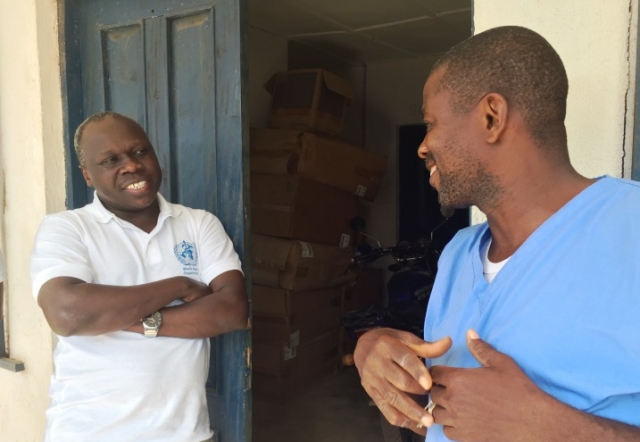 The World Health Organization Regional Office for African (WHO AFRO) wishes to warmly congratulate Dr Zabulon Yoti who is the Afro recipient of the inaugural global WHO Rewards System launched in December 2015 by WHO Director-General, Dr Margaret Chan, to celebrate excellence amongst staff.
Ethiopia - Response for Acute Watery Diarrhea outbreak in Moyale town

Moyale town and surrounding kebeles (a kebele is the smallest unit of local government and can best be regarded as a municipality, a neighbourhood, a localized and delimited group of people or ward) have been affected with Acute Watery Diarrhea (AWD) since 7 November, 2015. The Town is the capital of both Moyale-Oromia and Moyale-Somali Woredas (or districts) and they share a border with Kenya. The town has very high population traffic from different regions, without any restriction to movement.
WHO Provides Emergency Case Management Supply to SNNPR
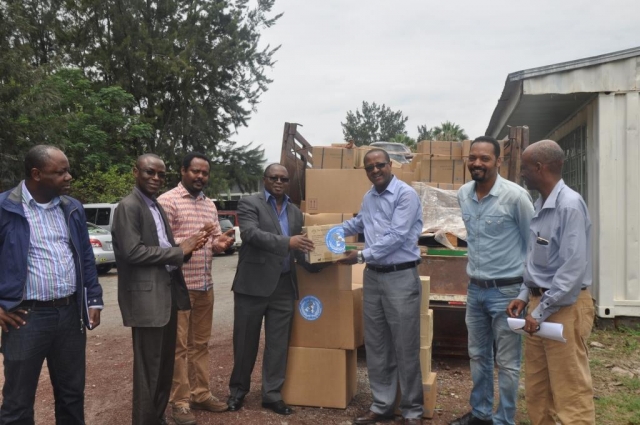
04 APRIL 2016, HAWASSA | The Southern Nations Nationalities and Peoples (SNNPR) regional Health Bureau in Ethiopia continues to receive technical as well as logistics support from the World Health Organization (WHO). Recently, in its continued support to strengthen the region’s effort in the prevention and control of Acute Watery Diarrhea (AWD), the WHO provided 1 DDK Basic Module + Support module + ORS module + Infusions Module worth USD 10,000.00
Zimbabweans urged to shun fast foods to prevent diabetes
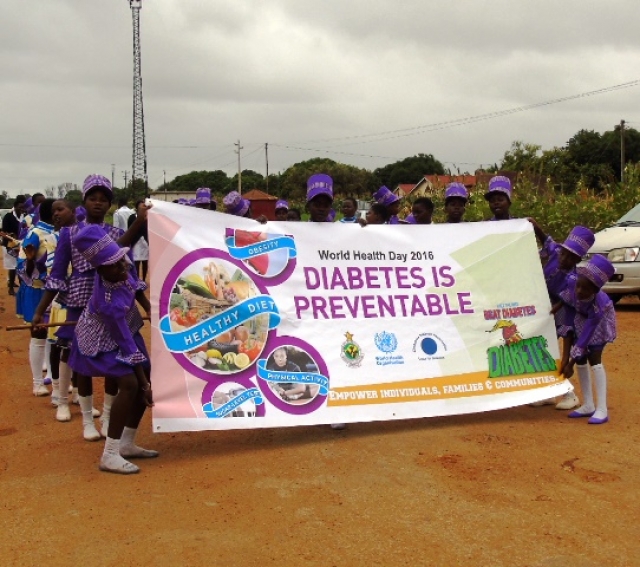
Chegutu, 7 April 2016 - The call was made during the commemoration of World Health Day which was held at Pfupajena Stadium in Chegutu, Mashonaland West Province. Zimbabwe today joined the rest of the world in commemorating World Health Day under the theme Diabetes is preventable: Empower individuals, families and communities.
Seychelles commemorates World Health day 2016

Seychelles joined the rest of the world in commemorating World Health Day under the theme “Beat Diabetes” in a series of activities throughout the week. The activities were organised by the Ministry of Health, in collaboration with the World Health Organisation and other key partners including various other ministries and agencies.
Ethiopia - Scabies outbreak response in Amhara regional state

Belaynesh Yimer is a 14-year-old girl and seventh grader, in Tenta kebele (district) of Enebssie Sarmidir Woreda of Amhara state. She wants to be a doctor and heal patients. One day, she could not stop scratching herself and her body was aching. She could not sleep, study, write and eat properly. She could not hold a pen due to the sores on her hand. Consequently, she missed several days of school.
WHO and partners protect more than 1 million people from cholera
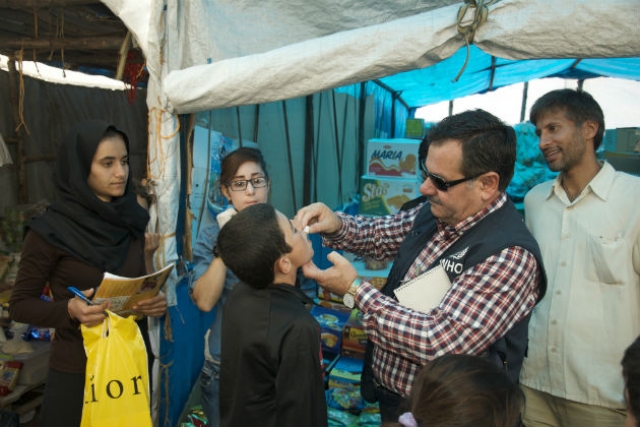 In 2015, more than 1 million people in 7 high-risk countries received the oral cholera vaccine, thanks to campaigns run by WHO and partners. This extraordinary measure was taken to contain several cholera outbreaks from spreading further.
WHO and the MoH to develop new approaches to control Human African Trypanosomiasis (HAT)
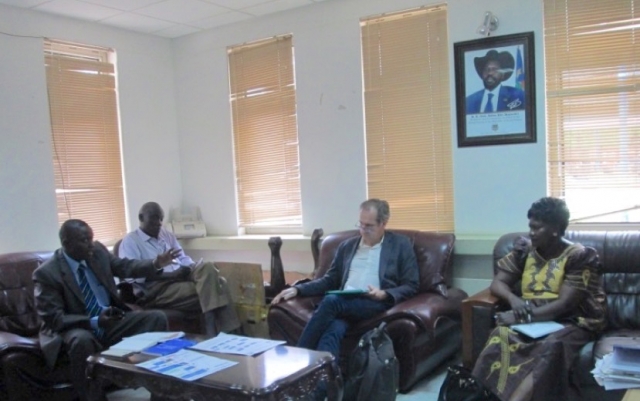
Juba, 11 April 2016 - In an effort to accelerate the elimination of HAT as a public health problem, the Ministry of Health and WHO committed to reinforce and coordinate actions towards harmonizing control strategies, elimination, and sustained surveillance process of HAT.
Human African Trypanosomiasis (HAT), also known as sleeping sickness, is a parasitic disease that is fatal if left untreated. The disease is transmitted by the tsetse fly and is endemic to Sub Saharan Africa, where it mainly affects impoverished rural communities.
Mainstreaming mental health in Ethiopia
 Hanna comes from Mekelle, in theTigray region of Ethiopia. At one point in her life she suffered a traumatic experience that led to depression: “I have always been happy and healthy in my life. Until something terrible happened to me: my only child died. After that dramatic episode, my life hasn’t been the same. I kept thinking about him, and couldn’t sleep at night.
To X-ray or not to X-ray?
 When Dr Michael Kawooya, a radiologist at Mengo Hospital in Kampala, Uganda, performs an ultrasonography on pregnant patients he’s often asked, “Doctor, is this dangerous?”
His answer is always “No”.