Despite gains in access, 1 in 5 African children go without lifesaving vaccines
 Ahead of first-ever Ministerial Conference on Immunization in Africa, new report highlights progress and challenges toward providing universal access to immunization
World Health Organization and African Union call on the continent to unite to make vaccines a priority for Africa’s future
Relief for families impacted by Ebola flare-up

Sierra Leone is once again counting down the days until the latest flare-up of Ebola can be declared over. As part of the inter-agency response to the flare-up, dozens of people who were in contact with two individuals who had tested positive for Ebola were isolated and placed under medical observation. With the monitoring period now over, they are breathing a sigh of relief as their lives get back to normal.
WHO Hands-over AfDP ebola virus equipment to Federal Ministry of Health

Abuja, 19 February, 2016 - The World Health Organization (WHO) has handed-over ambulances and other Ebola Virus Disease (EVD) equipment and supplies procured by funds from the Africa Development Bank (AfDP), to the Federal Ministry of Health for onward distribution to states, health facilities and relevant agencies.
International Comparison of SA Private Hospital Price Levels: WHO and OECD present to Competition Commission
Pretoria, 17 February 2016 - The WHO Country Office in South Africa and the Organisation for Economic Co-operation and Development (OECD) are making oral submissions to the Competition Commission's Market Inquiry into Private Healthcare on 17 February 2016 in Pretoria.
WHO and the Ministry of Health conducted a consultative meeting to strengthen community health systems and the 2016/2017 work plan
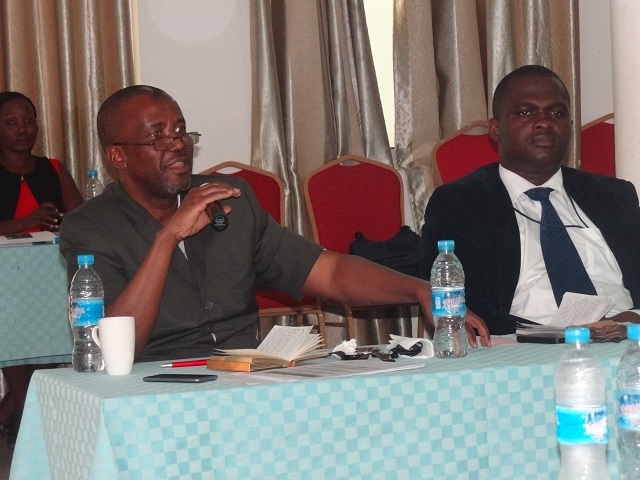
Juba, 17 February 2016 - The Ministry of Health, and the WHO Country Office, concluded a one-day Consultative Meeting on the Boma Health Initiative (BHI), a strategy adopted by the MoH to strengthen community health systems and the 2016/2017 work plan.
The purpose of the meetings was to generate a common understanding of the WHO approved work plans for 2016/17 biennium, to explain the main deliverables of the WHO work plans for biennium and to agree on WHO strategy and plan of action for implementation of the BHI.
Swaziland Ministry of Health learns best practices from Ethiopia
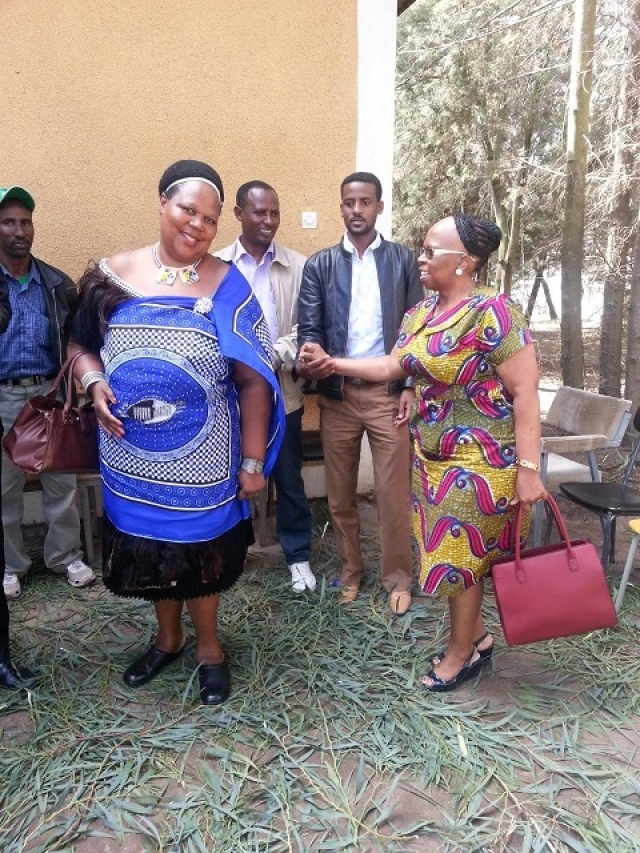
Mbabane, 16 February 2016 - While endeavouring to achieve Universal Health Coverage, which is the goal of the newly formulated National Health Strategic Plan 2014-2018, the Ministry of Health has visited Ethiopia to learn about their best health practices.
WHO deploys laboratory experts to establish the sero-type of bacterial meningitis causing the outbreak in Ghana

Accra, 16 February 2016 – WHO has deployed a team of four members to work with the Ministry of Health in Ghana and Ghana Health Service to confirm through serotyping the bacterial type of meningitis causing the outbreak in the country. This follows reports of meningitis outbreak in a number of districts in Ghana with streptococcus pneumoniae being the bacteria identified in many cases.
Audio and video productions to promote the WHO work in South Sudan, and raise awareness on health issues
Radio is an important tool for the rapid diffusion of important messages on health. Regular live radio talk programmes have been successfully used in South Sudan.
WHO Uganda holds staff retreat

Kampala, 15th February 2016:- “After this retreat I envision a Country Office that knows what is expected of us; we should be among the leading implementers of the Transformation Agenda by implementing the Key Performance Indicators to change the image of Africa,” said Dr. Wondimagegnehu Alemu, the World Health Organization Representative in Uganda Country at the 3-day WHO Uganda 2016 staff retreat held at Munyonyo Speke Resort Hotel in Kampala.
Liberia receives support to strengthen disease surveillance

Monrovia, Liberia, 15th February 2016 - Liberia continues to register progress in her efforts to respond to the health status of the Liberian population through building a resilient health system. A robust Health Emergency Risk Management System has been developed through building public health capacity for prevention, preparedness, alert and response for disease outbreaks and other threats.