
WHO/Uganda Staff
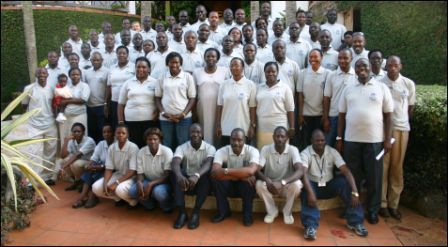
30th January 2009. WHO/Uganda Staff in a group Photo during their annual retreat held in Jinja Nile Resort from 21st to 23rd January, 2009
124th WHO Executive Board session
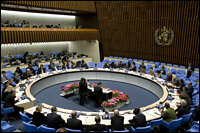
26 January 2009, Brazzaville -- The WHO Executive Board's 124th session is taking place in Geneva from 19 to 27 January 2009.
Dr Luis Gomes Sambo WHO Regional Director for Africa is leading an AFRO delegation to this year's session.
Among the issues on the agenda are:
Death Announcement - Dr LEE Jong-wook, Director-General of the World Health Organization, has died.
Harare,22 May 2006 - The World Health Organization Country Representative Dr.Evarist Njelesani and Staff wish to announce, with deep shock and sorrow, the death of Dr LEE Jong-wook, Director-General of the World Health Organization.
Dr Lee had been in hospital since Saturday afternoon, where he underwent surgery to remove a blood clot on his brain (a subdural haematoma). He remained in intensive care until 07.43 this morning, when he was pronounced dead.
2006 - Annual Malaria Conference East and Southern Africa - Accelerating Malaria Prevention and Trea
Annual inter country malaria review and planning conferences have shown to be effective in sharing best practices and peer review mechanisms among countries. The World Health Organization Inter Country Support Team on Malaria for East and Southern Africa will be organizing such a meeting from the 14th to the 18th of August 2006. The meeting will take place in Harare, Zimbabwe.
World Blood Donor Day 2008 Commemorated at Zimuto Secondary School
Masvingo Province, 13 June 2008 -- In 2005, the World Health Assembly adopted a resolution establishing an annual World Blood Donor Day, to be celebrated on 14 June each year. The day which is meant to recognise, thank and honour those people who donate their blood voluntarily to save human lives was celebrated at Zimuto Secondary School in Masvingo Province. The theme, of Blood Donor Day this year is "Giving Blood Regularly".
3 million children immunized against measles in Côte d'Ivoire
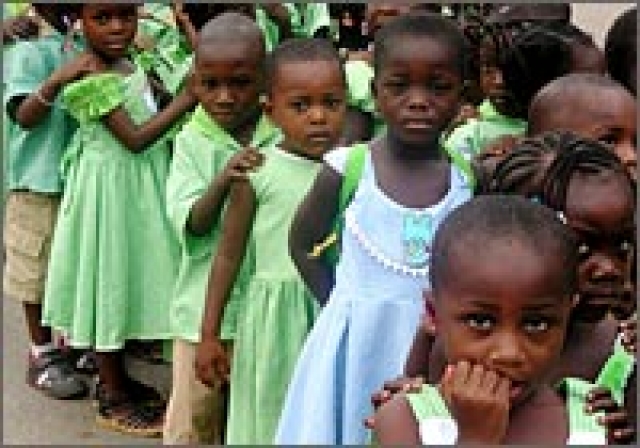
In November 2008, the Government of Côte d'Ivoire conducted a nationwide measles immunization campaign targeting children from nine months to five years.
Côte d'Ivoire has suffered from significant periods of crisis, beginning with a coup in 1999 and then the conflict in 2002. With a peace agreement signed, general elections are expected to take place in 2009. According to the WHO-UNICEF immunization coverage estimates, in 2007, only 67% of children received one dose of measles vaccine by their first birthday through routine health services.
WHO Regional Director for Africa, Dr Luis SAMBO, visits Zimbabwe to support Cholera Epidemic Response
Harare, 19 December 2008--The World Health Organization Regional Director for Africa, Dr Luis Sambo, has visited Zimbabwe to support the cholera epidemic response efforts.
During the three-day visit from 16-19 December 08, Dr Sambo held discussions with national authorities and partners on ways and means of bringing an end to the spread of the cholera epidemic.
Zimbabwe: WHO, partners work to control cholera outbreak
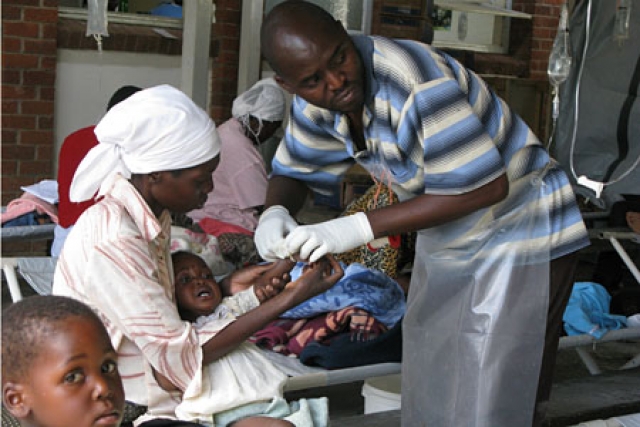
12 December 2008 -- A widespread cholera outbreak and inadequate access to safe drinking water and hygiene are threatening the wellbeing of thousands of Zimbabweans. Shortages of medicines, equipment and staff at health facilities throughout the country are compounding the health challenges.
The outbreak could surpass 60 000 cases, according to estimates by the Zimbabwe Health Cluster, which is a group coordinated by WHO and comprising health providers, NGOs and the Ministry of Health and Child Welfare
Pentavalent vaccine launched in Lesotho for the first time
Maseru, 12 December 2008 -- In yet another milestone effort to reduce childhood sicknesses and deaths from preventable diseases, the Minister of Health and Social Welfare (MOHSW), Dr. Mphu Ramatlapeng, officially launched the Pentavalent vaccine, for the first time in the history of Lesotho.
Thanks to the collaborative efforts of the MOHSW, WHO, UNICEF, the GAVI Alliance and other partners, this life-saving vaccine was introduced to provide more protection to children in the country.
Health system problems aggravate cholera outbreak in Zimbabwe
10 December 2008, Harare -- A widespread cholera outbreak, under-resourced and under-staffed health system, and inadequate access to safe drinking water and hygiene are threatening the wellbeing of thousands of Zimbabweans. As of 9 December, 16 141 suspected cases of cholera and 775 resultant deaths (case fatality rate of 4.8%) had been recorded since August in two-thirds of the country's 62 districts.