
WHO Trains Health workers from Nine African Countries on Improvement of Congenital Birth Defects Surveillance

Kampala, November 20, 2019: - The World Health Organization (WHO) recently conducted a Training of Trainers to develop and strengthen registration and surveillance systems for participants from nine African countries. They were also oriented on how to improve research and studies on the causes of congenital birth defects, diagnosis and prevention.
Nigeria commemorates third noma day – resolves to eliminate disease by 2030

Abuja, 20 November 2019 - Nigeria has marked its third National Noma Day with a strong commitment to eliminate the debilitating disease by 2030.
The theme for this year’s event, marked on 18 November, was: “Timely recognition averts deformity – raise awareness to prevent noma” and the Nigerian government indicated commitment towards raising awareness on the disease and fully eliminating it from the country.
Sweeping Agreement Inked by WHO and African Union to Accelerate Vital Health Goals Credits Sweeping Agreement Inked by WHO and African Union to Accelerate Vital Health Goals

Dr L. Musango, WHO Representative in Mauritius, courtesy call to newly appointed Minister of Health and Wellness, Dr Hon. Kailash Jagutpal

About one month after the dissolution of the National Assembly, the general election took place on 7 November 2019 for the people of the Republic of Mauritius to elect the new members of the parliament. The ruling party – Militant Socialist Movement (MSM) in alliance with Mouvement Liberateur and led by the Prime Minister, Honorable Pravind Kumar Jugnauth (ML) was reelected to govern the country for the next five years. The newly elected members of the Parliament took the Pledge for Allegiance to the
Diseases do not respect borders

WHO led a Field Simulation Exercise (FSX) at the Namanga One Stop Border Post and surrounding areas in both Kenya and Tanzania between June 11 to June 14. The exercise was convened by the East Africa Community (EAC).
WHO supports South Sudan in oral cholera vaccination campaign to prevent the risk of a cholera outbreak in Renk

Juba, 15 November 2019 – To mitigate the risk of cholera outbreak, the World Health Organization (WHO) in collaboration with the Ministry of Health, UNICEF and MedAir are immunizing 144 033 people against cholera in Renk, a county bordering Blue Nile state in Sudan.
Nigeria launches campaign to protect more than 28 million children against Measles and Meningitis

Children in 19 Northern states to be vaccinated in largescale campaign implemented by the Government of Nigeria and WHO with Gavi support
Abuja, 16 November 2019 - In efforts to continue boosting the immunity of children against measles and meningitis, Government, through the National Primary Health Care Development Agency (NPHCDA) and the World Health Organization (WHO), with support from Gavi, the Vaccine Alliance, today kicks off a campaign to reach more than 28 million children with lifesaving vaccines.
Statement from Uganda’s Minister of Health on the National Measles-Rubella and Polio Immunisation Campaign 2019

On behalf of the Ministry of Health and the Government of Uganda, I take this opportunity to update the public on the just concluded national Measles-Rubella and Polio immunisation campaign.
As you may recall, the national Measles-Rubella and Polio immunisation campaign was launched in Mayuge District on Tuesday, 15th October 2019 and implemented countrywide from 16th to 20th October 2019. There was an extension of 1 day nationwide and 2 days specifically for Kampala, Wakiso, Mukono and districts in the Karamoja region.
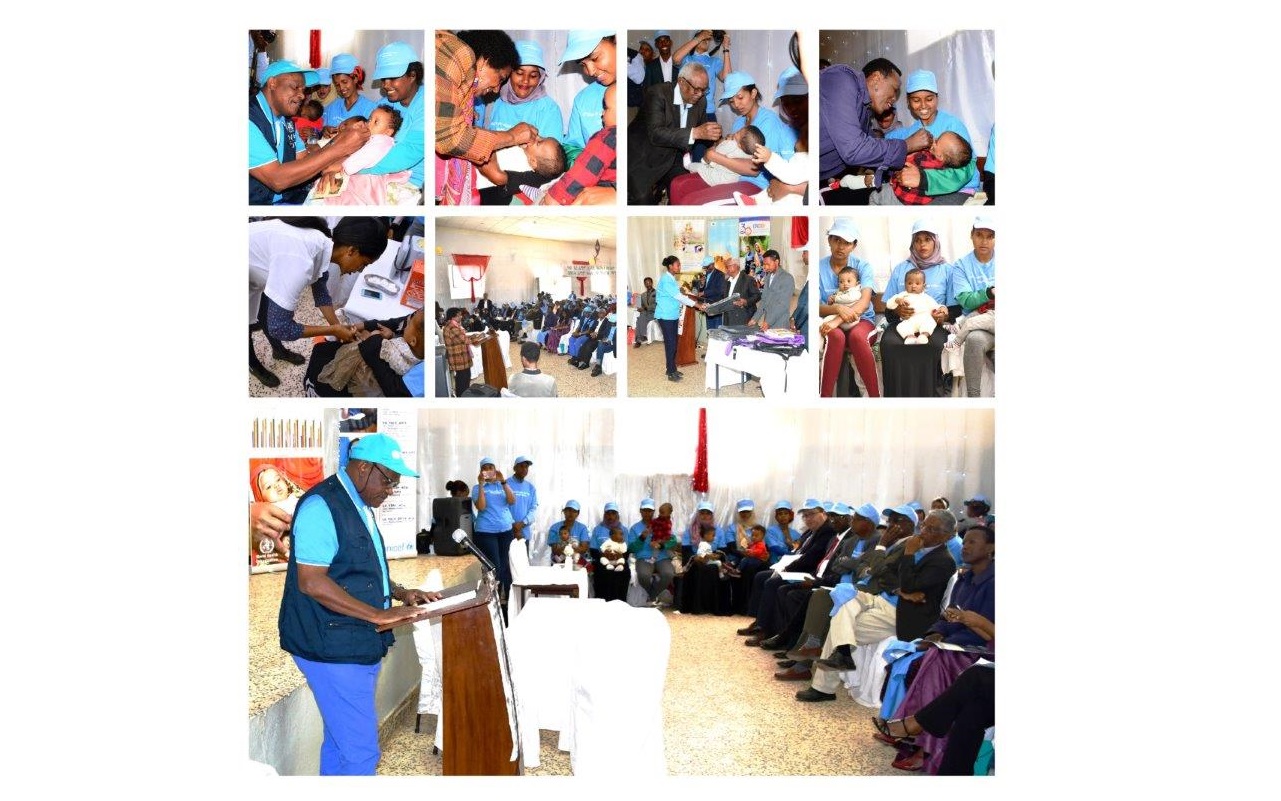
Eritrea launches the Meningitis A Vaccination and Vitamin A supplementation Campaign November – December 2019
Democratic Republic of the Congo accelerates training of emergency medical units for use in epidemics
