
Maternal and Child Health Week Campaign Brings Vaccines to 1.5 Million Children
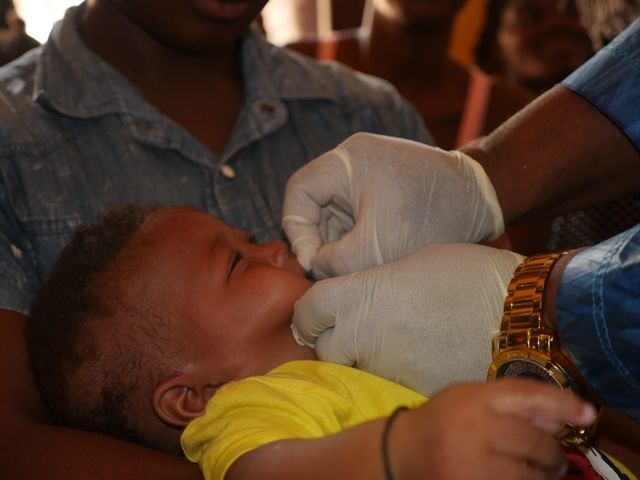
Five days of Immunization Activities to deliver integrated maternal and child health services to all pregnant women and children less than five years ended today in Sierra Leone. The campaign known as Maternal and Child Health Week is undertaken twice annually by the Ministry of Health and Sanitation to improve access and the quality of maternal and child health services in Sierra Leone.
Ministry of Health and Partners validate eHealth Policy and Strategy

Mukono, 24th June 2016 - The Ministry of Health recognizes eHealth, as a key enabler for supporting the health system in order to deliver good health to the population as laid out in the Health Sector Development and Investment Plan 2015/16– 2019/20. In that respect, the Ministry of Health with support from World Health Organization (WHO), Center for Disease Control (CDC), and United Nations Children’s Education Fund (UNICEF) convened a two-day workshop at Colline Hotel, Mukono to validate the draft eHealth policy and strategy.
From refusal to promotion: Religious leaders in Lunda Norte, Angola agree to advocate for yellow fever vaccination
 The district health authorities, WHO and the Red Cross on 19 June 2016, met with leaders of one religious group based in Estufa neighbourhood, Chitato district, Lunda North province to explain the importance of yellow fever vaccination in protecting members of their communities from the disease.

Experts recommend strategic shift in Nigeria’s polio eradication programmme.

Abuja, 23 June 2016 - Experts that periodically review Nigeria’s immunization programme have recommended a strategic programmatic shift that will entail strengthening of the routine immunization (RI) programme, closing of surveillance gaps and reduction in the intensity of supplemental immunization campaigns to be implemented in Nigeria forthwith, as the country moves towards polio certification.
Mental Health Funding and the SDGs: What now & who pays? Report Launched in Sierra Leone

A global report titled “Mental Health Funding and the SDGs: What now and who pays?” was launched in, Freetown, Sierra Leone on 21 June 2016. The report prepared by Jessica MacKenzie of UK’s Overseas Development Institute was commissioned by the World Health Organization and the Mental Health Innovation Network with funding from Grand Challenges Canada. The Report highlights current mental health funding partners, funding gaps and potential new funders that could potentially improve access and quality of mental health services around the world.
Nigeria develops new National Health Policy to accommodate emerging trends

Abuja, 22 June 2016 - Finalization of the National Health Policy revised for the attainment of Universal Health Coverage (UCH) and other health-related Sustainable Development Goals (SDGs) has ended in Abuja.
World Blood Donor Day Launched in Liberia

Monrovia 22 June, 2016: Ministry of Health Liberia launched the World Blood donor Day on 21stJune under the theme “Blood connects us all” and a slogan ‘save a life donate blood’. This theme highlights the dimension of sharing and the connection between blood donors and patients. Access to safe blood and blood products is in line with the Investment plan to building a resilient health system.
Launch of emergency vaccination campaigns on the DR Congo and Angola border
Brazzaville, 22 June 2016 – As the yellow fever outbreak in Angola and Democratic Republic of the Congo continues, the World Health Organization will launch emergency pre-emptive vaccination campaigns on the DR Congo, Angola border and the city of Kinshasa in the DR Congo to halt the epidemic and prevent the risk of further international spread.
WHO South Sudan Participated in an Emergency Drill Exercise to Ensure Proper Incident Response

Juba, 20 June 2016 - On 18 June 2016, residents of the Naivasha Residential Compound (the security approved compound for UN international staff) conducted emergency drill exercises to test plans and promote awareness of staff roles and responsibilities during an incident scenario. The simulation was held at the Naivasha Residential Compound.
The simulation consisted of a “scheduled exercise” held on the morning of June 18, 2016, to bring together the internationally recruited staff from WHO, UNICEF, UNDP and WFP.
The objective of the exercise was: