Global Health Promotion Conference ends with a call for urgent action to save lives and avoidable illness
Nairobi, 30 October 2009 -- Delegates at the 7th Global Health Conference on Health Promotion which ended on Friday 30th October in Nairobi, Kenya have called on governments, civil society, development organizations and health services to join forces and reposition health promotion policies and programmes to curb the unacceptable global toll of preventable ill-health and death.
From a government perspective - A profile of consistent support to immunization

2 October 2008 -- At 10.30pm, Friday May 9, 2008, Alhaji Musa Abdullahi Nahuche, Chairman, Bungudu Local Government Area (LGA), handed N400,000 cash to the Director, Primary Health Care (DPHC), Mohammed Rabiu Bungudu, to support activities for the Immunization Plus Days (IPDs) starting the following morning in his home state of Zamfara. He was delivering on his promised support earlier in the day after having to source the cash from the community, as a last resort. That amount was only surpassed by the LGA contribution when it piloted the IPDs nationally in 2006.
Conference urges community empowerment as an essential component of Health Promotion
Nairobi, 28 October 2009 -- Delegates at the 7th Global Conference on Health Promotion have called for strengthening community empowerment as an essential component of Health Promotion.
This is part of the outcome of the deliberations at the 5-day conference taking place at the Kenyata International Centre, Nairobi, Kenya under the theme: Promoting Health and Development: Closing the implementation gap.
The 7th Global Conference on Health Promotion: President Kibaki urges more resources for African health challenges
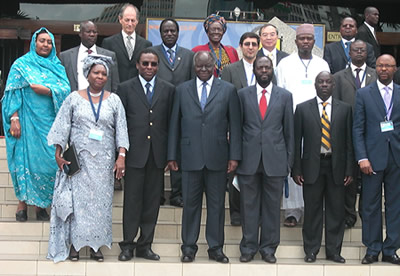

Nairobi, 26 October 2009 -- The 7th Global Conference on Health Promotion, openedi on Monday 26 October 2009 at the Kenyatta International Conference Centre in Nairobi. His Excellency President Mwai Kibaki of Kenya called on African leaders to find innovative ways to mobilize resources to finance priority health programmes.
WHO Strengthens Zimbabwe's Health System
Harare, 22 October 2009. The Zimbabwean health system was given a boost yesterday when WHO handed over vehicles and other commodities to strengthen EPI surveillance, and disease outbreak preparedness and response to the Ministry of Health and Child Welfare.
Zambia Hosts WHO Project Meeting on Strengthening Cervical Cancer Prevention Programmes in Six African Countries
21 October 2009 -- The final review meeting for the six African countries implementing the WHO demonstration project on strengthening cervical cancer prevention programmes opened in Lusaka on 20th October, 2009. This meeting has brought together more than forty participants from the participating countries which include Madagascar, Malawi, Nigeria, Tanzania, Uganda and Zambia.
Better data for better health in Sierra Leone
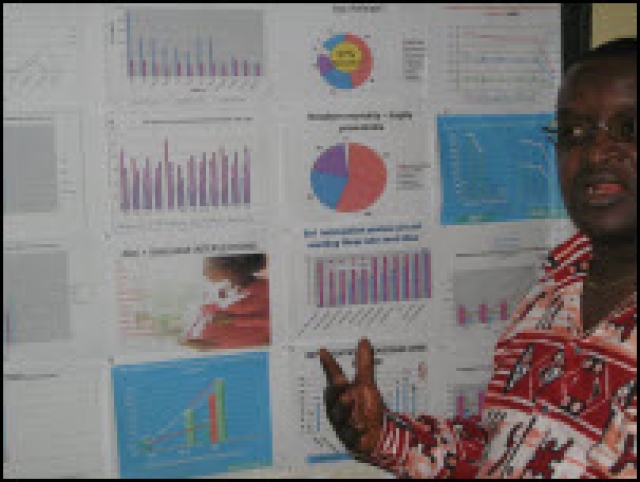
Sierra Leone's district health information system (DHIS) captures data from hundreds of community health centres across the country. The system, developed with the support of the Health Metrics Network, is designed to bring information together to permit analysis and comparison of results. Collected at village and community levels, data are being compiled and analysed at the district level in the computer-based DHIS before being transmitted to the Ministry of Health and Sanitation in the capital, Freetown
Press Release on the Handover Ceremony of a Donation to the Office of the Lusaka District Commissioner
Lusaka, 05 October 2009 -- The World Health Organization Country Office for Zambia donated a computer, printer and a UPS to the office of the Lusaka District Commissioner today as a way of building capacity in that office in terms of epidemic prevention and control. The Lusaka District Commissioner’s office is spearheading this campaign under the Disaster Risk Reduction (DRR) Programme.
WHO gives bicycles, motorcycles, medicines to Zimbabwean health authorities
Harare, 30 September 2009 -- The World Health Organization officially presented hundreds of bicycles and motorcycles to the Zimbabwean Ministry of Health here today to strengthen health care and disease surveillance activities throughout the country.
The 300 black bicycles and 124 bright red motor cycles were purchased with US$ 500 000 acquired by WHO via the UN's Central Emergency Response Fund. These items strengthen Zimbabwe's ability to prepare for and respond to potential health concerns, including cholera outbreaks and the pandemic H1N1 2009.
Landmark H1N1 response plan launched in Zimbabwe
Harare, 30 September, 2009 -- A landmark plan to improve how countries, particularly developing nations, can better protect themselves against the pandemic H1N1 2009 has been applied for the first time in the world during a two-day workshop in Zimbabwe that ended today.