New WHO Representative to South Africa, Dr Owen Kaluwa, presents his credentials

Uganda commences field data collection to inform the Population Based HIV Impact Assessment Survey (UPHIA 2020)
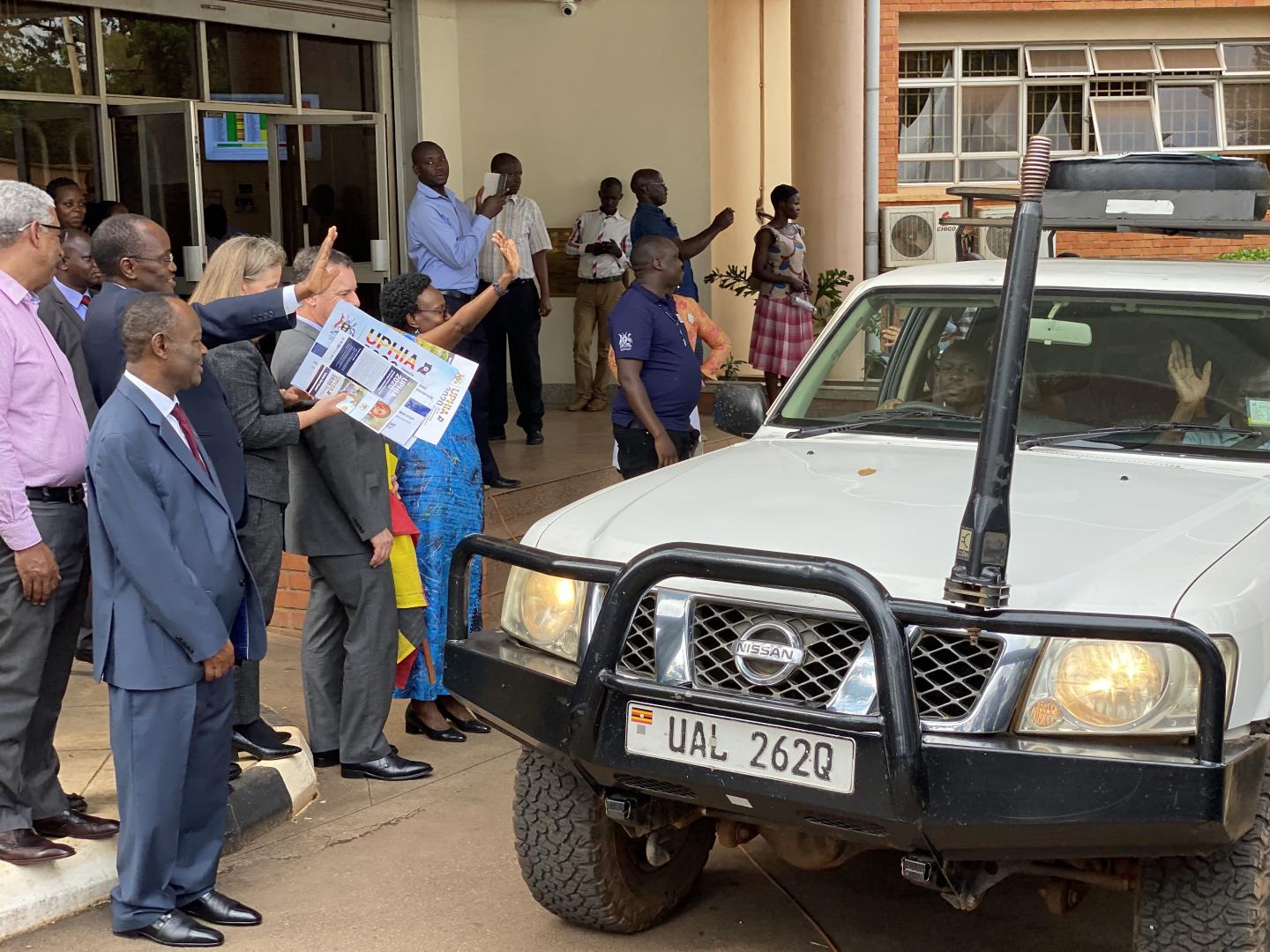
Kampala, 10 February 2020:- The Ministry of Health launched data collection exercise for the Uganda Population-Based HIV Impact Assessment Survey 2020, (UPHIA2020) intended to provide national and regional estimates of HIV, incidence, prevalence, viral Load suppression and other programme indicators of coverage, outcome and impact in Uganda.
Uganda Intensifies fight against Tobacco Consumption

|
|
Dr Hafsa Lukwata gives a firm answer when asked about the Tobacco industry in Uganda: “We know the tobacco industry has a million tricks up its sleeve to promote tobacco consumption.
Uganda’s Ministry of Health Receives Equipment Worth Nine Million Dollars

Kampala, 10 February 2020- The Ministry of Health received cold chain and transport equipment worth nine million dollars procured through United Nations Children’s Fund (UNICEF) and World Health Organization (WHO) with support from the Global Alliance for Vaccines and Immunization (GAVI). The equipment included 657 motorcycles, 996 solar fridges, 10 generators, vaccine carriers and cold boxes.
Rwanda Cancer Centre inaugurated on the World Cancer Day 2020 by President Paul Kagame

On World Cancer Day celebration 04/02/2020, Rwanda inaugurated the up to date Cancer Centre equipped with Radiotherapy. His Excellency President Paul Kagame spoke on the important role the new centre will play in the lives of patients living with cancer, “now, many more Rwandans will be able to get the care they need with their families close by”, he said.
Ministry of Health (MoH), World Health Organization and Partners are Working to Strengthen Preparedness and Response Capacity of The Gambia Against the 2019 novel coronavirus

In response to the ongoing outbreak of the Novel Coronavirus (nCOV) in Wuhan Province in China and its subsequent spread around the world, the Ministry of Health (MoH) of The Gambia in collaboration with WHO and partners has so far taken the following measures:
Update on Uganda’s preparedness situation following the 2019 Novel Coronavirus outbreak in China and other countries around the World

Kampala 6 February 2020: The Ministry of Health Uganda would like to update the general public on the country’s preparedness following the declaration of a confirmed outbreak of novel coronavirus (2019-nCoV) in China that has now spread to other countries.
Zimbabwe’s data on health SDGs progress now more accessible: Zimbabwe’s first step towards a National Health Observatory

Zimbabwe’s health information is now easily accessible following the validation exercise to approve and enter it into the African Health Observatory (AHO) in December 2019. The validation meeting was convened to introduce the African Health Observatory; to introduce the concept of a National Health Observatory (NHO) and to validate and approve data for the AHO portal, with support from WHO technical staff.
Neglected Tropical Diseases not deserted, Government collaborates with WHO to create awareness

Abuja, 05 January 2020 - Mr Emmanuel Kewe, a 27-year-old man says, “I did not know that these diseases can be found in my community, this very one with open wounds (Buruli Ulcer) that I’m seeing on this picture is exactly what my neighbor is battling with.
The African region reinforces preparedness for novel coronavirus

Brazzaville, 5 February 2020 – While there are no confirmed cases of novel coronavirus reported in the African region, the World Health Organization (WHO) is strengthening its support to countries in the detection and management of suspect cases and in ensuring a robust response, should a first case be detected.