Indicators for TB control in Africa improve, but still fall short of global targets
Harare, 4 April 2003 -- Treatment success and case detection rates for tuberculosis (TB) have improved appreciably in Africa since 1993 when the disease was declared a global emergency by the World Health Organization (WHO), but the current indicators in the Region still fall short of global targets, a WHO official has said in Harare, Zimbabwe.
Rift Valley fever in Niger
On 30 August 2016, WHO received reports about unexplained deaths among humans, along with death and abortion in livestock in the North Western parts of Niger, and the areas bordering Mali.
From 2 August to 22 September 2016, 64 human cases including 23 deaths have been reported in Tchintabaraden health district in Tahoua region. The area is mainly populated by nomadic stockbreeders.
The Third African Regional Conference on Immunization (ARCI)

Theme: “Towards a Polio-free Africa.”
The specific objectives of this conference are:
52nd session of WHO Regional Committee to take place in Harare
Harare -- The 52nd session of the WHO Regional Committee for Africa (RC52) is scheduled to take place from 8 to 12 October in Harare, Zimbabwe.
This year's meeting of the Regional Committee, WHO's Governing Body at the Regional level, will discuss a report on the work of WHO in the African Region during the 2000-2001 biennium, to be presented by the Regional Director, Dr Ebrahim M. Samba,
Ebola virus disease, West Africa – update 31 July 2014
Epidemiology and surveillance
The World Health Organization (WHO) continues to monitor the evolution of the Ebola virus disease (EVD) outbreak in Sierra Leone, Liberia, Guinea and Nigeria. The Ebola epidemic trend in Sierra Leone, Liberia, and Guinea remains precarious, with continuing community and health-facility transmissions of infection.
Between 28 and 30 July 2014, a total of 117 new cases (suspect, probable, and laboratory-confirmed cases) as well as 97 deaths were reported from Liberia, Sierra Leone, Guinea and Nigeria.
Let's Move For Our Health
"Move for health." This is the slogan for this year's World Health Day (7 April 2002) celebration whose theme, physical activity, emphasizes the importance of physical fitness and an active lifestyle.
Why the choice of this theme at this point in time? The reason, according to WHO Director General, Dr Gro Harlem Brundtland, is to draw the attention of policy makers, the public health community and civil society at large to the epidemiological shift in the global burden of disease and the factors fuelling the change.

Accelerating immunization in the African region
Harare -- The World Health Organization Regional Office for Africa has developed a strategy aimed at accelerating implementation of the Expanded Programme on Immunization (EPI) activities over three years (2003-2005) in order to improve the health of children in the African Region.
Gavi, the Vaccine Alliance visits the WHO Regional Office for Africa
Senior members of the Gavi Secretariat visited the WHO Regional Office for Africa (WHO AFRO) on 14 and 15 February to discuss with the Leadership of WHO AFRO on further enhancing WHO and Gavi’s joint efforts to effectively support countries within the African region towards strengthening their immunization and health systems.
Official visit of Dr Moeti to Centre for Disease Control
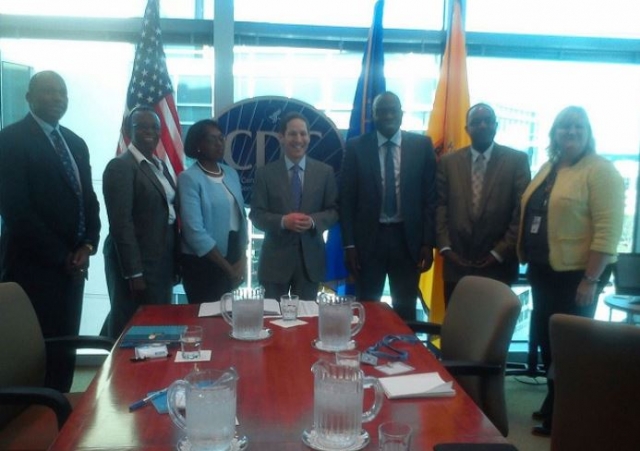
The WHO Regional Director for Africa Dr Matshidiso Moeti paid an official visit to the Centres for Disease Control in Atlanta, USA. She was met on arrival by Dr Tom Frieden and other senior executives of the CDC.
Their discussions focused on further strengthening collaboration between both organisations towards health development in Africa. Dr Moeti was accompanied by Dr Soce Fall, Director of Health Security and Emergencies. Dr Felicitas Zawaira, Director of Family and Reproductive Health and Dr Jean-Bosco Ndihokubwayo, Regional Advisor for Laboratories.