Building latrines and keeping water clean decreases diarrhoea and under-nutrition in Mali
Two years ago, Hamidou Samakan, chief of the village of Yarou Plateau in Mali, noticed significant changes in the neighbouring village of Gouna. The village was clean and there were no faeces to be seen. People were building affordable latrines, sweeping common areas, and chlorinating their drinking water.
Back in Hamidou’s village, people were still defecating in the open. Few households had latrines, and diarrhoea and under-nutrition were common.
Zimbabwe Launches National Food Fortification Strategy

Harare, 19 November 2015: Zimbabwe today launched the Zimbabwe National Food Fortification Strategy 2014—2018. The strategy, which is aligned to the National Food and Nutrition Strategy for Zimbabwe, will serve as a guide at both policy and implementation levels to prevent micronutrient deficiencies. The strategy was developed to address the micronutrient deficiency burden in the country as revealed by the 2012 Zimbabwe Micronutrient Survey.
Dr Moeti lauds health development efforts in Chad

N’Djamena, 19 November 2015 - The World Health Organization Regional Director for Africa, Dr. Matshidiso Moeti, has commended ongoing efforts in Chad to improve the health and wellbeing of the people. Dr Moeti made the remarks during a courtesy call on the Chadian Prime Minister Kalzeubé Payimi Deubet.
Ethiopia Conducts Integrated Men A Phase III and Measles Immunization Campaign

A Meningitis A Phase III and Measles integrated campaign, launched on 26 October 2015 in Afar, Amhara, Dire Dawa, Hareri, Oromia (East Harerghe and West Harerghe) and Tigray regions, has been completed successfully. Preliminary administrative data in regions where campaign is completed revealed a total of 11,645,517 individuals vaccinated for Men A and 725,469 children vaccinated for Measles showing coverage of 96% and 88% respectively. The campaign was planned for 10 days, but was extended to 2 days in some zones for mop-up activities for reaching children unreached during 10 days.
WHO targets students in health training institutions to strengthen national health securities

Brazzaville, 16 November 2015 - In an ambitious move to strengthen national health securities and improve health outcomes, the World Health Organization (WHO) is initiating the introduction of the Integrated Disease Surveillance and Response (IDSR) in the training curricula for students in pre-service and in-service health training institutions in the African Region.
WHO multi-country survey reveals widespread public misunderstanding about antibiotic resistance
16 November 2015 ǀ GENEVA – As the World Health Organization (WHO) ramps up its fight against antibiotic resistance, a new multi-country survey shows people are confused about this major threat to public health and do not understand how to prevent it from growing.
WHO warns climate change to threaten human health in Nigeria
Abuja, 16 November 2015: Climate change is threatening to worsen health problems in Nigeria, the World Health Organization warns in a new Climate and Health Country Profile 2015, published today. Increased temperatures, intense heatwaves, more extreme rainfall and floods are expected to intensify existing challenges of communicable diseases, food insecurity and poverty, if action is not taken.
Endgame strategy: WHO positions field staff to leverage on interruption of wild polio virus towards certification in 2017.

Abuja, 14 November, 2015: The recent removal of Nigeria from the list of polio endemic countries notwithstanding, the Immunization, Vaccines and Emergencies (IVE) cluster of the World Health Organization (WHO) is re-strategizing for the final push to eradicate polio in Nigeria. In its latest strategy, the cluster plans to leverage on the recorded gains in interruption of WPV towards certification in 2017.
Measles outbreak triggers immunization campaigns targeting over 12 000 children in Juba, South Sudan

Juba, 13 November 2015 - The World Health Organization (WHO), Ministry of Health (MoH), and health partners are rapidly responding to a new measles outbreak and have vaccinated over 12 000 children at the protection-of-civilians (PoC) sites and surrounding host communities.
Network of Public Health Emergency Operation Centers established to protect lives
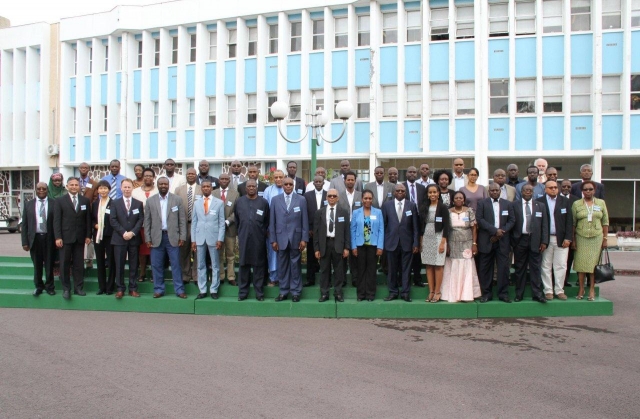 12 November 2015, Brazzaville - The need for each African country to have functional Public Health Emergency Operation Centers (PHEOCs ) that should serve as a hub to coordinate the preparedness for and response to public health emergencies to save lives, was one of the key issues discussed at a three-day meeting held in Brazzaville from 9 to 11 November 20