Dr Pierre M'pele Ends His Mission in Ethiopia

After two years and 10 months of leading the World Health Organization’s programme in Ethiopia, WHO Representative (WR), Dr Pierre M’pele-Kilebou, has completed his mission and moved on to Cotonou, Benin.
Revitalising National Immunisation services with routine and supplementary vaccination campaigns
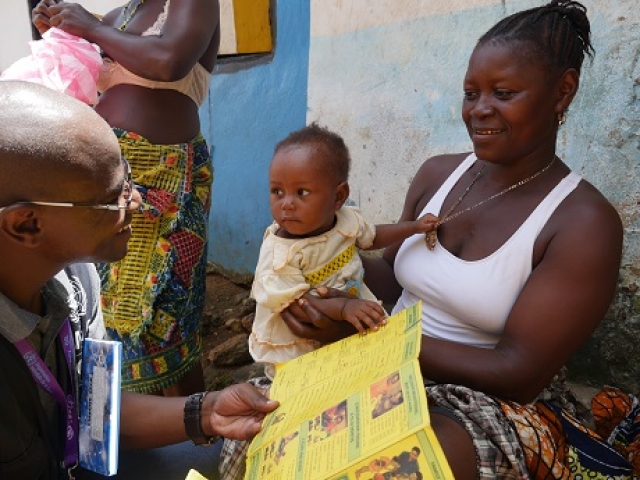
In Sierra Leone, the Ebola outbreak has affected all aspects of health care. Exact numbers are yet to be confirmed but it is clear that many children have missed out on routine vaccination services during the outbreak. To counter this, mass immunization campaigns are being held nationwide
Statement on the end of the Ebola outbreak in Sierra Leone
Delivered by Dr Anders Nordström, WHO Representative in Sierra Leone
Today, 7 November 2015, the World Health Organization declares the end of the Ebola outbreak in Sierra Leone.
Since Sierra Leone recorded the first Ebola case on 24 May 2014, a total number of 8,704 people were infected and 3,589 have died. From those who tragically lost their lives, 221 of them were healthcare workers. We remember them all today.
WHO commends Sierra Leone for stopping Ebola virus transmission
Freetown, 7 November 2015 - Today, the World Health Organization declares that Ebola virus transmission has been stopped in Sierra Leone. Forty-two days, that is two Ebola virus incubation cycles, have now passed since the last person confirmed to have Ebola virus disease had a second negative blood test.
Uganda hosts Commemoration of the 6th Africa day for Food and Nutirtion security in Africa and who hosts participants to a ‘healthy’ lunch

Kampala, 6th November 2015:- Uganda hosted the Africa Day for food and nutrition safety at Speke Resort Munyonyo, under the theme “Empowering our women, Securing our Food, Improving our nutrition” which ties neatly with the declaration of the year 2015 as “The year of Women empowerment and Development towards Africa’s agenda 2063”.
Annual National Tuberculosis Stakeholders Meeting held in Mukono District

Mukono, 6 November 2015: The Annual National Tuberculosis (TB) Stakeholders three-day meeting commenced at Collin Hotel in Mukono district, from 28th to 30th October under the theme “Engaging all stakeholders to end Tuberculosis epidemic in Uganda’’.
The objective of the meeting is to bring together all stakeholders to discuss the progress and key strategies to end the TB epidemic and Leprosy in Uganda.
WHO Commits to Improve Health Situation in Gambella, Ethiopia

Increasing reports of communicable diseases and presence of a large number of refugees from south Sudan heightened the need for strengthened public health emergency preparedness and response in Gembella Region.
“WHO commits again as a partner to ensure working together to improve the health situation of people of Gambella and hundred thousands of refugees from South Sudan” said Dr. Pierre M’Pele-Kilebou, WHO Representative to Ethiopia as he handed over Emergency Health Kits to Gambella Regional Health Bureau (RHB) .
WHO Responds to El Niño Driven Emergency in Ethiopia

WHO has been providing health and nutritional support to communities affected by health impact of increasing food insecurity and malnutrition in Sitti zone of Somali Regional State. Failure of rain for two consecutive seasons in many parts of the country is caused by the global El Niño phenomenon, resulting in a slow onset of natural disaster, according to a joint statement by His Excellency Mitiku Kassa, Secretary of the National Disaster Prevention and Preparedness Committee and Mr. John Aylieff, Acting Humanitarian Coordinator for Ethiopia.
Liberia Reinforces Health Promotion Post-Ebola
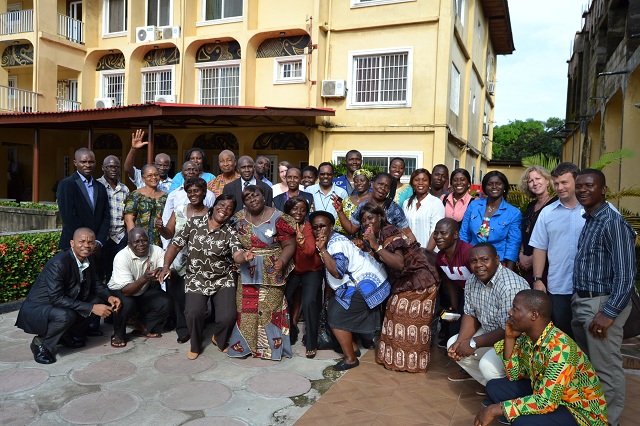
Monrovia, 5 November 2015: Learning from the lessons from the Ebola Virus Disease (EVD) outbreak in Liberia, the Ministry of Health intends to reinforce health promotion in all parts of the country as part of the investment plan for building a resilient health system. In this regard, a meeting was held to validate a draft National Policy and Strategic Plan on Health Promotion, November 3-4, 2015 in Monrovia. The meeting was organized by the Ministry of Health (MOH) with support from WHO Country Office, Liberia and AFRO.
Bringing child health services closer to rural communities in Malawi

Under the Rapid Access Expansion (RAcE) programme, launched in Malawi in 2013, the Ministry of Health has been working with WHO to train community health workers to treat common childhood diseases.
The approach, known as the integrated community case management (iCCM) of childhood illnesses, focuses on treating diarrhoea, malaria and pneumonia, which together accounted for 45% of deaths among children younger than 5 years of age in the country in 2012.