Uganda hosts African regional meeting on nutrition
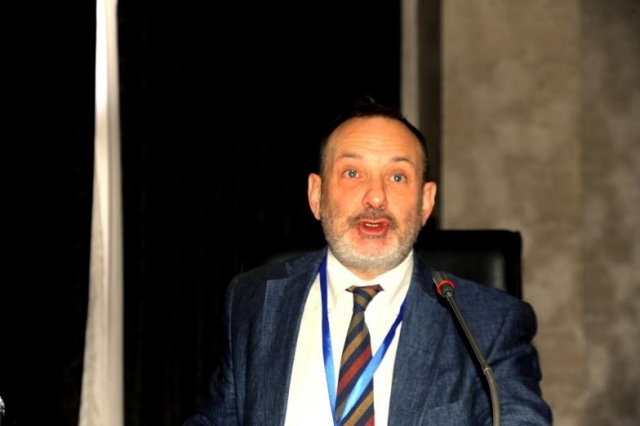
Kampala, 18th February 2015- Uganda hosted the Regional Meeting on Accelerating Nutrition Improvements (ANI) in Africa that reviewed implementation status of the project from the 11 participating countries. At the same time, delegates analyzed and documented successes, challenges and lessons learned in addition to mapping ways of accelerating delivery of all targets by December 2015 when the project ends.
Global ALL IN campaign fights rising HIV infections and deaths among adolescents

The Global ALL IN campaign against adolescent infection and death by HIV-AIDS kicked off with calls to listen, involve and include young people in efforts to reduce AIDS-related deaths and new HIV infections.
The launch presided by the Kenyan president Uhuru Kenyatta and lauded by various UN global leaders, is a fresh call to act on the rising numbers of infection and death among global and African youth. The campaign aims to achieve reductions in AIDS-related deaths by 65% and new HIV infection by 75% by 2020.
Sierra Leone's Rescue Team: Ebola survivors supporting each other
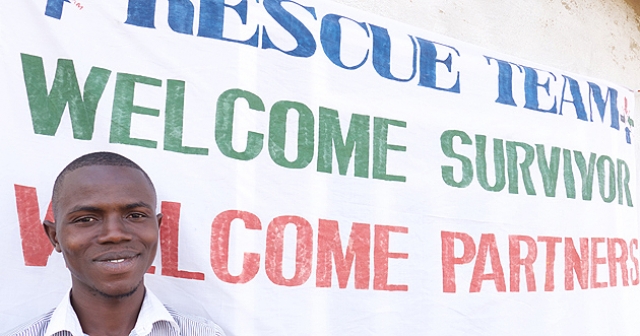
The "Rescue Team", an association set up by Ebola survivors to help fellow survivors trying to put their lives back together again, is now exploring ways to contribute to the Ebola outbreak response in Sierra Leone.
"How can I make a life when I have no hope? My future is blind," says Sherrie Bangura as he contemplated life after recovering from Ebola virus disease.
Polio outbreak increasingly under control in the Horn of Africa

Nairobi Kenya, 9 February 2015 - The Horn of Africa Technical Advisory Group Meeting opened in Nairobi today with a clearer indication that the intensive response to the polio outbreak launched 21 months ago is beginning to bear fruit.
Restarting immunization in Ebola-affected village
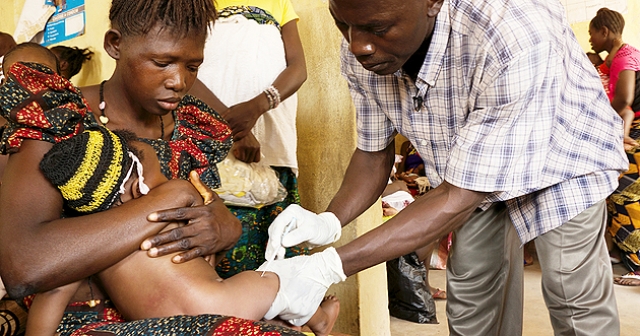
One of the great challenges in this Ebola outbreak is finding ways to safely provide essential health services like child immunization while still fighting the Ebola outbreak. This is the story of what the community health care team in Kamasondo village are doing to reach all the babies born in the district during the Ebola outbreak and vaccinate them against common childhood killers.
Drop by drop closer to polio-free Ethiopia

Jigjiga/Wardher, 9 February 2015 - A pledge of commitment for a polio-free Ethiopia was made on 8 February 2015 in Jigjiga and Warher at the launch of the polio national immunization days (NIDs) in Somali Regional State. Ethiopia has been polio free since 5 January 2014, but the risk of polio cases in Horn of Africa prevails. The campaign running until 11 February 2015 aims to reach over one million children under the age of five in the region.
Sierra Leone: Restarting immunization in Ebola-affected village
 One of the great challenges in this Ebola outbreak is finding ways to safely provide essential health services like child immunization while still fighting the Ebola outbreak.
Sierra Leone: Increasing community engagement for Ebola on-air
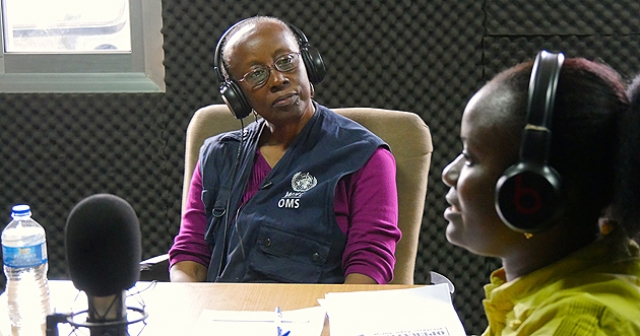 WHO’s social mobilization team is using radio to reach communities with information about how to prevent the spread of Ebola in Sierra Leone.
Reaching communities not just physically, but psychologically and emotionally as well.
Protecting fans from Ebola at the Africa Cup of Nations in Equatorial Guinea
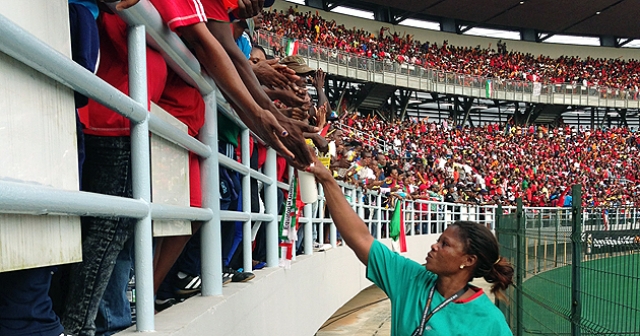
Thanks to preparedness activities by Equatorial Guinea’s Ministry of Health, FIFA and WHO, the one million people gathered in Equatorial Guinea for the 2015 Africa Cup of Nations are able to focus more on footie than on fears of Ebola.
So what does it take to ensure that capacities are in place to prevent, identify and respond to potential Ebola virus transmission at such a large mass gathering?
Mass gatherings: A growing science
Cholera prevention measures reduce transmission among displaced people in South Sudan

When violence erupted in South Sudan at the end of 2013, tens of thousands of people fleeing the conflict sought refuge in United Nations bases positioned around the country in the hope that peacekeepers stationed there would protect them. The bases were quickly overwhelmed, with families crammed together with little or no access to safe water or sanitation.
Then the rainy season approached, increasing the risk of water-borne diseases, in particular cholera, which is endemic to the country – with the potential for explosive outbreaks in the congested camps.