Liberia: Psychosocial support breaks boundaries between families and Ebola patients
 The Ebola outbreak in West Africa has produced increasing circles of victims beyond the infected and the dead. Survivors, families, children, and health workers are dealing with the stress and trauma left behind by the disease.
Malawi health service delivery systems in flood affected districts to be strengthened by MOH and the WHO response efforts

On 30 January 2015, the Minister of Health, Dr Jean Kalilani and WHO Representative (WR) Dr Eugene Nyarko visited the worst flood affected districts of Chikwawa and Nsanje. Accompanying the Minister and the WR were the Secretary for Health and the Ministry of Health Directors. The purpose of the visit was to assess the health situation of displaced people living in the camps.
From Liberia to Sierra Leone: a cortege of hope in the fight against Ebola
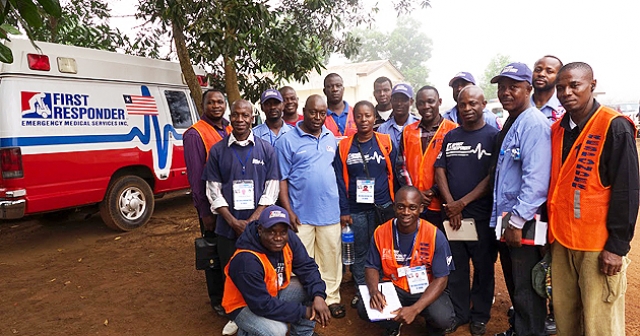
Three Liberian ambulances, with 20 Liberian staff joining their Sierra Leonean colleagues in the fight to end Ebola
After a two-day journey bumping along more than 500 kms over rough roads and dirt tracks, 3 ambulances and a team of 20 Liberian health experts have arrived at last in Freetown, the capital of Sierra Leone.
The team aims to train up its Sierra Leonean counterparts and establish the base of a First Responder Team. They plan to stay at least 6 months and the ambulances will remain in Sierra Leone.
Kenya marks World Cancer Day with high expectation
The World Cancer Day in Kenya has been marked by a call for heightened public awareness, greater responsibility and action by all stakeholders and the need for a medical environment that enables early screening, access to treatment and better trained personnel.
The calls come at the backdrop of the Kenyan situation in which 27 000 people are estimated to die of the disease annually and between 20 000 and 80 000 new cases of cancer are diagnosed annually.
WHO supports Nigerian government in efforts to eradicate polio in 2015

Ibadan, Oyo Nigeria 5 February, 2015 – To sustain interruption of wild poliovirus transmission in Nigeria, the World Health Organization’s Immunization, Vaccines and Emergencies (IVE) Cluster conducted a weeklong review and planning meeting in Ibadan, Oyo from 2 to 6 February 2015.
The six geo-political zones reviewed their performances in 2014, developed zonal and state work plans for 2015, strengthened routine immunization activities, enhanced surveillance systems, and solidified the accountability framework to ensure prudent management of resources.
WHO supports workshop on climate change vulnerability and adaptation assessment
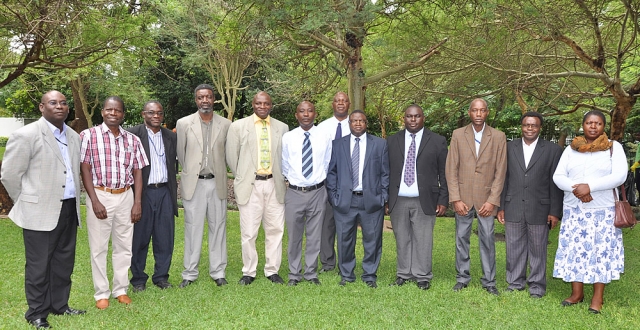
Lusaka, 4 February 2015 -- It has been estimated that 23% of deaths or a population of 2.4 million per year is attributable to environmental risk factors, whose impact is especially felt among the poor and vulnerable (children, women and rural and people with disabilities).
About 60% of the ecosystem services are being degraded or subjected to pressure with consequences on the quality of air and water and an increase in natural disasters. Climate change is expected to affect health, agriculture, food security and water sectors.
WHO Supports Ministry of Health to Host IDSR Review and Consultative Meeting

WHO supported the Ministry of Health to conduct a review meeting on Integrated Disease Surveillance and Response (IDSR) in South Sudan from 27 to 28 January 2015.
Addressing delegates at the meeting, WHO Representative to South Sudan Dr. Tarande Constant Manzila commended the Ministry of Health’s commitment to prioritize the implementation and strengthening of communicable disease surveillance through the adoption and implementation of the IDSR strategy at all levels.
Increasing community engagement for Ebola on-air

WHO’s social mobilization team is using radio to reach communities with information about how to prevent the spread of Ebola in Sierra Leone.
Reaching communities not just physically, but psychologically and emotionally as well.
“My work as a social mobilizer is to pass on key messages to convince people to stop the cultural and traditional practices that are fuelling the spread of Ebola,” says Zainab Akiwumi, who leads the WHO social mobilization team in Sierra Leone.
African First Ladies Unite to End Polio

The African Union First Ladies made a call for action on 31 January 2015 for continent-wide efforts, leadership and political commitment to kick polio out of Africa. The First Ladies agreed to advocate for a polio-free Africa as a top priority for their governments in 2015 at an event jointly organized by the Organization of African First Ladies Against HIV/AIDS (OAFLA), Centers for Disease Control (CDC) and the Global Polio Eradication Initiative (WHO, Rotary, CDC and UNICEF) at the African Union Headquarters in Addis Ababa.
South Sudan Inches Closer to Eliminating Guinea Worm Disease

“Imagine living with a snake-like worm about a metre long in your body?” It sounds unthinkable, but that is the painful reality that people affected by Guinea Worm Disease (GWD) have to live with. The question was posed by State Minister of Health for Western Equatoria, Dr. John Bona during the ninth annual review meeting of the Guinea Worm Programme in South Sudan, held under the theme: “Together for a final push to eliminate Guinea Worm Disease in South Sudan.”