
Travelling the last mile to zero Ebola cases in Liberia

In early December, President Ellen Johnson Sirleaf urged the people of Liberia to travel the last mile to reduce Ebola cases to zero. That last mile will be very long and difficult, and can only be achieved when every county has the capacity to find and isolate all cases, trace all contacts and bury all who die from Ebola safely. Here is the story of 2 remote villages travelling that last mile.
The number of new Ebola cases in Liberia has been falling in recent weeks. Now, hard-to-reach villages are at the frontline in the fight to drive cases to zero.
Ethiopia Marks 365 Days without Polio
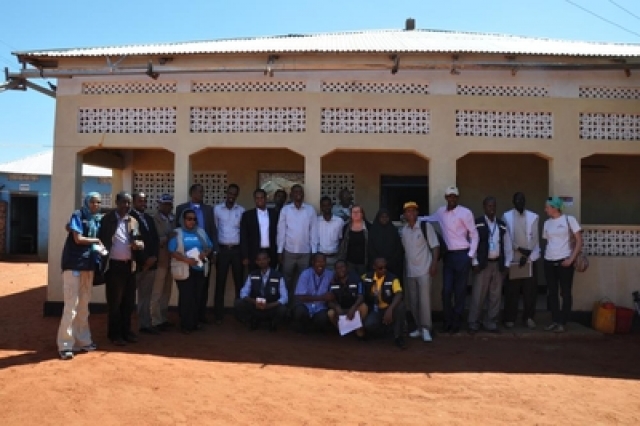
Wardher. 6 January 2015. Since 5 January 2014 no new cases of wild polio virus have been reported from the Somali region of Ethiopia. Dr Pierre M’Pele-Kilebou, WHO Representative to Ethiopia, and Dr Omar Mohammed Farah, Somali Regional Health Bureau Head, visited Wardher town in Doollo Zone, Somali region, on 5 January 2015 to congratulate the Zonal Administration and WHO/UNICEF Operations Base staff for their persistent efforts to ensure that every last child gets vaccinated against this paralyzing disease.
Tuberculosis Programme Managers' Capacity Strengthened through WHO Training Course

A WHO training course fortuberculosis (TB) control programme managers organized by the World Health Organization Ethiopia Country Office and the Federal Ministry of Health took place during 24 November to 5 December at the ALERT Training Center in Addis Ababa.
Ebola Preparedness Continues in Ethiopia

The ongoing epidemic of Ebola Virus Disease (EVD) in West Africa poses considerable risk to currently unaffected countries, including Ethiopia. To support currently unaffected countries with strengthening their preparedness for an introduction of EVD, WHO and partners are accelerating Ebola preparedness activities, such as the development of a preparedness checklist outlining the key components and tasks of an Ebola response.
New Guinea Worm Case Confirmed in Ethiopia

A new Dracunculiasis (commonly known as Guinea Worm Disease) case has been confirmed in Ethiopia. The third case of 2014 was reported on 2 December from Gog district in Gambella Region, southwest Ethiopia. Aggressive interventions, such as abating of ponds, were immediately taken to prevent other villagers from getting the disease.
Safe breastfeeding key to improve children's health
 Brazzaville, 12 January 2015 – Every day an estimated 8000 children die in sub-Saharan Africa from easily preventable or treatable illnesses. Breastfeeding is one of the best ways to provide newborns, infants and young children with the nutrients that they need while protecting them against conditions such as pneumonia, diarrhoea, and measles.
Keynote Address by Dr David Okello at the occasion of the National Health and Research Conference, Mbabane, Swaziland
Salutations
• Your Excellency, the Right Honourable Prime Minister Dr Sibusiso B. Dlamini
• Honourable Minister of Health Make Sibongile Ndlela-Simelane
• Honourable Ministers present here
• Regional Administrator
• Members of Parliament from both Houses
• Your Excellency the American Ambassador
• The RC and Other Heads of UN Agencies
• Senior officials from Government Institutions
• Development Partners
• Representatives of Non-Government Organisations
• Health Researchers
Sexual and intimate partner violence affects millions in Africa
WHO Perspectives on Maternal Mortality in Zimbabwe: A Reflection of the Year 2014
Key Highlights
- Maternal Mortality Ratio (MMR) for Zimbabwe has declined from 960 deaths per 100,000 live births in 2010 to 614 deaths per 100,000 live births in 2014.
- This is commendable progress, but the ratio still remains unacceptably high.
- Zimbabwe’s MDG target is to reduce MMR to 71 deaths per 100,000 live births by 2015.
- The media has a critical role to play in promoting social accountability on maternal health.
KOICA and WHO Join Forces to Support Ebola Preparedness in Ethiopia
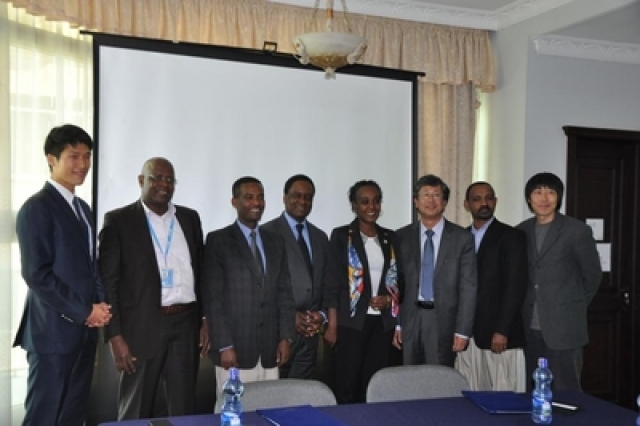
Addis Ababa. 29 December 2014 – Korea International Cooperation Agency (KOICA) and the World Health Organization Country Office for Ethiopia (WCO) joined forces in the effort to heighten Ebola virus disease (EDV) preparedness in Ethiopia. KOICA’s support to WHO will contribute to strengthening the capacity of the Ethiopian health system to prepare for Ebola in line with the country’s EVD outbreak preparedness plan.