AFRO SHOC Room photo gallery
Above:
01 Gateway to the AFRO SHOC
02 The Main Operations Room
03 The Control Room
04 One of the Breakout Rooms
05 The Equipment Room
06 The Main Operations in session
07 The Main Operations Room in session
08 The Main Operations Room in session
WHO identifies key health priorities in the Central African Republic
On 17 December, WHO team visited the displacement camp near Mpoko airport hosting around 45 000 people who have fled recent violence, to rapidly assess the health situation and priority needs.
At the Mpoko camp, as across the rest of the country, key health concerns include:
The number of overweight children aged under 5 in Africa has nearly doubled since 1990

Commission presents its final report, calling for high-level action to address major health challenge
The Commission on Ending Childhood Obesity (ECHO) presented its final report to the WHO Director-General today, culminating a two-year process to address the alarming levels of childhood obesity and overweight globally.
Un Deputy Secretary General Calls On International Community To Support Poverty Reduction In Africa
New York -- United Nations Deputy Secretary General Louise Frechette has called on the international community to help in "addressing the needs of Africa where poverty and health challenges are the most acute."
Launching an international health exhibition organized by the World Health Organization in collaboration with the UN Department of Public Information at the UN headquarters in New York on Monday, Mrs Frechette said: "We (the international community) must provide support to Africa …let this exhibition be an inspiration to us all."
Stakeholders Meeting for Emerging Pandemic Threats FAO, OIE and WHO IDENTIFY PROJECT, Entebbe, Uganda, 2-4 November 2010

Executive summary
TB infects 1.6 million, kills 600,000 annually in Africa
Harare, 21 March 2003 -- Tuberculosis (TB) infects 1.6 million people and kills 600,000 others in Africa every year, making the disease one of the most common preventable causes of death from a single infectious agent in the Region, according to a report issued Friday by the World Health Organization Regional Office for Africa.
Health Ministers Renew Commitment to Action on Humanitarian Crisis
A meeting of health ministers from southern African counties and senior officials of WHO ended Wednesday in Harare, Zimbabwe, with delegates from participating countries renewing their "political commitment for immediate actions with a view to mitigating the health consequences" of the humanitarian crisis facing the region.
A report issued at the end of the meeting said that the ministers "indicated the importance of a strategic response which recognizes the multi-dimensional nature of the current crisis, and which responds effectively to people's priority needs."
Wild polio and vaccine derived polio in Nigeria
After more than two years without the detection of wild polio in Nigeria, the Government reported three laboratory confirmed wild poliovirus type one (WPV1) cases with onset between July and August 2016.
All three cases were detected from Borno State, in children between 2 and 5 years of age. Two of them developed acute flaccid paralysis (AFP) while one was asymptomatic, identified as a close contact of a child with AFP.
"Intensify surveillance" to beat Ebola says Dr Moeti
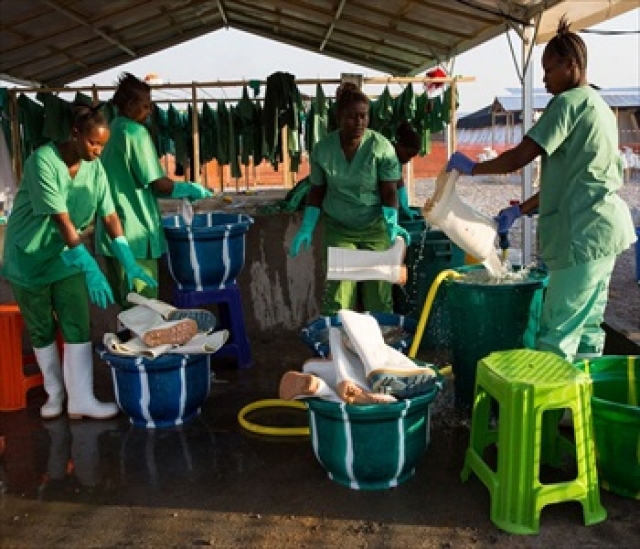
The surveillance of outbreaks of the Ebola disease in West Africa needs to be intensified if the deadly virus is to finally be beaten, according to the World Health Organization's (WHO) new Regional Director for Africa.
More than 8,700 people have died from Ebola mainly in Guinea, Liberia and Sierra Leone, but now the number of cases is dropping.
Daniel Johnson has been speaking to the new WHO chief, Dr Matshidiso Rebecca Moeti, about her priorities for dealing with the epidemic
Health Worker Crises Threaten To Undermine Health Improvement In Africa
Speaker after speaker at a World Health Organization-World Bank meeting that concluded today in Addis Ababa, Ethiopia drew attention to an emerging crisis of health manpower in Africa. The situation threatens to defeat the efforts of African governments, private health care providers, NGOs, and donors for health improvement.