Regional Consultation on roles and responsibilities of WHO and civil society organizations in prevention and control of NCDs
Regional Consultation on the roles and responsibilities of WHO and civil society organizations in the prevention and control of noncommunicable diseases in the African Region
Intercontinental Hotel, Balaclava, Mauritius, 17-18 October 2016
Indicators for TB control in Africa improve, but still fall short of global targets
Harare, 4 April 2003 -- Treatment success and case detection rates for tuberculosis (TB) have improved appreciably in Africa since 1993 when the disease was declared a global emergency by the World Health Organization (WHO), but the current indicators in the Region still fall short of global targets, a WHO official has said in Harare, Zimbabwe.
WHO, Ministers To Discuss Humanitarian Crisis In Southern Africa
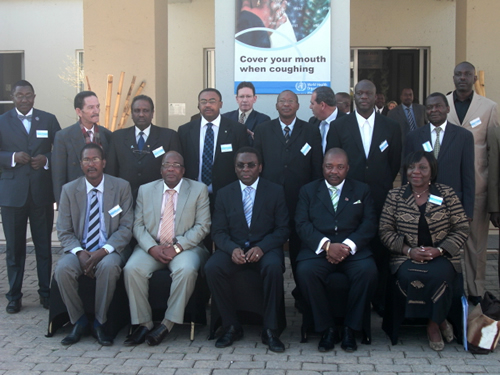
Health Ministers from ten southern African countries and senior officials of the World Health Organization meet from 26 - 28 August in Harare, Zimbabwe, to examine the response of the health sector to the acute and large-scale humanitarian crisis facing the region.
African Public Health Leaders Unite to End Preventable Deaths and Improve Health of Women, Children and Adolescents by 2030
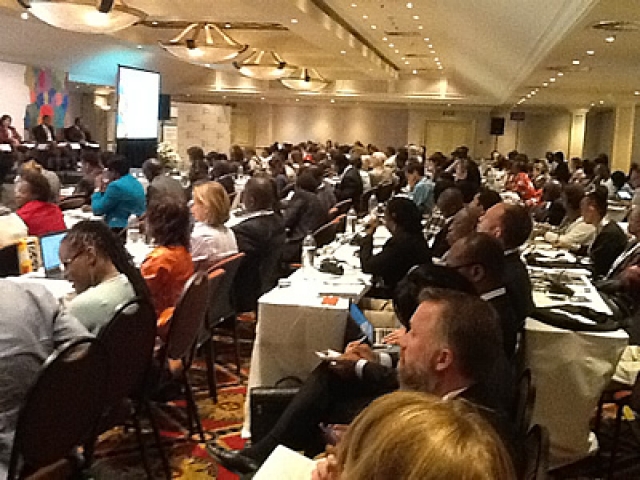
Regional Stakeholders Convene to Shape Global Strategy for Women’s, Children’s, and Adolescents’ Health
| Johannesburg, 6 May 2015 - Hundreds of leaders and public health experts from across Africa are gathering today to identify game-changing interventions to accelerate progress towards improving the lives of millions of women, children and adolescents.
Pandemic Influenza puts additional pressure on sub Saharan Africa’s health systems
Johannesburg, 11 August 2009 -- The emergence of the Influenza A (H1N1) 2009 Pandemic puts an additional pressure on health systems of African countries already stretched with other competing public health priorities, said Dr Luis Gomes Sambo, the World Health Organization's (WHO) Regional Director for Africa.
WHO Task Force on Immunization: Call for nominations
The WHO Regional Office for Africa is soliciting proposals for nominations for current vacancies on its Task Force on Immunization (TFI). Nominations are required to be submitted no later than 07 June 2013. Nominations will be carefully reviewed by the TFI membership selection panel which will propose the selection of nominees for appointment to the WHO Regional Director for Africa.
Global Polio Eradication Initiative - April 2010
Situation analysis
Rift Valley fever in Niger
On 30 August 2016, WHO received reports about unexplained deaths among humans, along with death and abortion in livestock in the North Western parts of Niger, and the areas bordering Mali.
From 2 August to 22 September 2016, 64 human cases including 23 deaths have been reported in Tchintabaraden health district in Tahoua region. The area is mainly populated by nomadic stockbreeders.
The Third African Regional Conference on Immunization (ARCI)

Theme: “Towards a Polio-free Africa.”
The specific objectives of this conference are:
Gavi, the Vaccine Alliance visits the WHO Regional Office for Africa
Senior members of the Gavi Secretariat visited the WHO Regional Office for Africa (WHO AFRO) on 14 and 15 February to discuss with the Leadership of WHO AFRO on further enhancing WHO and Gavi’s joint efforts to effectively support countries within the African region towards strengthening their immunization and health systems.