
WHO/AFRO-UK high-level delegation starts visit to Ethiopia

WHO and GAVI Alliance Partners along with the Ministry of Health strategizes to vaccinate over 485 000 children under one year of age in 2018

Despite widespread conflict and insecurity, South Sudan has witnessed a remarkable improvement in routine vaccination coverage in 2017. Since the introduction of the pentavalent – or five-in-one vaccine for infants that combines five antigens, namely: Diphtheria; Pertussis; Tetanus; Hepatitis B (HB) and Haemophilus influenza type b, the country raised pentavalent vaccine coverage from 45% in 2016 to 57% in 2017.
Amid insecurity, WHO scaling up routine immunization coverage in South Sudan
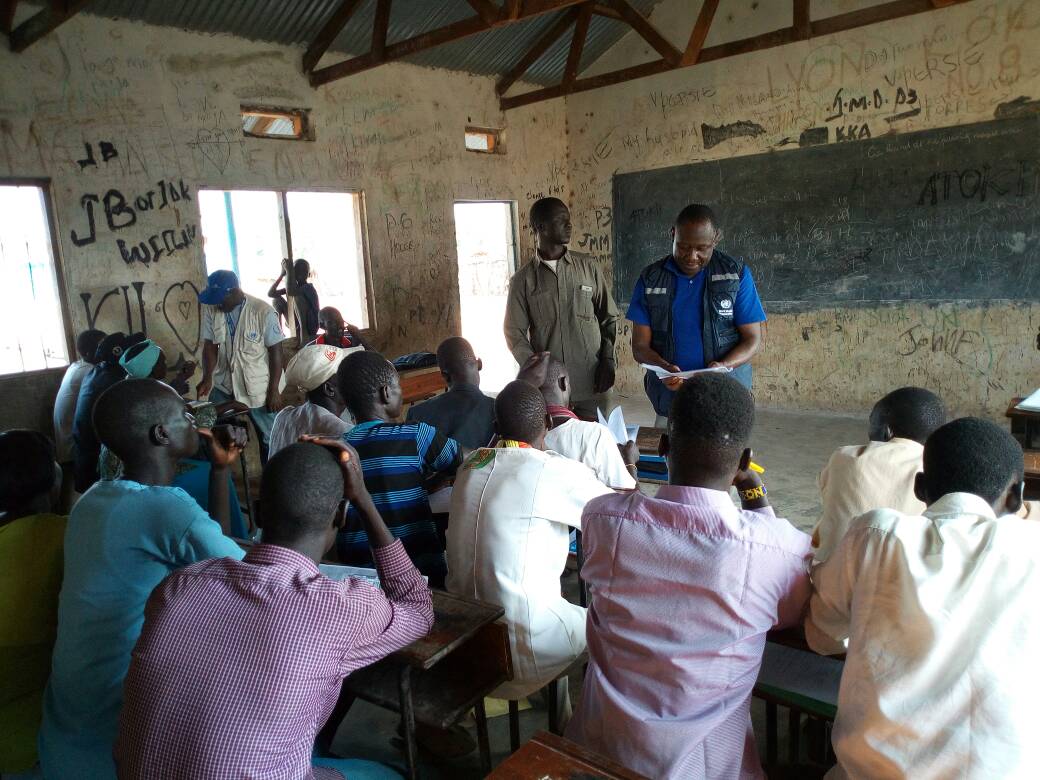
Amid widespread conflict where over 1.9 million people displaced due to insecurity, ensuring all children receive life-saving vaccines can be a challenge.
To strengthen and increase routine immunization coverage in conflict affected areas, WHO conducted multiple service delivery activities including accelerated outreach, measles follow-up campaign and phase II of the meningitis campaign in the conflict affected states of Unity, Jonglei and Upper Nile to reduce the risk of vaccine preventable diseases including measles and meningitis outbreaks.
WHO leads and conducts “Health in All Policies” workshop in Gauteng Province Research and Innovation Summit

Government commends WHO for swift response to contain Lassa fever in Edo state

Benin, 20 February 2018 - As the Lassa fever outbreak continues in Edo, one of the three most affected states (others are Ondo and Ebonyi) in 2018; the Commissioner for Health Dr David Osifo, has applauded World Health Organization’s (WHO) response to contain the outbreak.
WHO moves to contain Nigeria’s Lassa fever outbreak

Experts agree on guidelines to boost vaccine uptake through improved communication

Rwanda Immunization success story

Context and Issue
• Rwanda suffered a catastrophic genocide against the Tutsis in 1994
• This disaster and the ensuing war resulted in total disruption of the country’s health system including immunization service delivery.
• Following this incident, the national immunization coverage was very low (less than 30% in 1995) and incidence of vaccine preventable diseases (VPD) was high (e.g 28,000 measles cases in 1995);
• Only 6 traditional vaccines were provided in routine immunization programme in 1994.
WHO contribution
WHO and the health cluster support the response to the suspected food poisoning in Bor South County in South Sudan

Juba, 19 February 2018 – Following an alert of suspected food poisoning on 18 February 2018, where one community death and an influx of over 400 patients were admitted at Bor State Hospital, and several others in private facilities within Bor town, WHO and the health cluster quickly mounted a response to support the Ministry of Health to treat those who were admitted.
WHO supports Borno state to reach 13 500 households with health messages that save lives

Maiduguri, 16 February 2018 - With multiple disease outbreaks looming in north-east Nigeria, World Health Organization (WHO) recently partnered with the Borno State Ministry of Health and the National Orientation Agency (NOA), to reach 13 500 households and shared key messages on health to save lives.
The goal of the house-to-house outreach effort was to share practical health messages on ensuring children receive routine vaccinations, along with guidance on preventing the spread of certain diseases endemic to the area and best practices for hygiene.