
Ethiopia digitalizes and modernizes its health emergency information systems

The World Health Organization Ethiopia (WHO) country office continues to support the Government of Ethiopia in advancing the digitalization and modernization of its public health emergency systems, helping ensure timely data-driven decisions for preparedness and response.

Religious leaders, health authorities, and WHO meet to validate minimum WASH and health Standards for Religious institutions
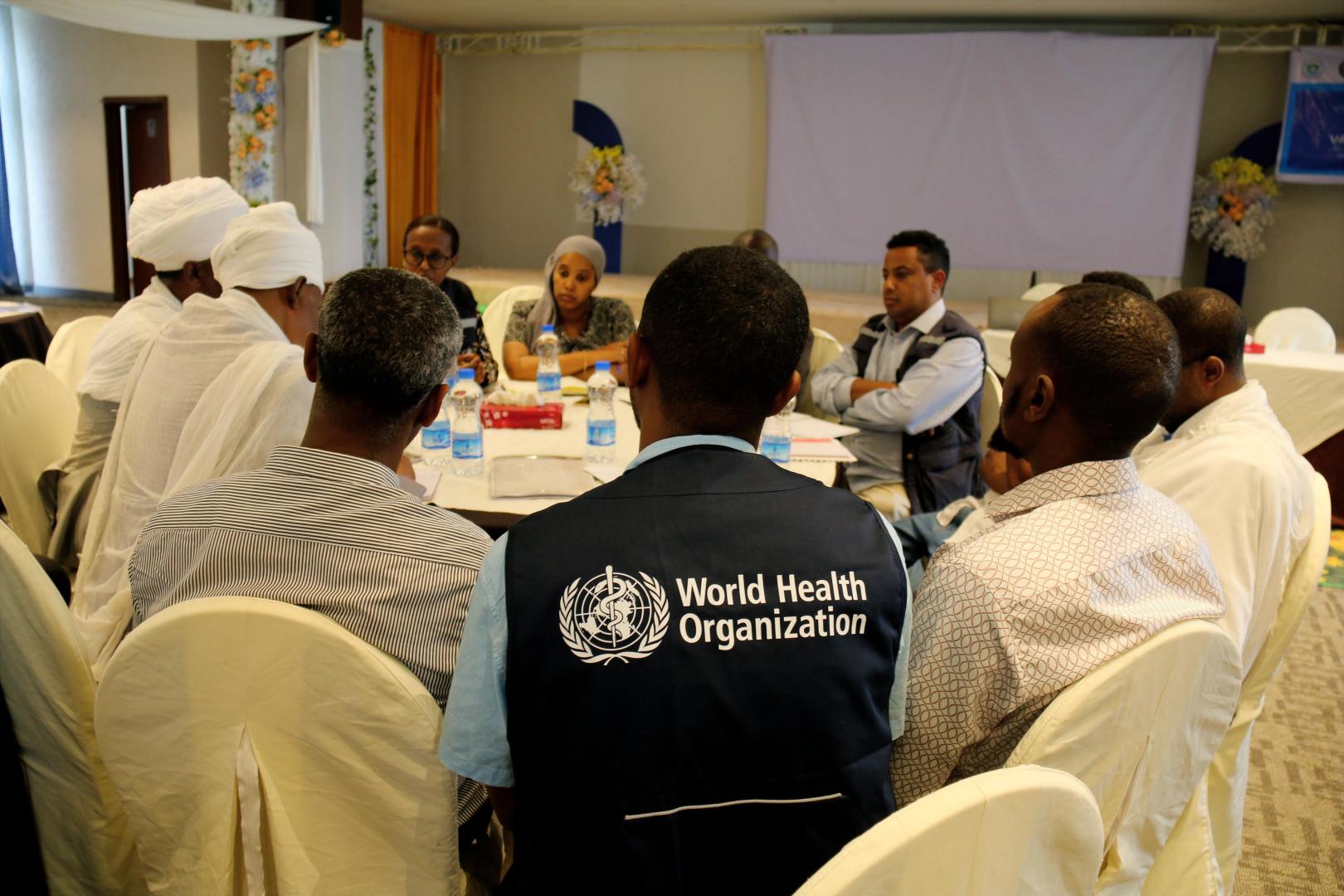
Over 60 participants, including representatives from the Amhara Public Health Institute (APHI), the Amhara Regional Health Bureau (RHB), religious leaders, the World Health Organization and partners, gathered for a two-day workshop to validate the "Minimum Water, Sanitation and Hygiene (WASH) and Health Requirements for Religious Institutions in the Amhara Region".
The initiative marks a new phase in Ethiopia’s fight against recurrent cholera outbreaks—combining the influence of faith leaders with public health expertise to protect communities and strengthen outbreak preparedness.
Managing an explosive Cholera Outbreak in South Sudan

One year ago, on 28 October 2024, South Sudan declared a cholera outbreak. The outbreak began in Renk, a border town between Sudan and South Sudan, triggered by the influx of returnees and refugees fleeing conflict in Sudan, before spreading to other areas.
To date, nearly 95 000 suspected cases and over 1 500 deaths have been reported from 55 counties across 9 States and all 3 Administrative Areas.
Launch of the hepatitis community of practice marks a new chapter in africa’s fight against viral hepatitis
Managing an Explosive outbreak of Cholera caused by multiple importations: One-Year experiences and lessons learnt

Op-Ed By Dr Humphrey Karamagi, WHO Representative for South Sudan
South Sudan is combating its largest and longest cholera outbreak since independence in 2011. The outbreak, which began in September 2024 has been sustained for now one year, testing the country’s experiences, defining new frontiers to interrupt transmission and providing new lessons for future similar outbreaks.
Garissa health workers trained on WHO global competency standards to strengthen care for refugees and migrants
Garissa County—Twenty-five frontline health workers from Garissa County have completed a five-day training on the World Health Organization (WHO) Global Competency Standards for Health Workers providing care to refugees and migrants, equipping them with skills to deliver people-centred and culturally sensitive services in one of Kenya's busiest border regions.
Nigeria reviews mpox guidelines and boosts community awareness to reduce transmission.

Abuja, Nigeria is taking significant steps to strengthen its national response to mpox by updating its clinical management guidelines, improving referral and data systems, and expanding public awareness to prevent community transmission.
WHO and Katyavala Bwila University hold scientific conference in Benguela

Benguela – The Faculty of Medicine of Katyavala Bwila University (FMUKB), in partnership with the World Health Organization (WHO), held today the Benguela Scientific Conference on Public Health and Innovation, under the theme “Resilience and Innovation in Outbreak Response: The Benguela Experience.”